Before you start that diet: ask yourself some questions

I’m not really that into navel gazing. I came from a  religious family so I’ve had my fill of sitting quietly. On top of my christian praying and reflecting  experience, my mother and brother even  fell for that 1970’s transcendental meditation craze. So I had to put up with that too. Being 14 and being made to meditate wasn’t fun.

Never the less  there are some lessons to be learned from “sitting with yourself”  or  as Socrates said,  “the unexamined life is not worth living”. To sensibly ask yourself questions is actually a good idea. To actually listen to the answers is probably better!!

So you’ve decided, once again to lose weight. This time, rather than just jumping on the first weird diet you can think of, why not ask yourself some questions. Here are some useful ones.

Spend a bit of time thinking about the past ( both recent and longer term). Not too much, otherwise you can lose yourself in the mists of time. But get a handle of your history. 

Are you  overweight now?

Why are you overweight? (This is  a very stark, rude question, but was it illness, unhealthy eating, too much food, not enough exercise etc).

Have you ever lost weight before?

If so, what helped?

and what hindered?

Ok, so you have lost weight in the past! What made you put the weight back on?

Ok, thats your past, or as much as you realistically need to consider, what are your views and targets now?

Are you looking for a  short term  fix (a wedding in 2 weeks), or are you prepared to have a long term target

To be successful you need to change your approach to food, weigh and measure, change choices, record your eating habits, and exercise, and all this will no doubt make you feel uncomfortable. So, on a scale of 1 to 10 (10 is high)  answer these questions.

Be honest, as we can all want to lose weight but not have much motivation because we know it’s hard work?

How motivated are you to lose weight?

How motivated are you to change your eating habits?

How motivated are you to increase your physical activity?

Will you try new strategies/techniques for changing your eating, exercise, and other behaviours?

Are you prepared to spend time studying reading materials  about nutrition ?

Will you record your exercise  and everything you eat and drink,?

Will  you  change your eating habits?

 Will  you be able to work regular physical activity into your daily schedule?

Will  you be able to exercise  and be active most, if not everyday?.

If you make a mistake, have  a lazy day, or give into temptation, can you forgive yourself, and “get back on the programme”?

Do you have an emotional connection with food?

Do you eat more when you are upset, annoyed or miserable?

Do you eat to celebrate?

If you have  confrontation, do you seek comfort in food to calm down?

A SERIOUS BIT

Think about this question carefully?

Have you ever purged (used laxatives, diuretics, or  vomiting) to control your weight?

If yes,  is this “often” (About once a month  A few times a month  About once a week  About three times a week  Daily.)

If purging is part of your present weight loss strategy, and you feel unable to stop, you probably need to chat to your doctor who could get you some  one to one support to deal with this issue

Thats just the tip of the iceberg. If you’d like more help or thoughts on managing your weight, do join the mailing list of email me directly on Andrew@andrewstemer.com
Foot exercises

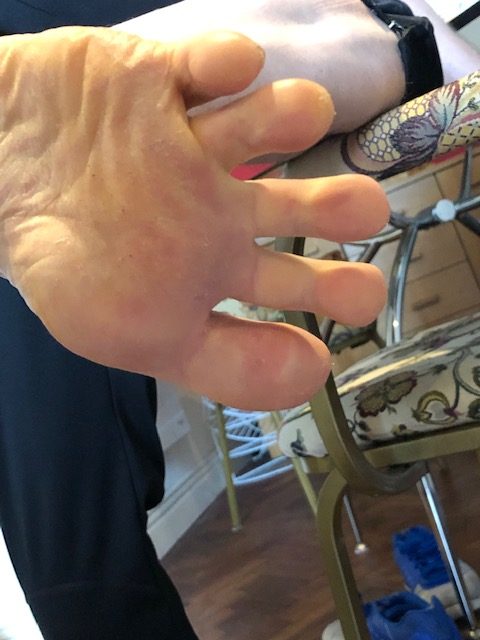
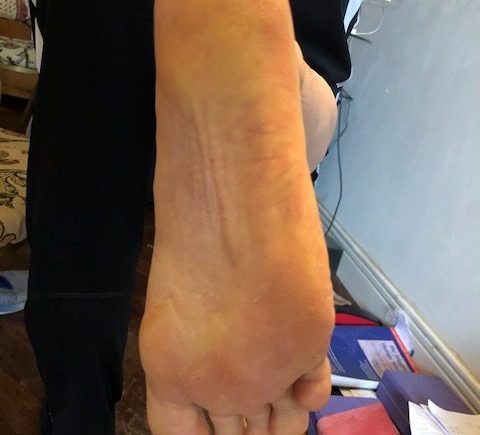
Try and do the foot exercises below. Your feet will love you, and you will also learn to love your feet. This type of activities are also helpful in your battle against plantar fasciitis.

Towel curls

Scrunch your toes, with or without a towel. Just think about the position you leave them in normally. Straight and  locked in your shoes like prisoners. To paraphrase Marie Antoinette “Let them scrunch air” or treat them to a  scrunch festival on a towel! Give them some manoeuvering room.

Toe splays

Splay your toes: see if you can  splay them.

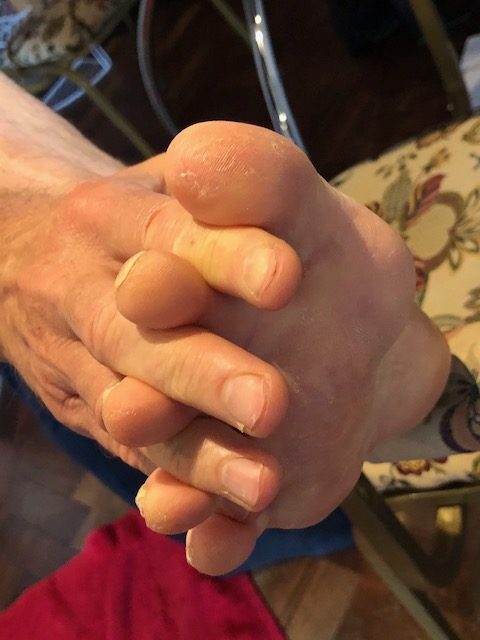
It was a bit of a battle for me to learn how to do this ( as, like you I’ve locked my feet into shoes for the last  years, so I alternate the splay with using my fingers to pull them apart ( you can do it en-mass as shown here or individually )

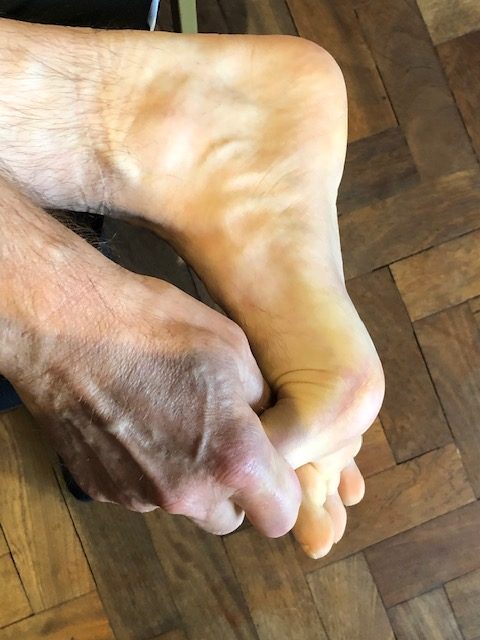
Big Toe stretch

Slowly stretch and pull the toe backward toward your shin. Go as far as is comfortable.

For more Physical therapy and fitness tips, join the mailing list

[mc4wp_form id=”832″]

Is Acne bacteria connected to back pain?

The paper by  Hanne B. Albert et al “Antibiotic treatment in patients with chronic low back pain and vertebral bone edema (Modic type 1 changes): a double-blind randomized clinical controlled trial of efficacy throws up a fascinating possibility. That some back pain and sciatica is  caused by a pathogen and as such, can be treated by antibiotics .

The pathogen that could be causing this is Propionibacterium acnes.

If you think you recognise the “acne” bit. You’d be correct. The stuff that ruins your teenage years and gives you acne!
As Dr long in his article  “The Murky world of Mordic Changes” . says “there will always be a proportion of our patients who simply don’t respond to our care…….Could there be something far more ‘pathological’ that might perpetuate lower back pain”
To understand this issue you need to  vaguely understand “mordic changes”. These are changes in the bones marrow of the vertebral body either side of a damaged disc. In stage 1 changes these areas have increased levels of pro inflammatory cytokines and increased levels of innervation

“Propionibacterium acnes bacteria secrete propionic acid, which has the capacity to dissolve fatty bone marrow and bone. We hypothesize that diffusion of propionic acid from the disc into the vertebrae causes the Modic changes. Similarly, as increased TNF-alpha and the growth of PGP-5 unmyelinated nerve fibres have been reported in Type 1 Modic changes, with the inherent slowness of these pathological processes perhaps explaining the delayed onset of improvement observed in this study”.(Albert et al)

Needless to say, shooting up clients with lots of antibiotics has drawbacks!

“High-dose long-term antibiotics should not be prescribed without due consideration. Clearly in a condition as chronic lower back pain there is a potential community as well as individual hazard if used indiscriminately. However, as many patients, as in this trial, are on sick leave, at risk of losing their jobs and have a high analgesic intake, we suggest that antibiotics, when applied along the lines of this MAST protocol may be appropriate in this subgroup, i.e. chronic lower back pain with Modic Type 1 changes. We do not support the proposition that all patients with lumbar pain should have a trial course of antibiotics. The criteria in this study were very clear: chronic lower back for more than 6 months, Modic Type 1 changes in the adjacent vertebrae following a previous disc herniation. As we do with other drugs, we rely on our fellow colleagues to use clear evidence-based criteria and to avoid excessive antibiotic use.”

However antibiotic issues to one side, this treatment is mired in controversy .  Lars Bråten authored a report totally failing to find any beneficial effect.

“Efficacy of antibiotic treatment in patients with chronic low back pain and Modic changes (the AIM study): double blind, randomised, placebo controlled, multicentre trial” (click here for report ) tested patients with chronic low back pain and Modic changes at the level of a previous disc herniation. For three months they were treated  with amoxicillin. It  did not provide a clinically important benefit. These  results do not support the use of antibiotic treatment for chronic low back pain and Modic changes

I note though that that Albert experiment (Pro) used amoxicillin–clavulanate and the Braten report (Anti) used Amoxicillin. Im not clever enough to state whether this would have made any difference.
So, keep an eye on that research!
If you want to keep up to date this back pain and back pain issues join our mailing list
[mc4wp_form id=”345″]

The big warning.
Some back pain is really serious: check your RED FLAGS by clicking here 


Smart phones useage mAy be screwing with your health

Maybe this isn’t the headline , or discovery,  of the century , but smart phones could lead to poor forward head posture, poor rounded shoulders and poor breathing.
Now its not as if the phone jumps out of the package and puts you in a combined head lock  and choke hold,  but it might as well: check out this new report “The effect of smartphone usage time on posture and respiratory function” by Jung et al  smart phones and breathing.
The big take home is this “The result of this study showed that prolonged use of smartphones could negatively affect both, posture and respiratory function”.  Wow.  Modern day scientists  are amazing!
What a lovely phone. I wonder why my neck and back hurts and I cannot breath properly anymore
The truth is this. Using your mobile phone now and then, wont hurt you (unless you walk into a lamp post). You can also  sort of ignore those hippy therapists as  poor posture, as such, wont hurt you. We all know people with disgusting posture who have never had a day of  postural pain in their lives.
However, “postural stress” as used in  advanced torture regimes simply takes a bad posture and makes you hold it for hours. The Scavengers Daughter  was device that held you in a stooped posture for hours and was very effective as a torture.
postural stress
As always,  it’s how much “bad”  you take before you start hurting.
Strangely the Backaholic Back Pain management course has a  specific lesson on self  torture techniques. Its sort of bazaar!
If you want more  back pain tips on information on when the Backaholic course will be released, do join our mailing list.

[mc4wp_form id=”345″]

The big warning.
Some back pain is really serious: check your RED FLAGS by clicking here 

Understand your pain

Underpinning every psychological approach to back pain is education.
It’s seen as crucial that you understand the mechanisms of pain within your body. So here is a super simple introduction to the basics of pain. I started teaching in our kitchen:

We have that basic banana approach. We can now build up to a bit more of a technical  overview. You’ll see, I got kicked out of the kitchen, into the bathroom!

now, its up into the brain! We were relocated to the bedroom

Its back to the bathroom to remind ourselves about what switches nociceptive neurons on and off

back into the bedroom to look at “inhibitory interneurons” and “enkephalins”


Helping you understand how pain works  is certainly  the approach used by  Dr Sarno in his TMS (Tension Myositis Syndrome)programme  and  Dr Schubiner in his MBS  ( Mind Body Syndrome) programme. I  just think our educational process is a bit funnier!
The Backaholic course should be ready in late August/early September, so if you want to fix your back pain, do sign up for our newsletter so you know when its available! Obviously we will send out lots of handy hints and tips between then and now.
[mc4wp_form id=”345″]

The big warning.
Some back pain is really serious: check your RED FLAGS by clicking here 

Predict your back pain!

Many have a bout of back pain, then think no more of it. Often you get a second bout! In some cases it turns into chronic long lasting pain that has you demanding pointless MRI’s and screaming for  painkillers like an addict.
This could be your opportunity to  live the rest of your life back pain free. Whilst the isometric flexion tests is only one of many tests, it’s a very useful one. Hook your feet under an object ( or get someone to hold them down) and sit up to 45 degrees with your arms crossed across your chest. Ideally your back is held in a “neutral spinal position”.
Time how long you can hold this position?
The standards are these: men need to be able to hold this position for 136 seconds, women 134 seconds. Less is a substantial  risk factor for future back pain.
If you thought your core was great because you can do lots of  “functional fitness” sit ups and weird crunches, but you fail this test, you need to add soem very specific training to your regime asap.
Incase its news to you,  your core needs to be able to isometrically contract all day long to support your spine! This test  is a very good indicator if you are preparing for that Functional task.
Join the mailing list so I can help you  stay pain free!
[mc4wp_form id=”345″]

The big warning.
Some back pain is really serious: check your RED FLAGS by clicking here 

What predicts your performance in the Crossfit open?

Among a batch of reports studying the Crossfit method, you’ll find “physiological Predictors of Competition Performance athletes” by Martinez-Gomez et al worth a read ( or a quick skim).

In reality any attempt to predict an athletes performance in a specific wod is always a bit speculative as different wod’s can have massively different outputs and can focus on specific “modal domains”that can bring specialists to their knees. Wod’s can be as wide ranging as “run 5k” or “deadlift 1,1,1,1,1,1,1”.

Nevertheless this study took the 5 wods of the Crossfit Open in 2019 and evaluated the performance of 15 athletes who were also assessed against various laboratory tests: incremental load test for deep full squat and bench press; squat, countermovement and drop jump tests; and incremental running and Wingate tests. It would be a fairly safe bet to say that the athlete who scores high on all of these tests would also score highly in the Wod’s.

In 2019 the “open” wods were

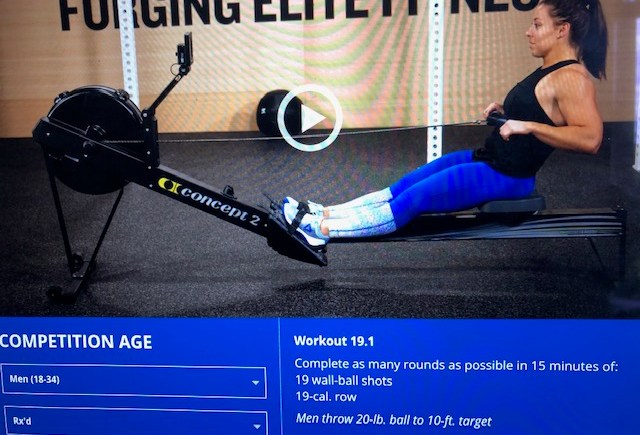
19.1 Complete as many rounds as possible in 15 minutes of

  • 19 wall-ball shots
  • 19-cal. row

19.2 Beginning on an 8-minute clock, complete as many reps as possible of:

  • 25 toes-to-bars
  • 50 double-unders
  • 15 squat cleans, 135 / 85 lb.
  • 25 toes-to-bars
  • 50 double-unders
  • 13 squat cleans, 185 / 115 lb.

If completed before 8 minutes, add 4 minutes to the clock and proceed to:

  • 25 toes-to-bars
  • 50 double-unders
  • 11 squat cleans, 225 / 145 lb.

If completed before 12 minutes, add 4 minutes to the clock and proceed to:

  • 25 toes-to-bars
  • 50 double-unders
  • 9 squat cleans, 275 / 175 lb.

If completed before 16 minutes, add 4 minutes to the clock and proceed to:

  • 25 toes-to-bars
  • 50 double-unders
  • 7 squat cleans, 315 / 205 lb.

19.3 For time:

  • 200-ft. dumbbell overhead lunge
  • 50 dumbbell box step-ups
  • 50 strict handstand push-ups
  • 200-ft. handstand walk

Men 50-lb. dumbbell / 24-in. box
Women 35-lb. dumbbell / 20-in. box

19.4

For total time:

3 rounds of:

  • 10 snatches
  • 12 bar-facing burpees

Rest 3 minutes

Then, 3 rounds of:

  • 10 bar muscle-ups
  • 12 bar-facing burpees

Men 95 lb.
Women 65 lb.

19.5

33-27-21-15-9 reps for time of:

  • Thrusters
  • Chest-to-bar pull-ups

Men 95 lb.
Women 65 lb.

“CrossFit performance (i.e., final ranking considering the sum of all WODs, as assessed by number of repetitions, time spent in exercises or weight lifted) was significantly related to jump ability, mean and peak power output during the Wingate test, relative maximum strength for the deep full squat and the bench press, and maximum oxygen uptake (VO2max) and speed during the incremental test”. However the relationship varied depending on the wod analysed. No surprise there.

However, the authors by using “multiple linear regression analysis” suggest that the two crucial factors were lower body muscular power (especially jump ability) and VO2 max.

You can do your own VO2 max here

The top 5 things that keep you in pain

Once you have tweaked your back a few times, you stand a good chance of dragging yourself down into a pain cycle. Here are the 5 things people who suffer from pain do.

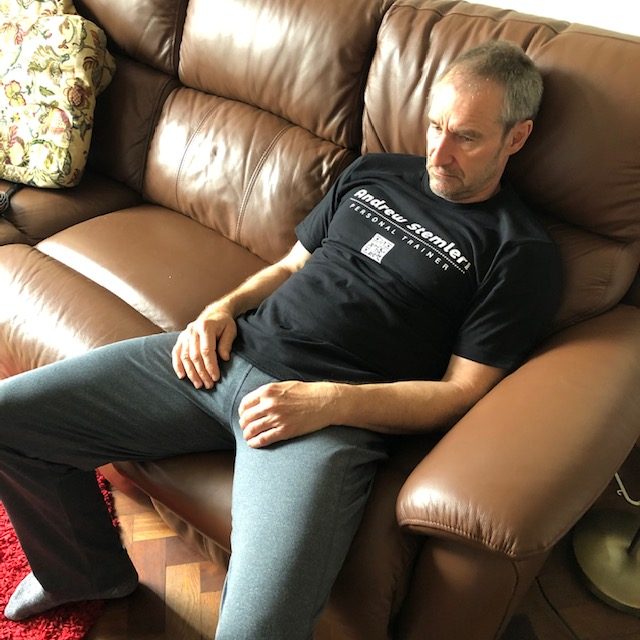
THEY STOP PHYSICAL ACTIVITY

This image has an empty alt attribute; its file name is IMG_0774-rotated.jpg

If you become sedentary it will start a cascade of bad stuff: your sleep will suffer, you’ll weaken your muscles meaning you’ll slide towards a boring disabled lifestyle, with a loss of control over your daily life. The more you sit and do nothing, the more you focus on your pain. The worse it becomes

THEY FALL INTO THE OVER ACTIVITY TRAP

This image has an empty alt attribute; its file name is IMG_0775-rotated.jpg

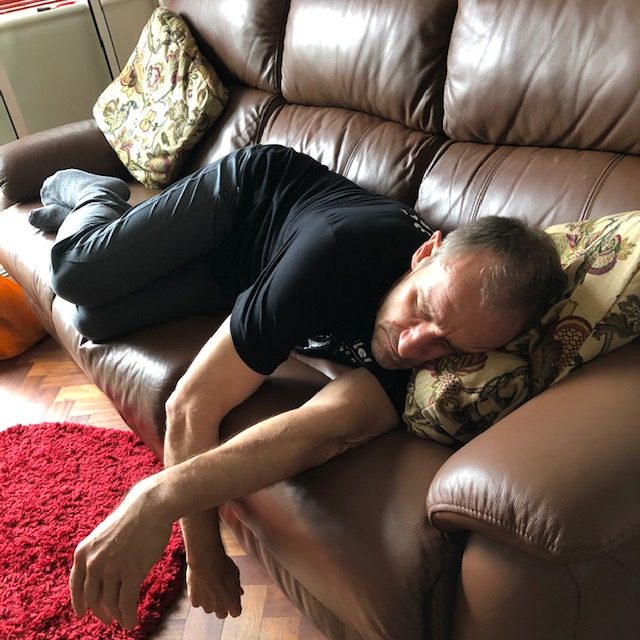
taking advantage of any easing of pain to work yourself to exhaustion, or into pain. This means you need to collapse until you recover. When you have recovered a bit, you slog through loads of work until you are exhausted or in pain. This leads to worse pain and declining physical fitness

ABANDONING WORK AND FUN FOR BOREDOM

This image has an empty alt attribute; its file name is IMG_0776-rotated.jpg

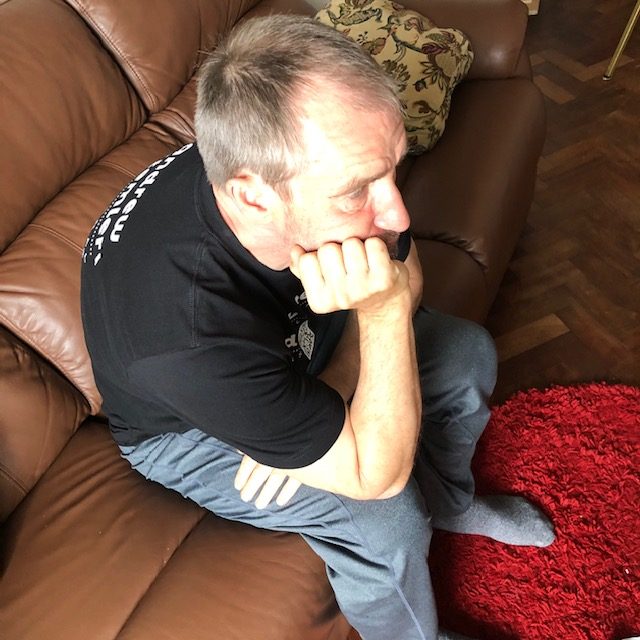
once you have taken time off work, and given up your hobbies, you get bored. Your pain will expand to fill the day

STRESS

This image has an empty alt attribute; its file name is IMG_0777-rotated.jpg

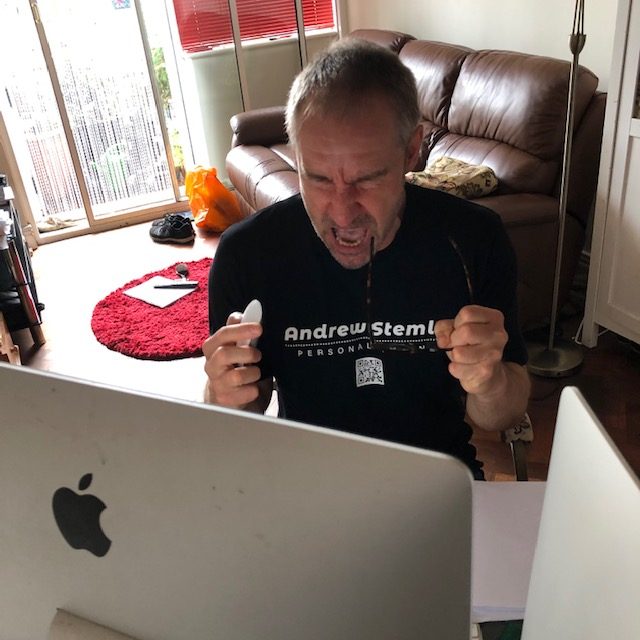
Stress. is the ultimate multi-tasking sensation: it can make you avoid activity, avoid friends , edge out loved ones: it can make you feel helpless and hopeless. It can lay the foundations for arguments and anger, and given time will deliver you mental health issue such as anxiety and depression

WAITING FOR A CURE, or HOPING THAT THE PAIN WILL GO AWAY

This image has an empty alt attribute; its file name is IMG_0778-rotated.jpg

Rather than simply doing the basic combination of stretches, smashes, movement education and strengthening that I can show you, You start obsessing about a “cure”. You chase your doctor for a magical MRI or a spinal fusion , even if you know that only 1 out of 250 MRI’s show anything remotely useful, and normally leads to a recommendation to stretch and build your core.

To be kept up to date with back pain fixes do join the Backaholic.com mailing list

The big warning.
Some back pain is really serious: check your RED FLAGS by clicking here 

Needless treatments: spinal fusion surgery for lower back pain is costly and there’s little evidence it’ll work

This article is republished under a Creative Commons license. Read the original article here. It was written by Gustavo Machado, Christine Lin and Ian Harris.
From time to time, we hear or read about medical procedures that can be ineffective and needlessly drive up the nation’s health-care costs. This occasional series explores such needless treatments or procedures individually and explains why they could cause more harm than good in particular circumstances.
Back pain affects one in four Australians. It’s so common, nearly all of us (about 85%) will have at least one episode at some stage of our lives. It’s one of the most common reasons to visit a GP and the main health condition forcing older Australians to retire prematurely from the workforce.
Treatment costs for back pain in Australia total almost A$5 billion every year. A great proportion of this is spent on spinal surgical procedures. Recently, Choosing Wisely, the campaign to educate medical professionals and the public about tests, treatments and procedures that have little benefit, or lead to harm, added spinal fusion for lower back pain to its list.
This is because, despite rates of the procedure being on the rise, current evidence doesn’t support spinal fusion for back pain. Randomised trials (regarded as studies providing the highest-quality evidence) suggest spinal fusion has little advantage over a well-structured rehabilitation program, or psychological interventions, for back pain.
What is spinal fusion?
Spinal surgery is most commonly performed to remove pressure on nerves that causes pain and other nerve symptoms in the legs. This surgery is called decompression. The next most common procedure is spinal fusion, where two or more vertebrae are joined together (using such methods as transplanted bone from the patient, a donor or artificial bone substitutes) to stop them moving on each other and make one solid bone.
Spinal fusion may be performed for fractures, dislocations and tumours, and is commonly performed in conjunction with decompression. For back pain, it’s performed when the origin of the pain is thought to be related to abnormal or painful movement between the vertebrae (from degenerative joints and discs, for example).
Rates of spinal fusions have been rising and continue to increase, outstripping other surgical procedures for back pain. In the United States, rates of spinal fusion more than doubled from 2000 to 2009. In Australia, rates increased by 167% in the private sector between 1997 and 2006, despite almost no increase in the public sector.
Spinal fusion rates differ significantly between regions of Australia, with the highest being in Tasmania and the lowest in South Australia: a seven-fold variation. Significant variations are also seen between countries. For instance, spinal fusion rates in the United States are eight times those in the United Kingdom.
The greatest increase in the use of spinal fusion has been in older Australians, often in conjunction with decompression surgery for spinal stenosis – a condition that causes narrowing of the spinal canal (the cavity that runs through the spinal cord).
Differences in clinical training, professional opinion, and local practices are likely to play a role in such variations.
Evidence for spinal surgery
There is little high-quality evidence to support the use of spinal fusion for most back-related conditions, including spinal stenosis. And there is disagreement between surgeons on when spinal fusion surgery should be performed, not only for back pain but also for more acute conditions such as tumours and spine fractures.
There have also been no studies comparing spinal fusion to a placebo procedure. Most research to date compares one fusion technique to another technique or to a form of non-surgical treatment, so we still don’t know whether spine fusion is effective against placebo.
We also know that spine fusion surgery is expensive and associated with more complications than decompression surgery. And the surgery often fails. Around one in five patients who undergo spine fusion will have revision surgery within ten years.
Research also shows most patients having spine fusion surgery under workers’ compensation won’t return to the usual job, will still be having physiotherapy and be on opioid medication two years after surgery.
So why are rates going up?
There are several factors, including an ageing population, that may contribute to the rapid increase in spinal fusion despite the lack of evidence supporting its use. Financial incentives might also explain the differences in rates between private and public sectors in Australia and between the United Kingdom and the United States.
We don’t have high-quality evidence on the benefits and harms of spinal fusion. This means there is uncertainty, which allows practitioners to continue doing the procedures they were trained to do unchallenged. This then leads to overtreatment, particularly where reimbursement rates are high, such as in the workers’ compensation setting.
Uncertainty about the appropriateness of spine fusion results in practice variation, wastes scarce health care resources and leads to worse patient outcomes.
We need better research in this area. This means research efforts should shift from studies looking at different ways of performing the surgery and focus on investigating whether or not it works better than non-operative treatments or a placebo, and, if so, whether the benefits outweigh the harms.
In the absence of such evidence, patients can consider other evidence-based and less costly treatments, such as exercise, cognitive behavioural therapy and physiotherapy.
 

The big warning.
Some back pain is really serious: check your RED FLAGS by clicking here