I love the pull up.
It is seen by many as a useful test for measuring the strength and endurance of the arm and shoulder girdle, and useful for those occupations where you need to manipulate your body weight: fire fighters, climbing into lovers’ bedrooms, showing off in front of kids, and getting out of holes when the zombie apocalypse strikes.
In Dec (2012) The media (papers and blogs) were all a-thither with the scientific proof that women cannot do pull ups. Even the Marines (“hoo-rah”) expect men to do 3, but women don’t have to do even one.
Zilch.
If you boil down the current research on women and pull ups, you will find two physiological reasons why most women cannot pull up.
They are fat and weak. (Don’t hate me, it’s science! )
It is generally accepted that women have a higher % of body fat (Heyward and Stolarczyk 1996) and according to an average of the research, women have upper body strength ½ of that of a man. (ranges from 35-79%: Laubach 1976).
But, as Kate said “It may be true, but God help you if you say that out loud to a girl!”
To be diplomatic and soften this up, it can easily be spun into the standard gym nonsense that women don’t have to do pull ups. Woo hoo, here comes your next Yoga class….after all strength is for smelly noisy boys.
We must accept that (Western) women have been sold a pernicious type of cultural weakness that blurs fitness with the spa. It palms off competence in Zumba as a substitute for the fitness that most women in the developing world need purely to survive the day. Elsewhere in the world women have to be tough, they have to plant food, haul goods, build stuff. A heroin-chic stick insect clinging to a partner’s arm isn’t available as a job option.
In fact, to be slightly political, the only reason Western women can prance around an aerobic studio and claim to be fit, is because their ancestors had the decency and foresight to be pirates, drug dealers and slavers who not only stole wealth, but saved it.
The poorest of us lives in comparative luxury based on this accumulated wealth, and it doesn’t matter if you have no physical competence
But what did this science experiment have to do, to validate the proposition that women don’t have to pull up?
“Three days a week for three months, the women focused on exercises that would strengthen the biceps and the latissimus dorsi — the large back muscle that is activated during the exercise. They lifted weights and used an incline to practice a modified pull-up, raising themselves up to a bar, over and over, in hopes of strengthening the muscles they would use to perform the real thing. They also focused on aerobic training to lower body fat”
And the result of this exciting “lat” challenging, bicep-strengthening routine was: “By the end of the training program, the women had increased their upper-body strength by 36 per cent and lowered their body fat by 2 per cent”
Wowee!
“But on test day, the researchers were stunned when only 4 of the 17 women succeeded in performing a single pull-up.”
“We honestly thought we could get everyone to do one,” said Paul Vanderburgh, a professor of exercise physiology”
A few interesting points.
1) This “hot news” (New York times dated 2012) was based on a report published in 2003 (“Training college-age women to perform the pull-up exercise.”) Shows how behind the times fitness media is.
2) It has been presented by much of the blogging world as justification for women having no pull ups, with the implication that they ought not to bother.
3) It shows that no one reads the small print. The researchers did not set out to produce a pull up specific routine
“We designed our training program with certain delimitations ..a whole body workout and not just a workout to improve pull ups”
4) It shows the impatience of “fitness regimes”. Why should the ability to achieve a certain goal in an arbitrary 12 weeks hold any sway? What’s wrong with spending 6 (+) months learning a skill?
5) The ineffectiveness of looking at movement in the simple terms of the strength of individual muscles.
All worthwhile “exercise” movements are analogues of human movement: they need to be learned, and they all, all combine numerous components of fitness: co-ordination, accuracy , agility, flexibility, strength, strength endurance, and to be frank some mental toughness and determination.
6) If you will permit me to sling a cat in among the pigeons, my final point is this : are pull ups a proper marker of fitness, or is “fit” a guesstimate of VO2 max.
If the girls we train can haul weight, including themselves, we begin to think “ tough chick” ( yes I know that’s a bit demeaning, but its meant nicely), but when flexible stick insects swoon into our gym with chocolate denial etched into their dulled eyes and the whiff of bulimia induced vomit around them, but a “really low resting heart rate”, we don’t think , “wow you’re fit”, we think “ Eat something and man up” .
Or to be more specific, get some steak and a pull up bar!
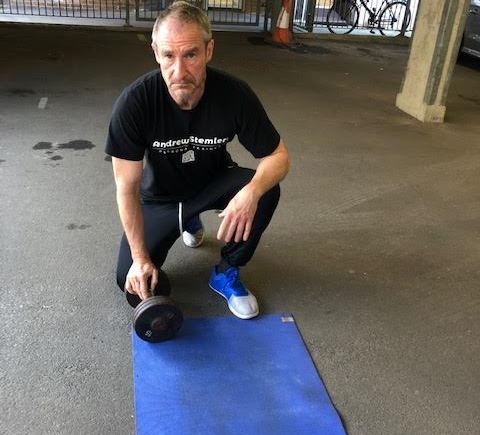














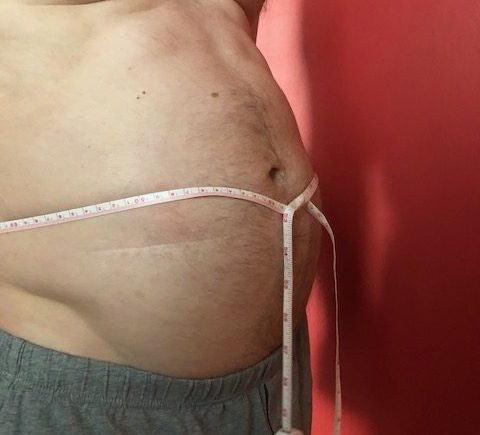

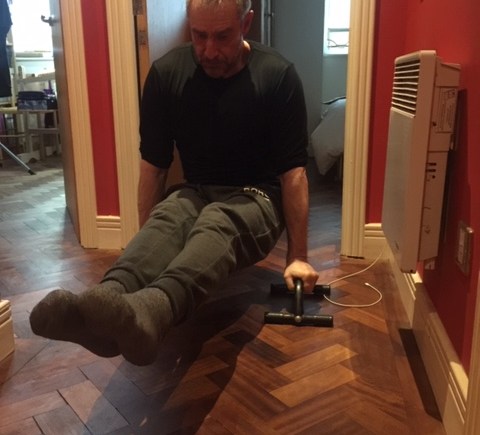
 .
. in 1966 “without special apparatus and without moving a muscle you can grow stronger and build, or reshape your body to nearer your hearts’ desire. The static contraction has been part of physical culture systems for a very long time. Hatha yoga contains postures held without movement”.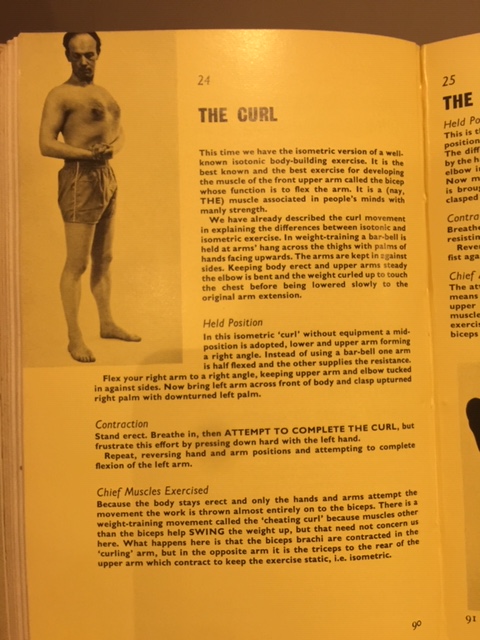


 Andrew Stemler