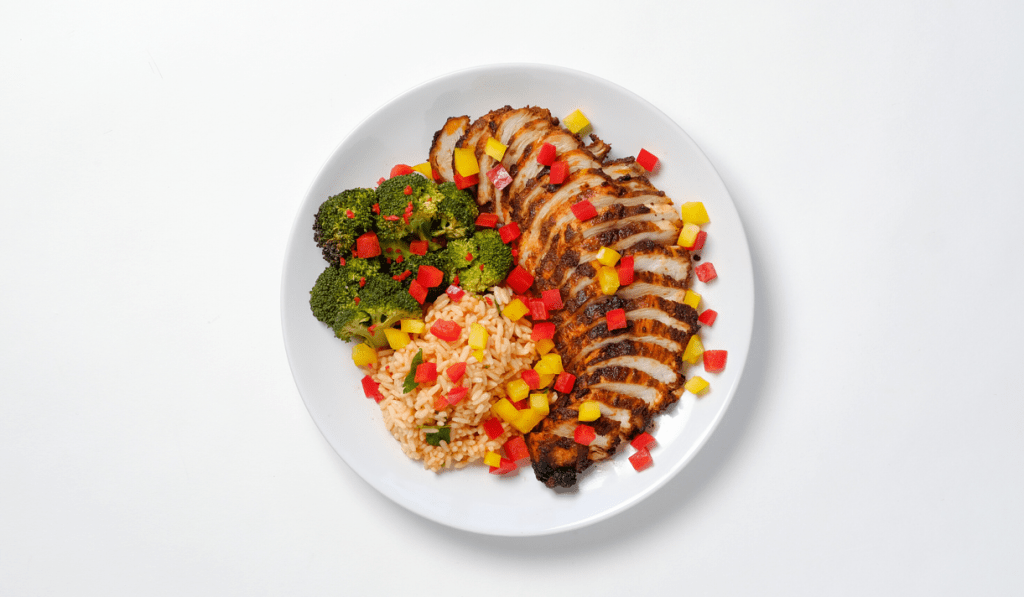
The aim of this series is to inspire the non cooks among you. To roast a chicken , shove it in the oven for about an hour. Buy a cheap meat thermometer, make sure it’s 70 degree, then simply weigh out a zone proportion ( 112g of chicken will give you 4 blocks according to the Zone diet)
We don’t assume that you have access to a pull up bar! But today we stayed in the flat because we have a pull up bar there (with rings on). We wanted to do a version of Cindy. The Crossfit workout of 5 pull ups, 10 push ups, 15 squats. AMRAP in 15 minutes (it should b 20 minutes, but Im 59, so I cut myself some slack now and then.)
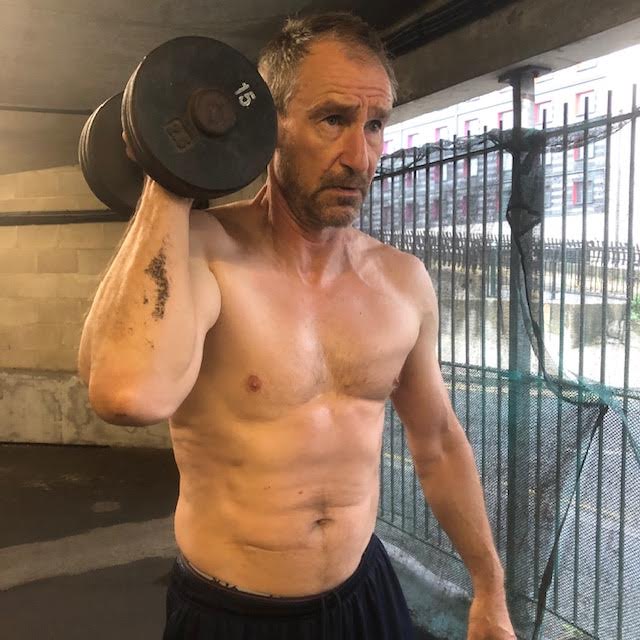
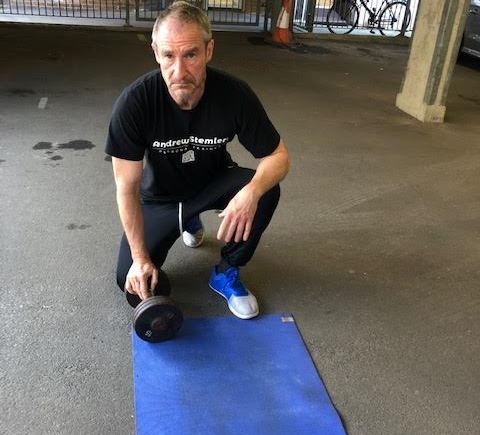
In promoting the DWF, (daily workout and food) we follow the classic Crossfit 3 day on 1 day off. We work in a car park with just a dumbbell a kettlebell and a skipping room. In the square next door, we have access to some benches that we can step up onto or jump on.
Whilst everyone likes a rippling physique, there are exercises that are simply good for you, sometimes, for reasons that are not immediately obvious.
The L sit can have an impact on your stress levels. It was recently established that there is a connection between your core, your brain, your adrenal glands and thus the release of the stress hormone cortisol. It’s only been tested on Monkeys, but it’s very interesting.
Classically it was thought that most of the body systems worked top down. You think it, and the brain sends out the memo.
Basically, the primary cortex portion of your brain (or M1 for short) contains a map of your entire body including regions like your legs, arms, face, and your core.
To everybody’s surprise, boffins have discovered a large number of neurons in the M1 that controlled the adrenal medulla. Plus, most of these neurons were located in the axial muscle region of the M1. Stated plainly: “Well, lo and behold, core muscles have an impact on stress,” says Peter Strick, PhD, a professor and chair of the department of neurobiology at the University of Pittsburgh Brain Institute.
“One clear implication of this organization is that the sympathetic responses which occur during activities such as exercise, the performance of demanding cognitive tasks, and the experience of emotions are generated by neural activity from the same cortical areas that are responsible for these behaviors.” (The mind–body problem: Circuits that link the cerebral cortex to the adrenal medulla)
This isn’t that much of a surprise although as the mind body connection has been fairly known, or boringly worked to death, depending on your perspective. What we are beginning to see is the pathways for a body mind connection.
How you treat your body has a direct impact on your emotions .
The psychologists, hippies and new age weirdos had always talked about this connection. I went to a charity fire walk in Liverpool Street, London several years ago, and we were made to power pose (stand there, legs astride, “being powerful”) o prepare us for the rigours of the fire walk. to come Without such preparations, we would clearly have died
Whilst power posing per se isn’t at all guaranteed (other studies found it to be utter tosh), its enough to understand that:
“specific multisynaptic circuits exist to link movement, cognition, and affect to the function of the adrenal medulla. This circuitry may mediate the effects of internal states like chronic stress and depression on organ function and, thus, provide a concrete neural substrate for some psychosomatic illness”.
All of which is a long winded rambling way of saying, do the L sit! ‘Cause your core sort of chats to your stress bits. Like”.
It’s OK. I hang around with some really trashy people and have picked up some filthy phrasing habits.
To own the L sit, here are the stages! It’s vaguely abusive in places
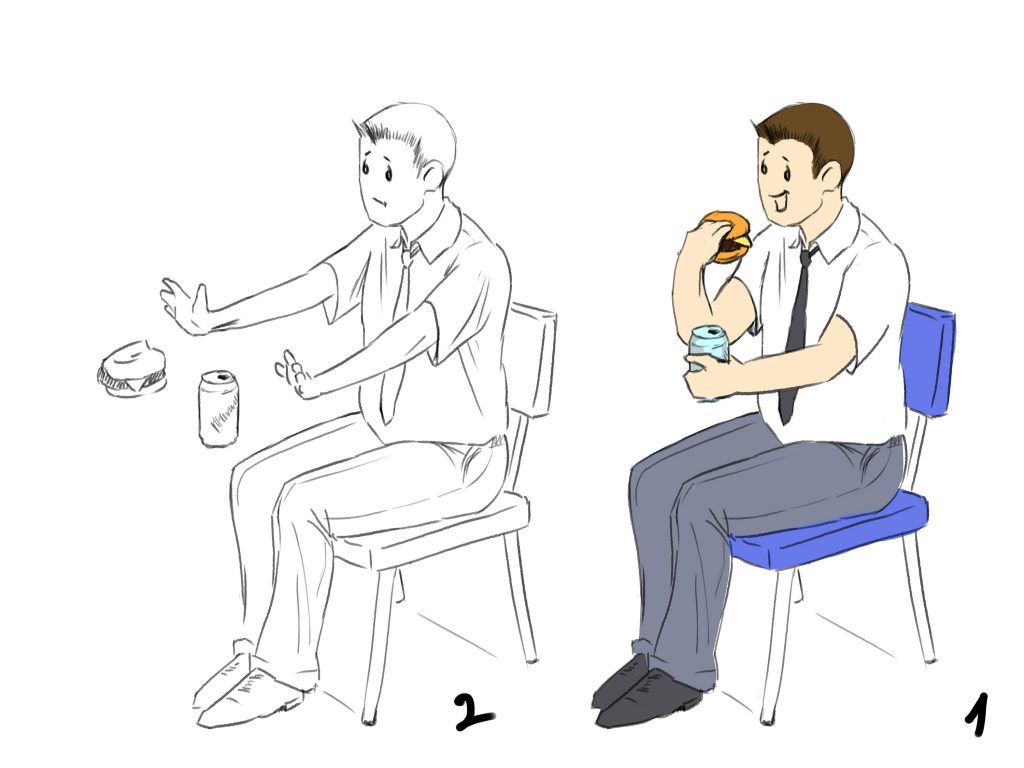
Stage 1. Notice the burger you are scoffing
Stage 2 put the burger down
The abusive thought behind stage 1 & 2 really is unnecessary. You can get good strong abs and still eat crap, you probably won’t be able to see them though. Although eating crap per se is bad for you.
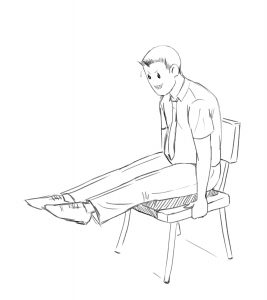
Stage 3 grab the edge of the health and safety checked chair and push your ass off the seat, Notice how your bum is behind your hands. Find a balance. Practice for a few weeks (less if its easy)
Stage 4 Build on stage 3 , then stick one of your legs in front of you.Yikes. It’s hard for some, not so for others. You are lucky or you are not. Practice this and stage 5 together. One leg, then the other. Feel free to cry. Everyone likes people who can express emotional weakness
Stage 5, is the other leg!
Stage 6. Hurrah, both legs out “purleez”
Stage 1-6 can be almost instant or its 6 weeks worth of work.
Then you can do it on the floor with paralletts
Then you start your disgusting journey to 2 minutes!
You’ll love the abs you get, the core control, and of course you’ll be calm and stress free!
Get L sitting, like you were born to it. It will soon become easy ( this is a lie: it will always suck. If you have Abs of steel,I can always put weight on your feet)
This is nastily crafted as yesterday you had the push up grind. Today you will really want to drive your hips on the push press and you’ll probably want more of a sprawl on the burpee.
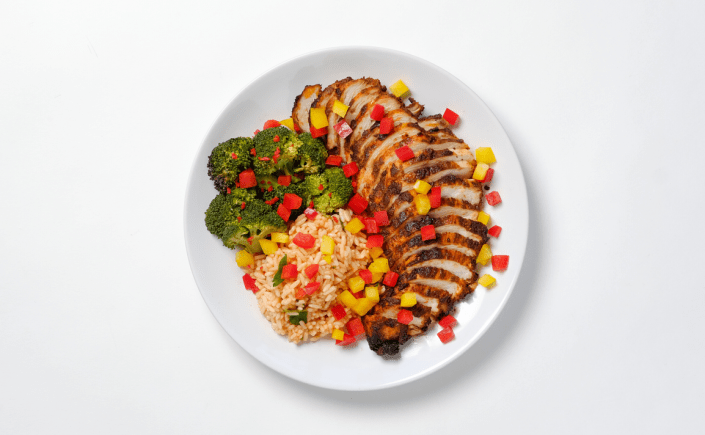
Mix all of the ingredients together, making sure the chicken is completely coated.
Place the chicken onto a tray, place the tray into the preheated oven.
Cook the chicken for 20-25 minutes, or until the chicken is cooked the whole way through leave to rest for 5-10 minutes then slice into thin 0.5cm slices.
Roasted Broccoli Ingredients
1 head broccoli
1tbsp smoked paprika
2 cloves garlic
splash of olive oil
Method
Take the florets off the broccoli, slice the bottom off the stalk, cut into 1/4’s lengthwise then slice into 1/2 – 1 inch cubes.
Mix all ingredients together then place onto a tray and cook in an oven for 15 minutes at 200c.
Zesty Rice Ingredients
100g white rice
300g water
2 limes, zested and juiced
small bunch of coriander sliced.
Method
Place the rice into a pan and pour over the water.
Bring up to the boil, leave to boil for 2-3 minutes then cover the pan with a lid and turn off the heat.
After 10 minutes, fluff up the rice with a fork and mix through the lime and coriander.
If you want to try Fresh Fitness Food go here https://www.freshfitnessfood.com/ then use the discounts GABDOU10 for 10% off and GABDOU for £50 off your first order.
Have a great weekend, stay active, eat healthily, see you tomorrow, and join the mailing list
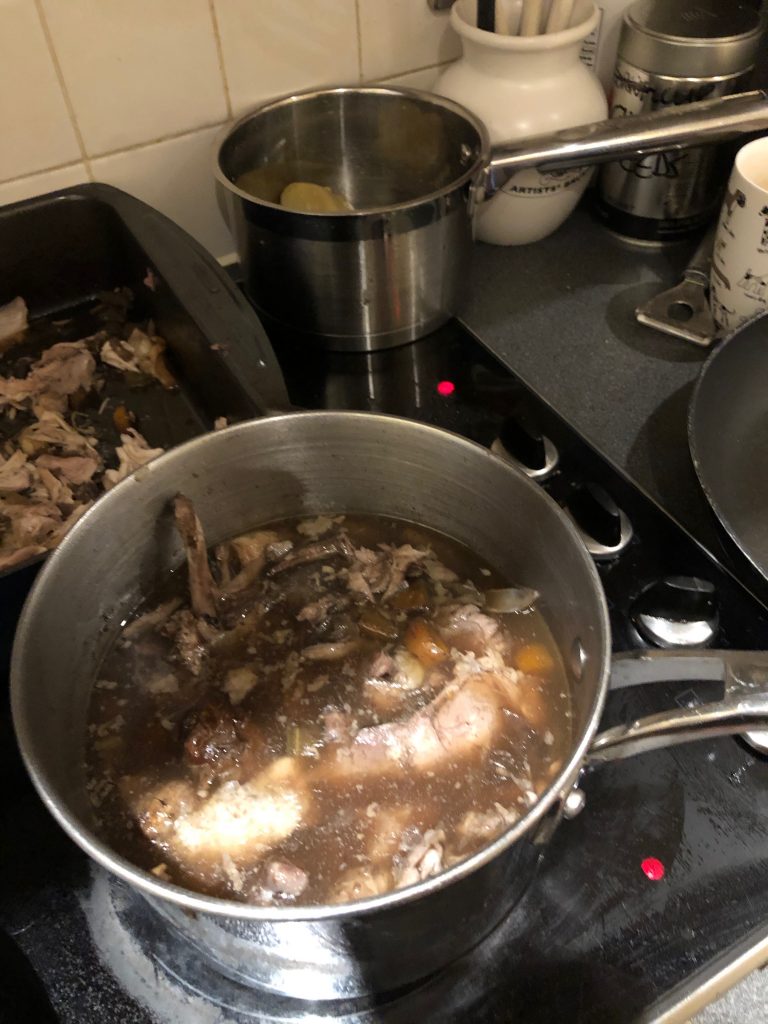
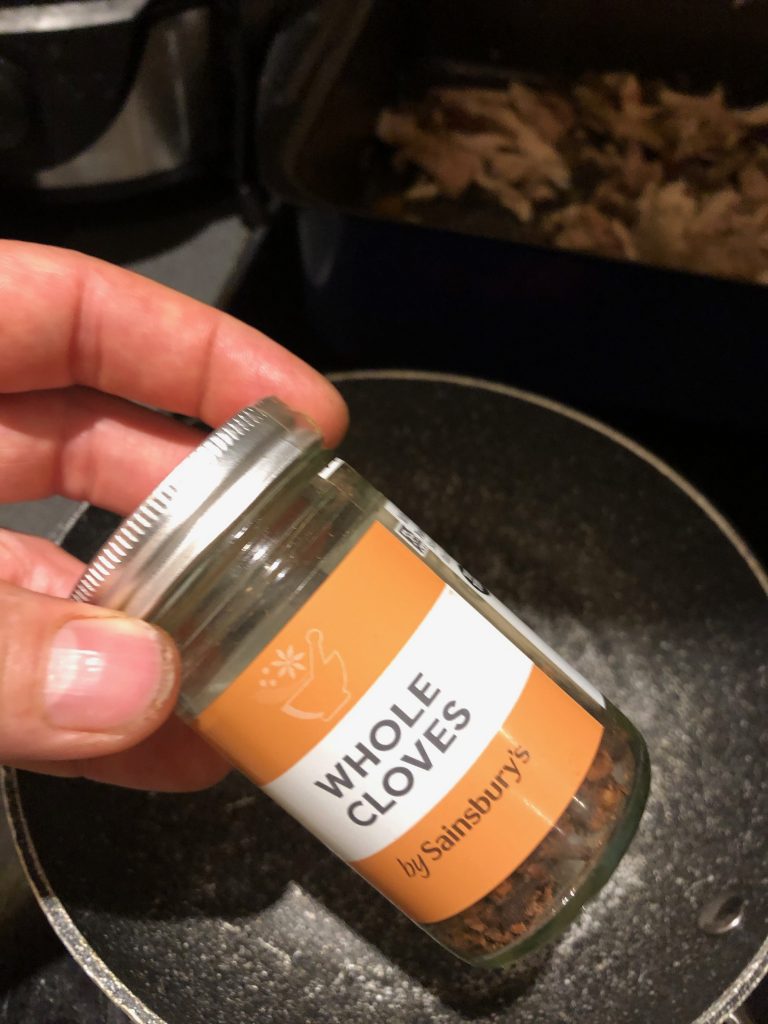
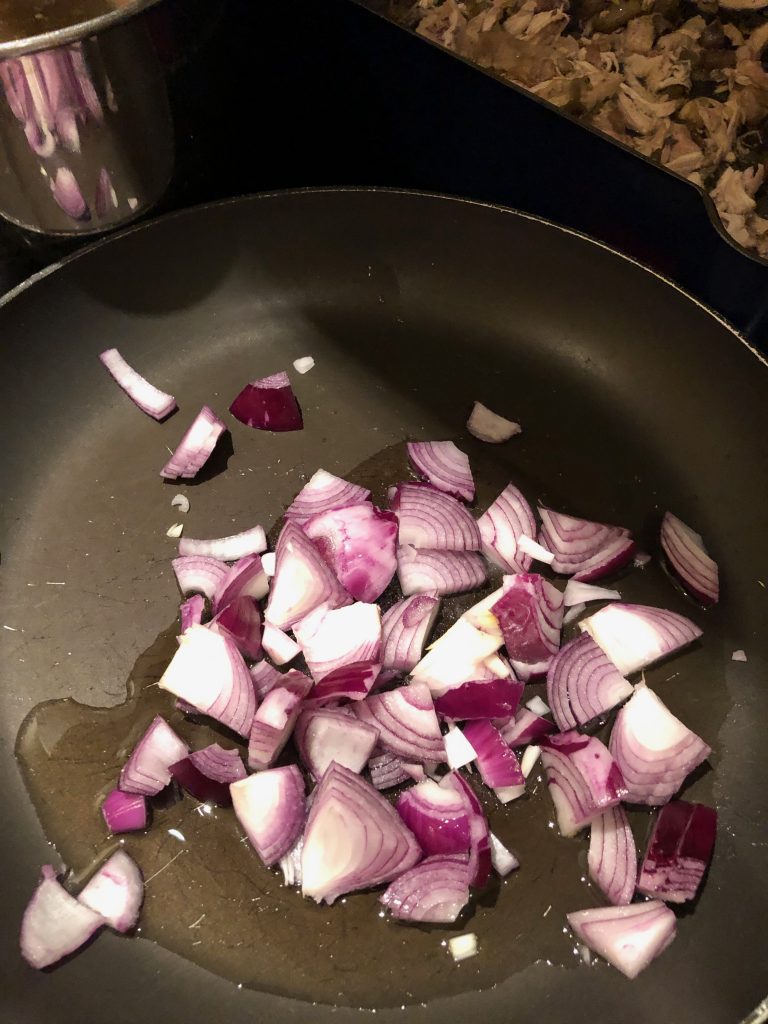
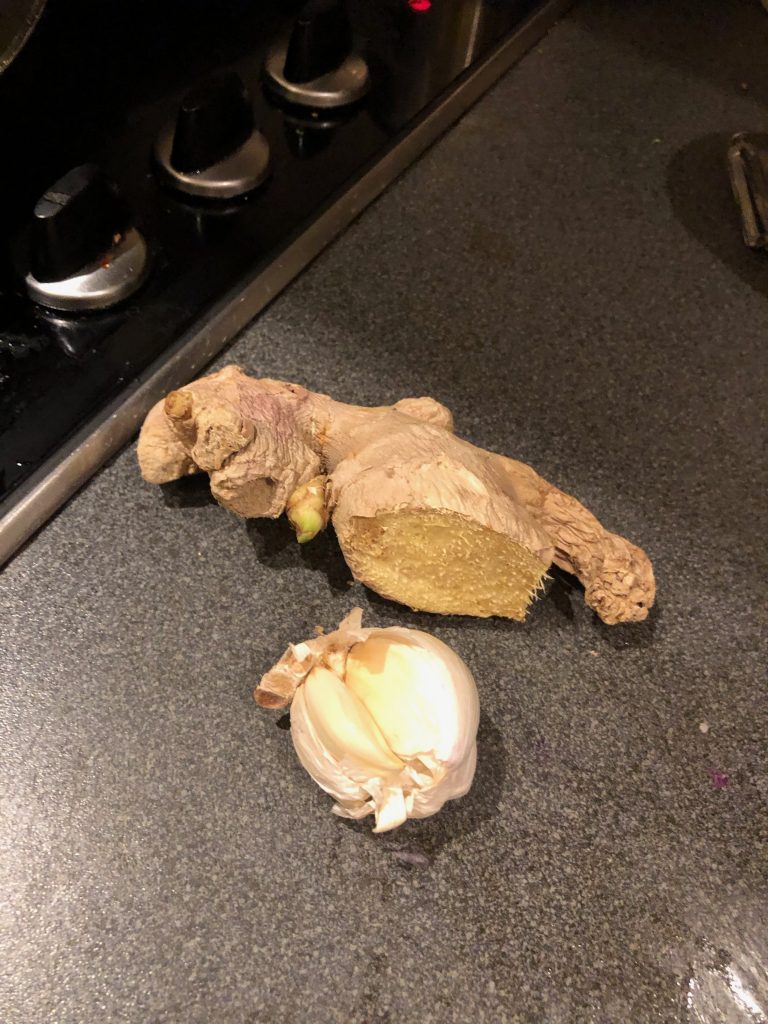
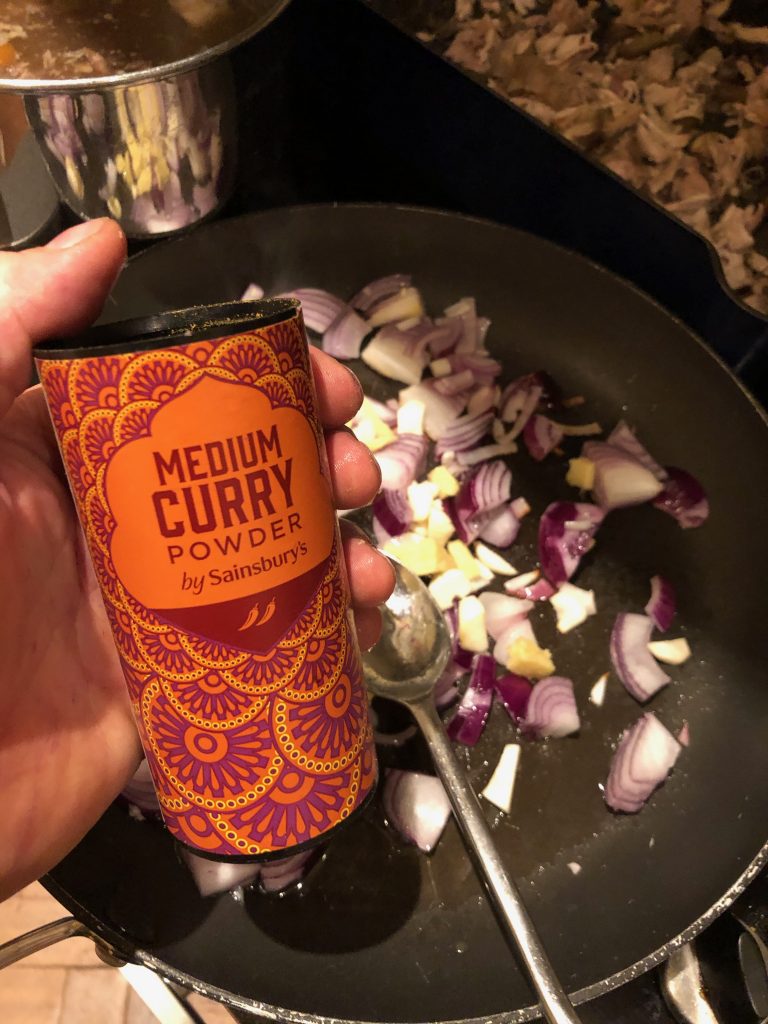
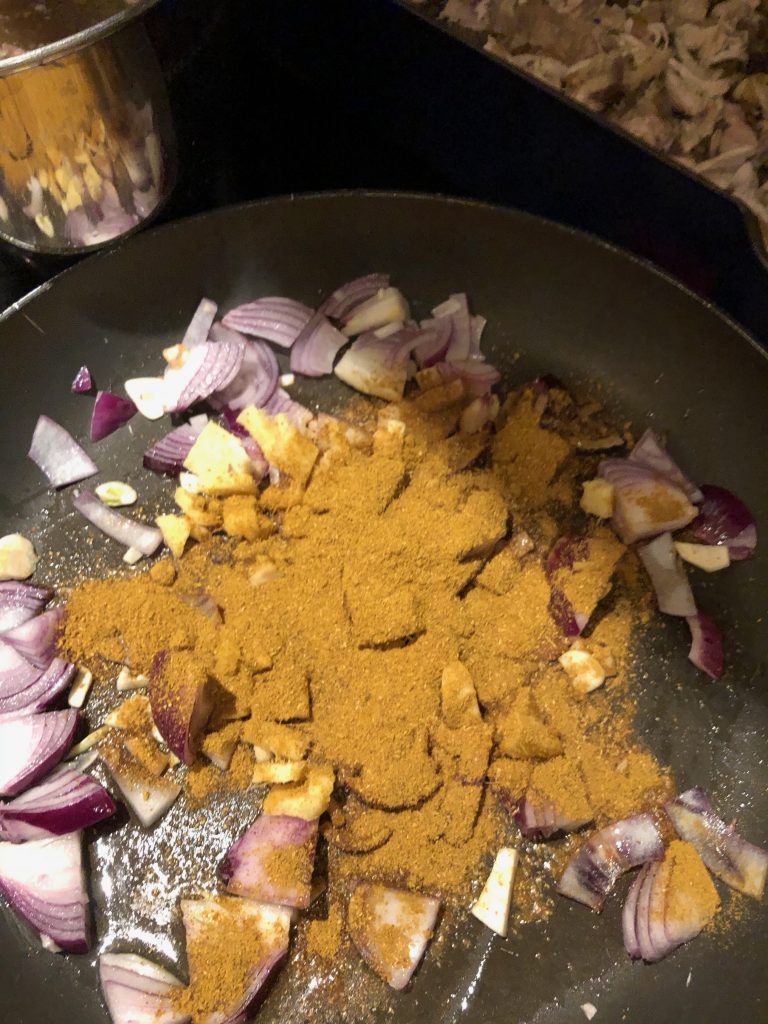
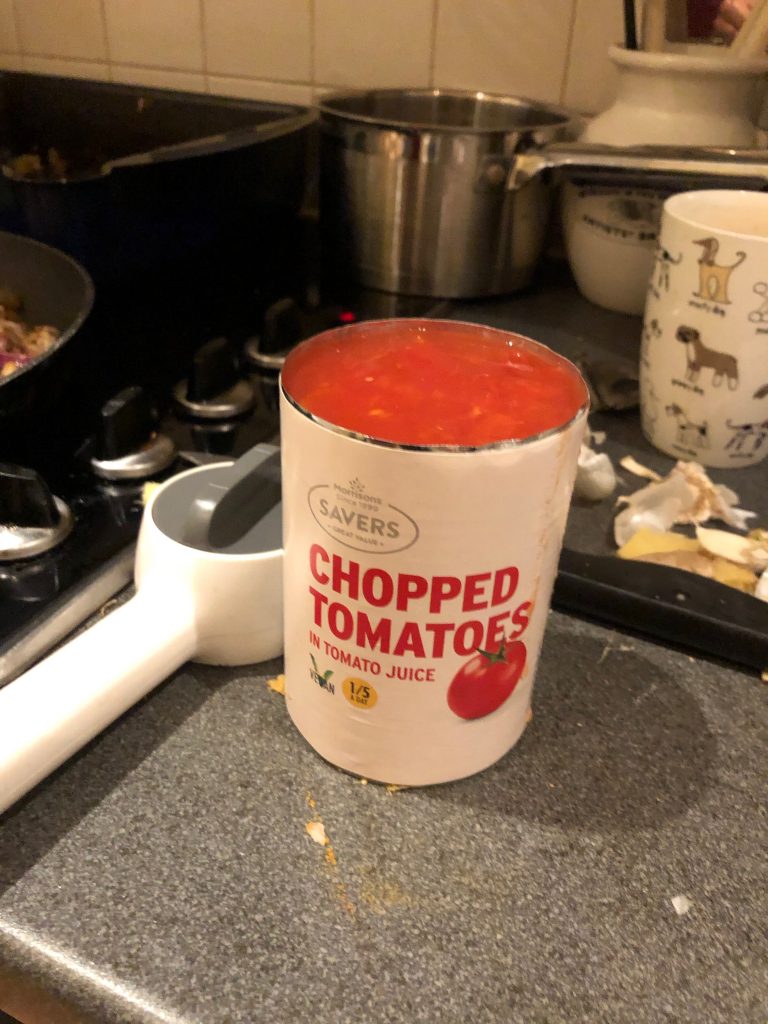
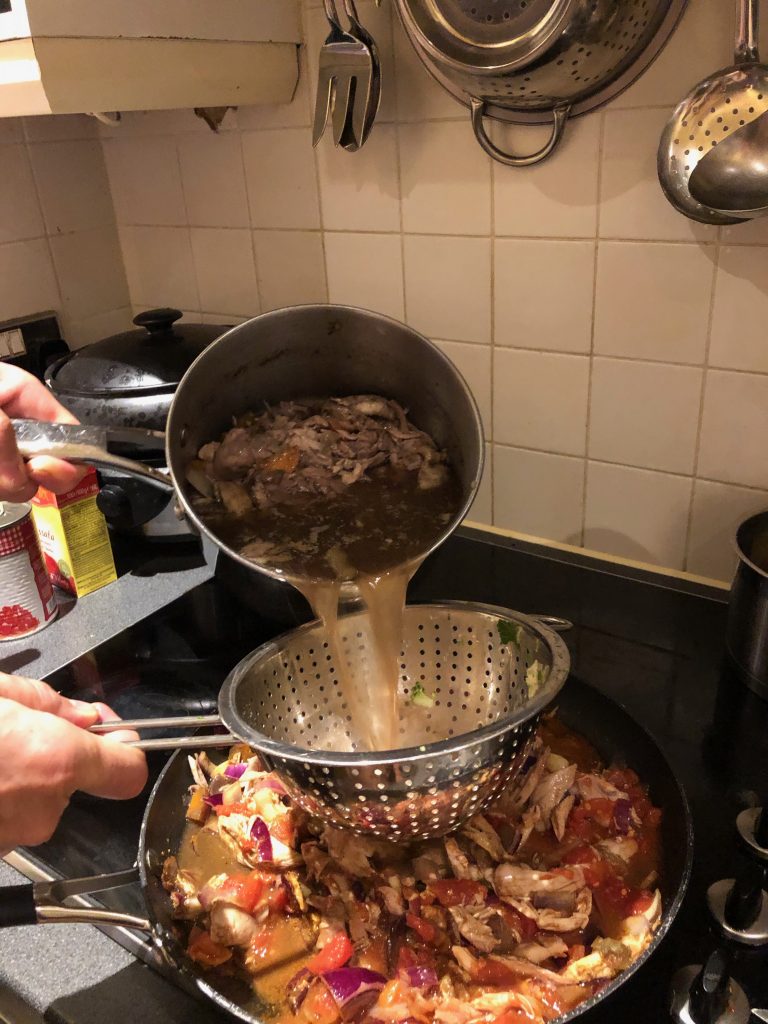
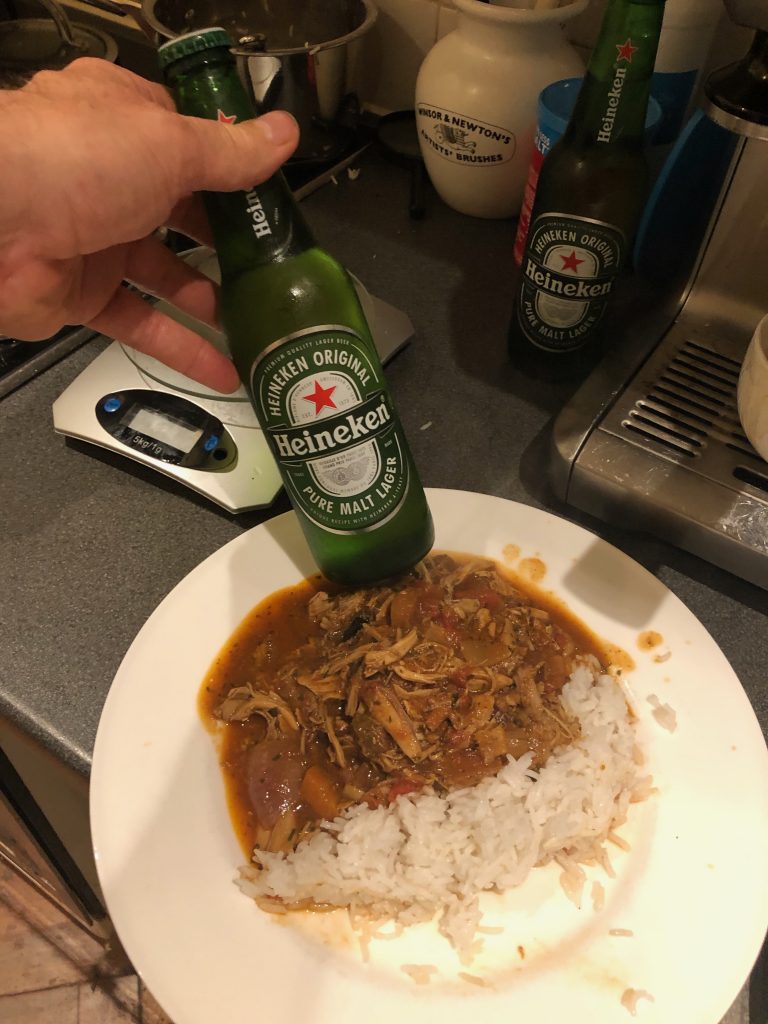
Here are some action picks from todays curry task. Everything you need to make a 4 block curry meal, with a bottle of beer.
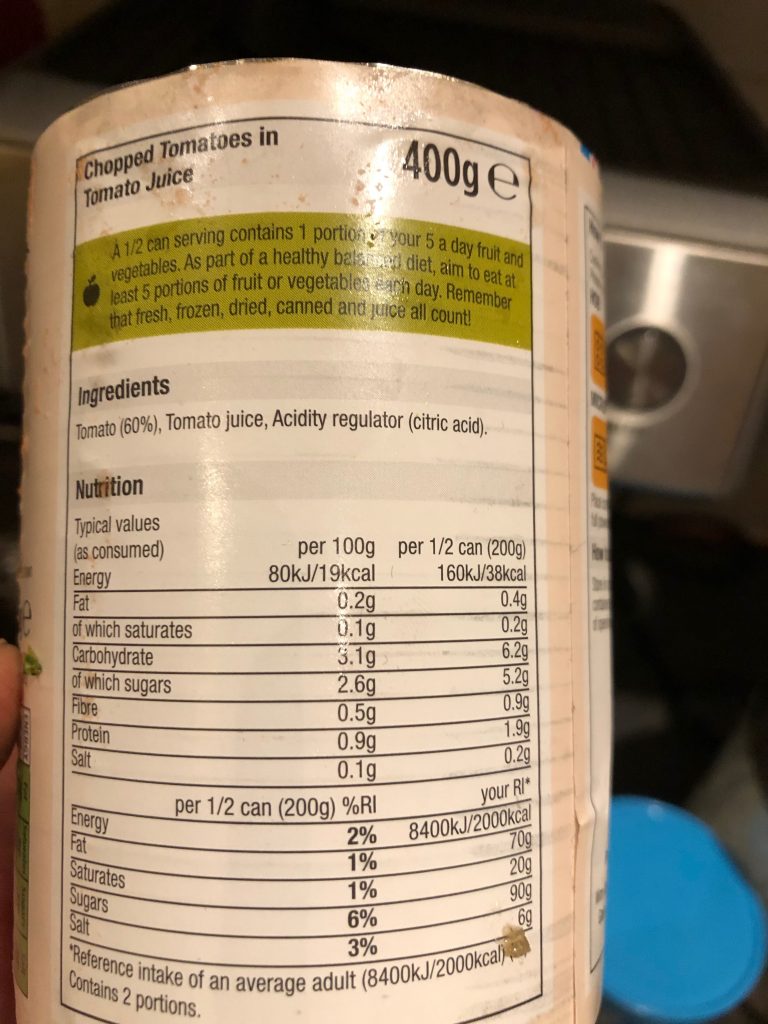
Using yesterdays pulled chicken and some stock made from the bones, it was chicken curry time. 93g of rice (3 blocks) 120 g of chicken (4 blocks) buried in a sauce of stock and tomatoes, plus tomato puree with onions, ginger, toasted and crushed cloves, coriander, garlic, curry powder and a bit of coconut milk powder.
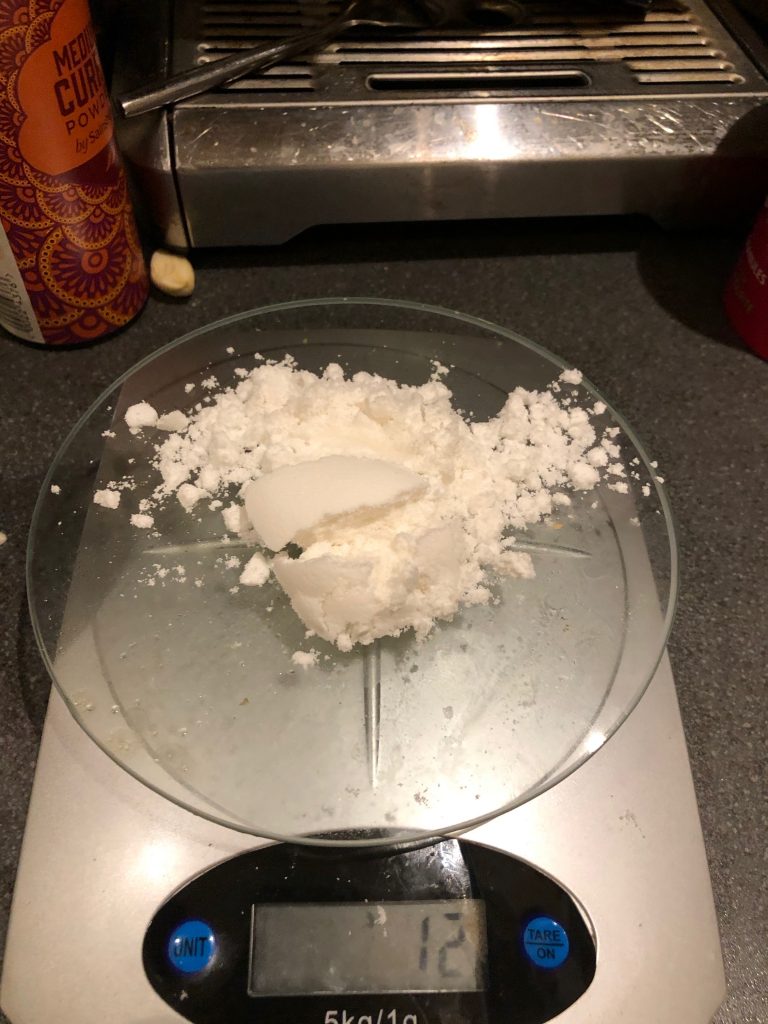
This sort of meant there was room for an extra 9g carb block (1 block). I sneaked in a beer at 12g of carb, so 3 g over But I knew I was going to do this so I slightly cut back a previous meal.
Nice, but I should have put a bit of chilli in. For me the ginger and clove is enough of a bit, but today it would have been better with a bit of chilli.
THE WORKOUT
An escalating ladder of 1 D/B snatch L&R, 1 push up, 5/10 V sit ups. Then 2 D/B snatch left/right, 2 push ups, 5/10 V sit ups ( 5 for kate, 10 for me.) The V sit up work stays the same each round) ( next round is 3 D/B 3 push ups)
As high up the ladder as you can as you can get in 13 minutes. Depending on the stimulus, you may want a light, medium or heavy dumbbell.
Effective exercise can generate powerful huge forces if they are initiated controlled and dominated by the hip.
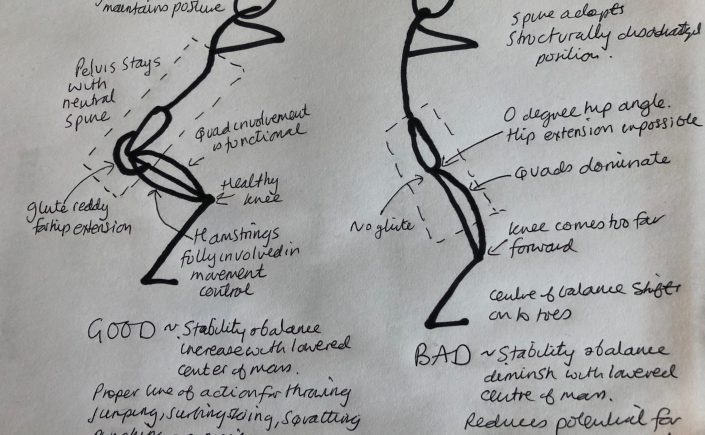
Many untrained athletes have a muted hip which creates postures and mechanics that reduce power output, promotes postures and mechanics that are considered by many to be unsound.
In simple terms the Muted Hip Function (MHF) results from the legs compensating for the failed of the hip, in effect using leg extension to compensate for non existent hip extension.
According to the Crossfit Journal the causes and consequences of MHF include but are not limited to:
• structurally disadvantaged spinal posture
• low glute recruitment
• low hamstring recruitment
• pelvis abandoning the spine and chasing the legs
• centre of gravity shifting dramatically backward
• centre of balance shifting toward toes
• knee experiencing unsound shear force
• leg extension being the only productive effort
• hip extension not being possible with low hip angle
• pelvis rotating the wrong way
The cure is deliberate and focused training. Thats why you probably need a trainer like me. Why not join the mailing list a get useful information
Lon Kilgore wrote in ‘The Paradox of the Aerobic Fitness Prescription” (Crossfit journal) that improvements in oxygen management could be driven by dropping Oxygen saturation during/after exercise. The logic of the General Adaption Syndrome (Seyle) requires an alarm phase to provoke adaptations.
“In the intermediate trainee and beyond, it is the depression of oxygen saturation as a result of interval training that forces the muscle to adapt to improve its ability to extract and consume oxygen to power exercise. Oxygen saturation is a marker of the specific driving force of VO2max gain*. If a beginner does long-slow-distance work and blood oxygen saturations drop 1% or less to 97%, this is enough to drive adaptation. But intermediate, advanced, and elite trainees need more. They need a drop in oxygen saturation to as low as 91%, maybe even lower for an elite athlete”
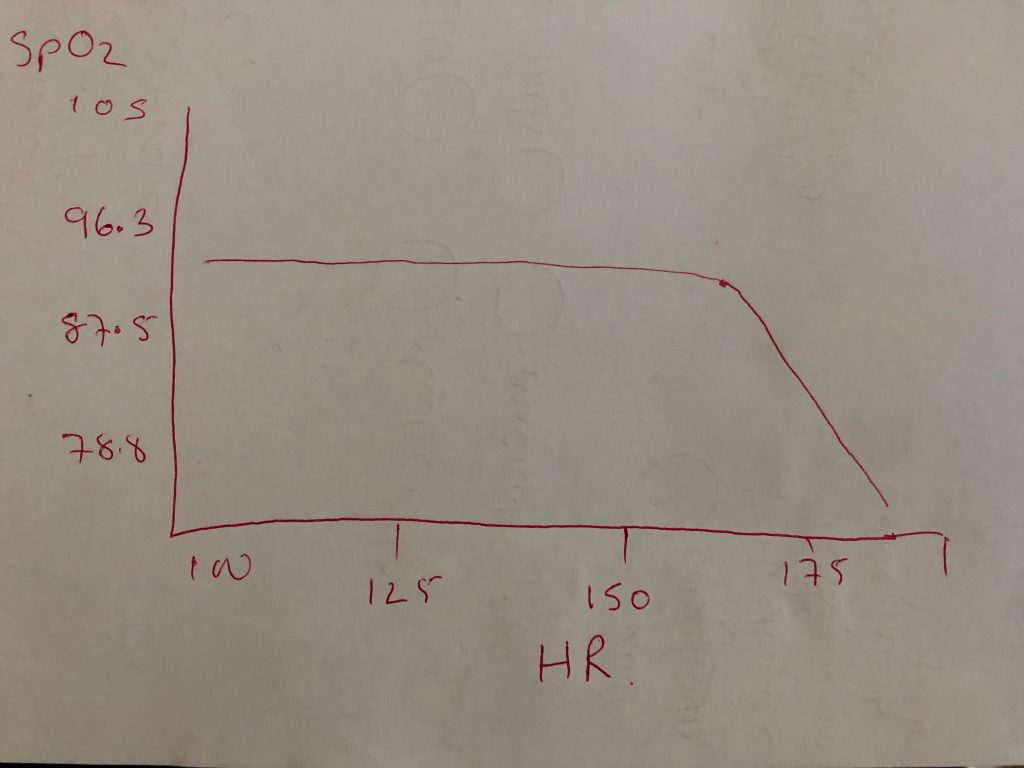
This observation was supported by David Lin et al who wrote “Oxygen saturations and heart rate during exercise performance” There is a fascinating write up here This basically showed that at a certain level of work, you can see a drop in O2 saturations
i
“SpO2% desaturations during maximal performance levels with power bursts into the clusters as revealed in this test could lead to measures of intense interval training providing an important augmentation to sports conditioning. “
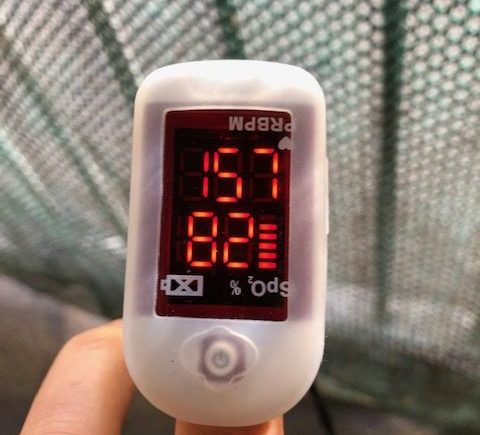
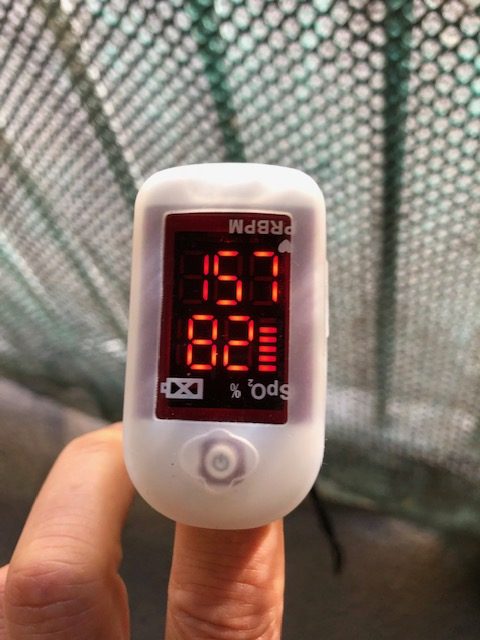
This mornings workout was a 15 minute AMRAP of 20 kettlebell swings, 15 double unders 150m sprint . I decided today, I’d take my pulse oximeter down. About half way through, straight after my double unders and during the run I managed to get my pulse ox on and this reading came up.
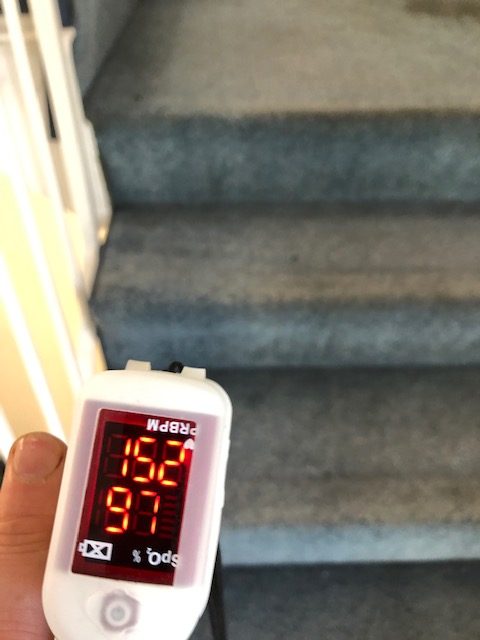
After a quick recovery our workouts always end with a disgusting stair climb to our flat ( to get home and haul the kettlebells back up) At the top it always feels as if you are going to die. As I reached the top I managed to get my pulse ox back on and whilst my heart rate was 160, my O2 saturations were 97. It took me a while to get my phone out so I only got a photo after my heart rate had dropped to 152
My take home conclusion is that the variation in a workout combined with power (in his case jumping in the double unders) really stresses the oxygen system. The requirement to rapidly change from one exercise to another takes the body by surprise and has it scrabbling around for oxygen like a pandemic government trying to buy PPE. BY comparison the rhythmic stair climb. which felt disgusting, and produced a highish heart rate, didn’t disturb my normal reading of 97%.
Obviously this is an old Pulse oxmimeter (new one here), this wasn’t a clinical environment ( no lab rats, no one had a clip board), but it was an in treating bit of citizen science!)
If you have never heard of it *According to wikipedia “Oxygen saturation is the fraction of oxygen-saturated hemoglobin relative to total hemoglobin (unsaturated + saturated) in the blood. The human body requires and regulates a very precise and specific balance of oxygen in the blood. Normal arterial blood oxygen saturation levels in humans are 95–100 percent”
For the normal person, you want to check that your O2 saturations are around 97 say, once every week or 2 weeks. When you get diagnosed with a breathing condition, your doctor will suggest to you that readings of 88-94 are acceptable. If you doctor has not told you, and you get O2 sats at rest of, say, below 90, its time to report that reading to your doctor and get them to run some more tests.
Amazon have a nice range of Pulse oximeters, and this one for £19.98 caught my eye ( as did Its qualification under the EU medical device scheme
To get more home monitoring and health ideas, do sign up for my newsletter!









 Andrew Stemler
