If the death of my father taught me one thing, its that regularly checking blood pressure is important !
A dirt cheap home blood pressure monitor helps you track your blood pressure and detect potential issues early.
Here are some specific reasons .
1. Early Detection of Hypertension: High blood pressure (hypertension) often has no symptoms but can lead to serious health problems, such as heart disease, stroke, and kidney damage. Regular monitoring helps catch it early. The problem is you can have hypertension without knowing. Well until its too late!
2. Prevent Complications: Uncontrolled blood pressure increases the risk of heart attack, stroke, and other life-threatening conditions. Monitoring helps manage and prevent these complications.
3. Track Medication Effectiveness: For individuals on blood pressure medication, regular checks ensure the treatment is working and adjustments can be made if necessary. Get yours here
4. Identify Lifestyle Impact: Tracking blood pressure helps evaluate how diet, exercise, stress management, and other lifestyle changes affect your health.
5. Monitor for Hypotension: Low blood pressure (hypotension) can also cause health issues like dizziness or fainting. Regular checks can detect and address this condition. a quality blood pressure monitor can be got from amazon for as little as £19.95
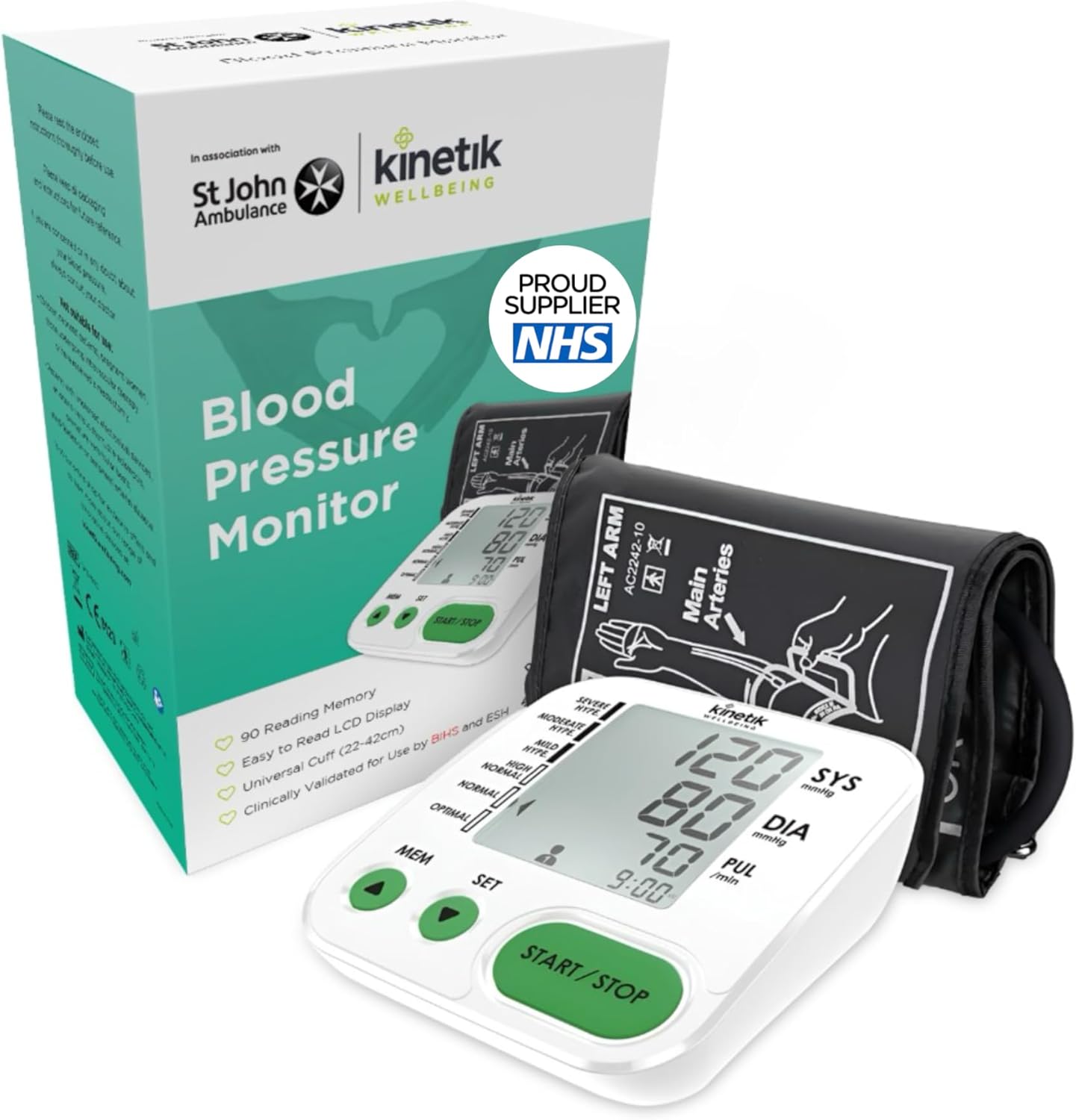
6. Family History of Hypertension: If, like me, you have a genetic predisposition to high blood pressure, regular monitoring is crucial to prevent complications. If I ever say my dad didn’t give me anything, call me out. He gave me Hypertension. However due to monitoring, controling my diet and exercise, my blood pressure is normally very healthy (about 100/60). And, I know because I have a well validated and accurate blood pressure monitor like this one
7. Aging: Blood pressure tends to increase with age, making regular checks essential for older adults. Lots of bad things can happen as you age, so its best to go into your 50’s, 60’s 70’s with lots of good stuff on your side
Blood pressure monitoring is often done when you can occassionally get to a doctors surgery. I think it needs regular monitoring. I now do mine twice a week. Initially, I monitored it every day as I found my blood pressure stupidly high. After some detective work, I found that things like coffee and salt really spike my blood pressure, so I now moderate my coffee and salt intake and my blood pressure is normally quite athletic.
I have an blood pressure monitor thats not available anymore, but the enxt time i get one, im buying the Kinetik Wellbeing Home Use Blood Pressure Monitor – Used by the NHS – Fully Automatic Upper Arm Blood Pressure Machine with Universal Cuff (22-42cm), Digital Sphygmomanometer Tester Kit. on Amazon here.
Its stupidly easy to use, and as you can see, its used by the NHS and recommended by the St John Ambulance
I recently wrote this outline of what I consider to be the most effective methods of helping people manage their weight.
The weight management industry is huge yet unregulated, and its advice is contradictory and confusing. I thought it ethical to clearly outline the strategy I will use to help you build the capacity in managing what you eat. You dont have to like all of this.
OBJECTIVE 1 Restore normal eating
The last 30 years have proven beyond doubt that simply manipulating food – be it by calorie counting, playing with macros, bingeing on a specific type of food, banning others and playing with time slots – has little lasting positive effect.Apart from not working, attempts to deploy starvation and deprivation methods merely result in disordered eating.Stop dieting and start eating normally. Basically, that means the plate method. A highly validated, effective nutritious method harking back to the “good old days” of “meat and two veg”
Objective 2 :Master your mind
Most people have no idea how to master their own minds. Our thinking is wrong, we do not recognise the influence our bad habits have, are often too inflexible in our approach to life, and have little to no idea as to how to change our behaviour.Our aim – using cutting-edge business, elite sport, and combat techniques – is to put you in control of your mindDon’t commit to goals, commit to processes.Treat goals with contempt. Goals are about the results you want to achieve. Systems are the processes that lead to those results.Goals are fine for the general direction of travel, but systems give you progress. Problems arise when you use your energy to focus on your goals rather than perfecting your system. Every sports person, and competitor wants to win. The winners are those who optimise their system.
Goals destroy your happiness. Your belief that joy and success appear only when your goal is achieved means you are never happy. Instead of tormenting yourself with goals, fall in love with the process.Goals are at odds with long-term processes. If you have a specific goal, what happens when you reach it? The purpose of setting goals is to win. The process of building systems is to continue playing the game.Setting up your system and processes is not a euphoria moment where you revel in positivity. Effective plans anticipate the barriers you may encounter and help you plan in advance about solving them. Otherwise, you can fall at the first fence. These barriers are known as inflection points. We help you imagine unpleasant situations in advance and write out a plan for responding. This strategy isn’t speculation, it’s taken from the Starbucks playbook. This is how willpower becomes a habit. By choosing a response to an issue in advance, that becomes the behaviour when that inflection point arises.
Objective 3 Build Better Habits.
We get you to understand habits. We guide you to identify the bad or unhelpful habits you’ve acquired, and how to transform them into better, more helpful habits. It’s certainly unhelpful to harangue people with generic exhortations to “meditate,” or “drink water”.Increasingly research has shown that those struggling with weight management often have certain habits in common. The more flexible you become in your daily life, the easier it is to manage what you eat.
Objective 4 Understand Will power
.For years people have been made to feel like failures when their willpower faded and their diet collapsed. It was thought that willpower was a skill to be learned, like riding a bike. This is a useful analogy. If you ride your bike on Monday, you don’t expect to be unable to ride it on Tuesday. So, if you have the skill to eat healthily on Monday, then Tuesday should be a breeze! We now view willpower as a muscle that needs both exercise and practice, but can equally end in failure. Willpower is a finite resource that needs to be managed. We will help you build your willpower.Some find the concept of willpower unhelpful, so we also explore the idea of “grit”. To make you more “gritty” we need to engage your interest, develop your ability to practice, discover your real (higher) purpose and build your hope. Researchers like Angela Duckworth have popularised and validated this approach.Little winsLittle wins have been shown to be crucial in redesigning how you think and feel about situations. By using simple daily tasks, we will get you some early successes.The underpinning theme is to help you find out how the mind works.We support you in studying powerful mind management models that can help you become a more happy, confident, healthier, and more successful person. We will help you understand the struggles that happen within your mind and know how to apply this insight to every area of your life. You have to changeTo manage your weight, you must change. At a fundamental level, you need to change your beliefs and values. This may sound drastic, but as the British cycling team found out, change is successful when made in 1% increments.
Objective 5. RECONNECT WITH YOUR EMOTIONS. Practicing healthy eating, building better habits, and understanding your mind is helpful. It’s also found that building your emotional resilience is equally important. However, secure within our relative wealth and comfort, much of our lives to date have ignored the need to attend to our emotional health. The overused phrase “How do you feel?” Is hackneyed, but the question remains essential. If you follow the work of Julie M Simon, you may quickly trace many issues as being created by a failure to manage your emotions. In its simplest form, people need to recognise, identify and accept their emotions.Once this is done, you can move forward to finding a solution.Emotions are too often either ignored or discounted. In other words, you are taught to ignore your emotional state. What can you do? You still have the emotions, you still feel them, fear sadness, and anger (more choice here!).How do you deal with them? You haven’t been taught how to cope with emotions so you need to soothe yourself. The number one choice of self-medication is food, although later on it could be drugs, booze, or pornography. Every time you feel joy, sadness, happiness, or failure, you go straight to food. Essentially, food becomes the only thing that means you can control your emotions. Where does this get you? If you cannot identify or control your emotions, then realistically you cannot control your food. It seems that food is the only thing that keeps you sane. For years you have used it to smother emotions, so it makes sense that you won’t allow it to be restricted or measured. If you do restrict, then it makes sense that you’ll binge later on during the day.Our program guides you through the emotional maze and helps you reconnect with your emotions, dealing with them in a better way than binging on cake
Objective 6 . Understand Trauma. One of the last pieces of the puzzle is trauma. Today this is an overused word. In this program, we use it to describe a “failed freeze” response.In simple terms, if you are attacked, most people think you have two options: fight or flight. Actually, you have four: fight, flight, a search for social support, or “the freeze” response. On a primal level, predators don’t like eating “dead meat”, so often creatures that freeze stand a higher chance of escaping. The mouse feigns death while the cat is staring, but when the cat loses interest the mouse runs like hell! The full freeze response is freeze THEN run.You may not have experienced a war zone or been mugged in the street; but what if your boss walks up and shouts at you, and you sit there and take it? Once your madcap boss wanders off, if you stay put, the chances are that you are accumulating micro traumas.. You froze, but you didn’t run. This leaves you feeling very unsafe. You do not need to be shot in a war zone to feel trauma (more here). Using drills developed for the military, our program gets to restore the safety you need and teaches you how to stop it from happening again.
It’s super important for you to understand how you feel. Once you can identify your feelings you can accept them, and offer yourself unconditional acceptance.
Often people get really stuck? How do you feel?
Gosh, where do you start?
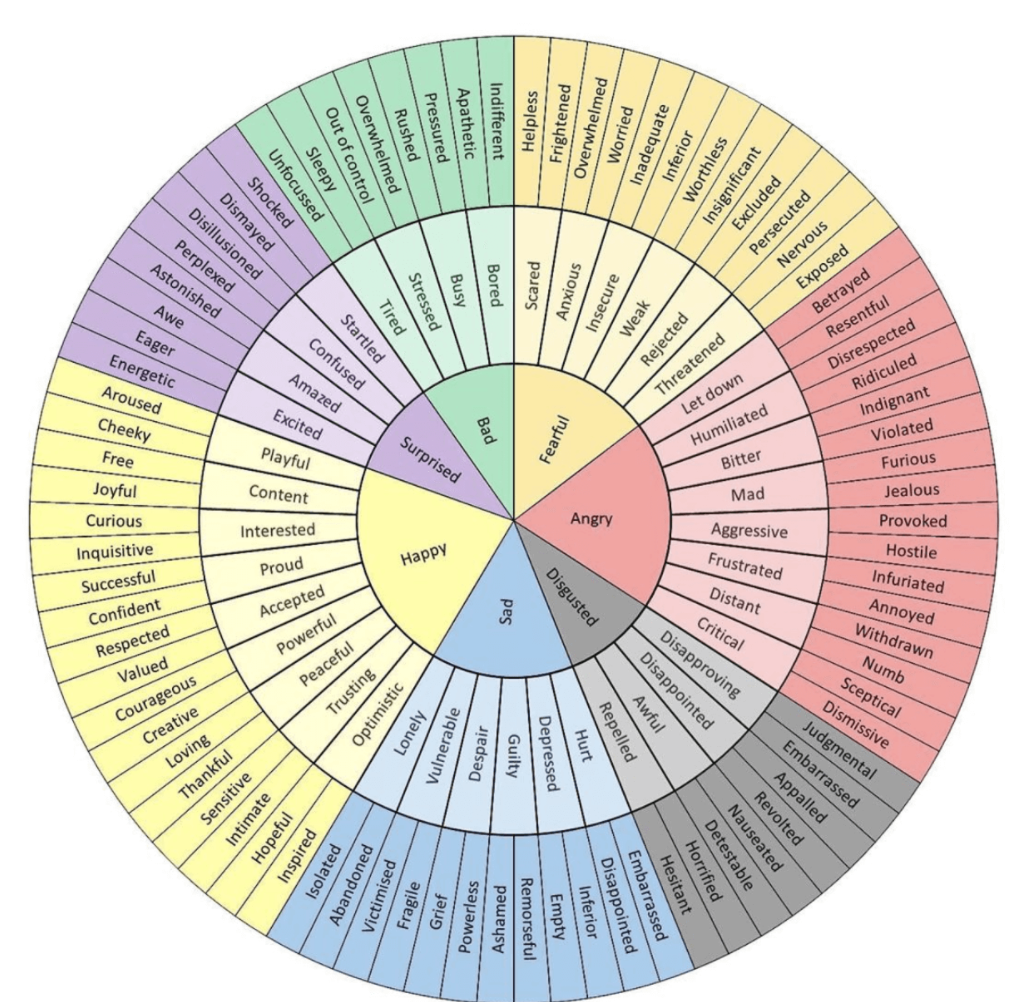
Its often a good idea to use a chart, or list as a prompt.
There are many useful lists to choose from. Plutchik, Aristotle and Darwin have all produced emotions lists. This is a useful chart from wikimedia
If you study the chart you’ll see that its very possible to have more than one emotional feeling at any one time. you can be sad, lonely and disappointed, all at the same time.
Most dysfunctional behaviour probably comes from trauma, we normally associated trauma with great big awful stuff. However, it seems that it can also accumulate over time. No one considers that the rage, rejection and blame that children are subjected to amounts to trauma
Maybe trauma is the wrong word, maybe its core issues or core wounds. Maybe it’s as classic as the death of a thousand cuts
It seems that numerous petty wounds, accumulated over time can begin to disconnect you from your emotions. Julie Simons in The emotional Eaters Repair Manual gives the following examples of the stuff that you could be subjected to as a child that could have effects later on.
Abandonment: a caregiver dies or is so overworked that they are “not available.
Attack: your caregiver attacks you (everything from a wack to constant aggression, threats, or ridicule
Betrayal: your caregiver lies or makes empty promises.
Blame, you were blamed for the feelings and actions of others
Deceived: you were intentionally misled.
Neglected: simple neglect of your physical and emotional needs
Domination: excessively controlled
Engulfment: you were smothered
Exploitation. You were made to do excessive and age-inappropriate chores
Fragmentation: your caregiver was mentally ill.
parentification. you were made to be responsible for others.
Rejection: dismissed as useless or worthless.
Shame: regularly criticized.
Violation: invasion of your space.
But what could be the mechanism or process? Why would having to do extra chores or get a slap on the back of your legs mean you are unable to control certain aspects of your behavior when you are older?
As a small person, your job is to learn lots of stuff, verbs, going to the toilet, and setting fire to things. You also should learn how to manage your emotions. The correct process of looking after your emotional health is to understand how you feel, then accept those feelings as appropriate, and then make sure you have enough emotional resources to support going forward. Once you have this process, you can move quickly to technical solutions.
However, if you are brought up by idiots, no one asks you how you are. Your emotions are either ignored or discounted. In other words, you are taught to ignore your emotional state. As a child, what do you do? You still have the emotions. You still feel them, fear sadness, and anger (more choice here!).
How do you deal with them? You haven’t been taught how to cope with emotions so you need to soothe yourself. The number one choice of self-medication is food (although later on, it could be drugs, booze, or pornography). Every time you feel joy, sadness, happiness, or failure, you go straight to food. Basically, food becomes the only thing that means you can control your emotions. Where does this get you? It means that realistically you cannot control your food. Food is the only thing that keeps you sane. for years you have used it to push down emotions so it makes sense that you won’t allow it to be restricted or measured. If you do restrict it makes sense that you’ll binge later on during the day.
The Minnesota Experiment on the Biology of Human Starvation was carried out 1944/45 . It remains the most ethically justified study of experimental semi-starvation to date.
The recently release film (documentary) the Game Changers has brought “meat free” protein sources back to the top of the nutritional agenda. It seems you no longer need to be a tree hugging hippy to see if you can get your protein from none meat sources.
For years there has been a grumble of bad PR about red meat and processed meat, although some dispute that meat has any down side.
That said, its now worth while noting the growth of this concern about the constant consumption of meat both from a health and environmental cost perspective . So it’s as well to experiment with plant protein and at the very least, least mix it up a bit.
The fact that James Cameron, Arnold Schwarzenegger and Jackie Chan all got together to support a film that promotes ” more veggie” is in itself worth noting.
So here is an outline of some useful veggie sources of protein. (BTW a CUP is a specific measure)
Green Peas. One cup is about 8 grams of protein. I love peas.
Quinoa. 8 gm a cup! Includes all nine essential amino acids . Ive never tried it. I must!
Beans. Two cups of kidney beans, for example, contain about 26 grams. But buying them and soaking them is a bit of bind, so buy them in can form!
Tempeh and Tofu. Ive never liked these. I always though soya was a genetically modified alien that stuck to your face, laid eggs in your tummy that exploded through your abdomen. I could be wrong. Allegedly contains about 15 and 20 grams of protein per half cup. But, I must try again.
Edamame: Soya as god intended. Boiled edamame contains 8.4 grams of protein per half cup. Must try it. Having written that, Im already anxious.
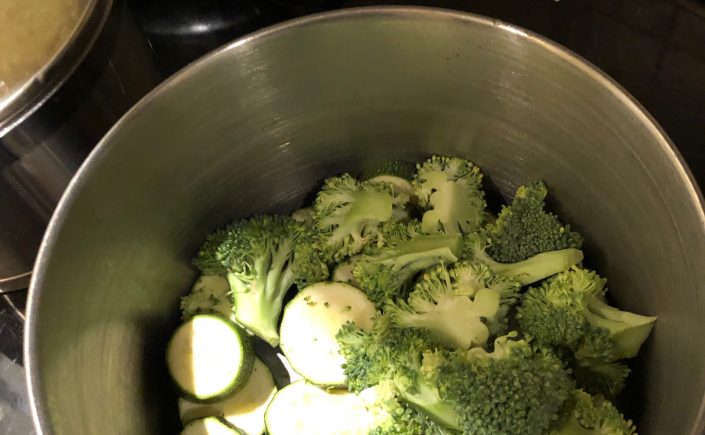
Leafy greens cabbage and stuff. I love these, but Ive never really thought of them as a protein source. Allegedly two cups of raw spinach contain 2.1 grams of protein, and one cup of chopped broccoli contains 8.1 grams.
Hemp seeds. If you can resist planting them out under high pressure sodium lights to make drugs,10 grams of protein in 3 tablespoons.
Chia seeds. 4.7 grams in 2 tablespoons. But really ” TWO TABLESPOONS”. Thats a lot to hide
Sesame, sunflower and poppy seeds. Throw these in your earth saving muesli volume, sunflower seed 7.3 grams of protein per quarter cups. Sesame seeds and poppy seeds ( per 1/4 cup) at 5.4 grams each.
Seitan. Never tried it, seen it, or heard about it until now ( 2019 really is my year)!!. But basically, it’s a wheat gluten. So whilst middle class folk are swooning from gluten intolerance, the hippies are chowing down on it. 75gms of protein in 100 gms.
Chick peas 7.3 grams of protein in just half a cup, and are also high in fiber and low in calories.





 Andrew Stemler
