Breath-holding can improve cardiovascular fitness through several physiological mechanisms. Here’s how it works:
1. Increased Oxygen Efficiency:
During breath-holding, your body has to manage the available oxygen more efficiently. Over time, this can lead to improved oxygen utilization by tissues, particularly muscles. This adaptation can improve your overall endurance and cardiovascular efficiency, as your body becomes better at using oxygen during physical activity.
2. Stronger Respiratory Muscles:
Holding your breath challenges your respiratory muscles, including the diaphragm and intercostal muscles. These muscles need to work harder to maintain lung capacity and control the release of air. Strengthening these muscles contributes to better breathing efficiency during exercise, which is crucial for cardiovascular fitness.
3. Increased CO2 Tolerance:
Breath-holding increases the levels of carbon dioxide (CO2) in the blood. This buildup can enhance your body’s tolerance to CO2, which is beneficial during intense physical activities where CO2 levels rise. A higher tolerance can delay the onset of breathlessness, allowing you to sustain exercise longer.
4. Enhanced Blood Circulation:
The temporary cessation of breathing increases blood pressure as your body responds to the lack of oxygen and buildup of CO2. This can lead to improved blood circulation as your cardiovascular system adapts to these conditions. Over time, this can improve the efficiency of your heart and blood vessels, contributing to better cardiovascular health.
5. Stimulation of the Parasympathetic Nervous System:
Controlled breath-holding activates the parasympathetic nervous system, which helps to lower heart rate and promote relaxation. This practice can lead to a more balanced autonomic nervous system, where your body can more effectively switch between states of rest and activity. A well-balanced nervous system supports overall cardiovascular health by maintaining healthy heart rhythms and reducing stress on the heart.
6. Improved Mental Focus and Stress Management:
Breath-holding exercises often require mental discipline and focus, which can help reduce stress. Lower stress levels can lead to lower blood pressure and reduced strain on the cardiovascular system, contributing to better overall heart health.
By regularly practicing controlled breath-holding exercises, such as those found in certain yoga practices or free diving training, you can gradually improve these aspects of cardiovascular fitness. However, it’s essential to approach breath-holding exercises cautiously and progressively to avoid risks such as dizziness, blackouts, or other potential dangers, especially if done unsupervised or without proper training.
On an increasing basis you’ll see portable pull up bars being erected in public places with a ”can you hang for 90 seconds? ”challenge
Often there is a prize involved , but the task is made harder as the bar ( on the versions I’ve seen ) spins a bit making holding onto it rather hard .
Whilst I’ll talk about coping with the spin in another article , I thought it would be best to build up your hang ability on a normal bar .
Hopefully this 6 week training schedule will be helpful. It assumes you can hang for 45 seconds.
• Day 1: Hang for 45 seconds, rest for 1 minute, repeat 3 times. • Day 3: Hang for 50 seconds, rest for 1 minute, repeat 3 times. • Day 5: Hang for 55 seconds, rest for 1 minute, repeat 3 times. • Day 7: Rest
Week 3: Day 1: Hang for 60 seconds, rest for 1 minute, repeat 3 times. • Day 3: Hang for 65 seconds, rest for 1 minute, repeat 3 times. • Day 5: Hang for 70 seconds, rest for 1 minute, repeat 3 times. • Day 7: Rest.
Week 4:• Day 1: Hang for 75 seconds, rest for 1 minute, repeat 3 times. • Day 3: Hang for 80 seconds, rest for 1 minute, repeat 3 times. • Day 5: Hang for 85 seconds, rest for 1 minute, repeat 3 times. • Day 7: Rest.
Week 5:• Day 1: Hang for 85 seconds, rest for 1 minute, repeat 3 times. • Day 3: Hang for 88 seconds, rest for 1 minute, repeat 3 times. • Day 5: Hang for 90 seconds, rest for 1 minute, repeat 3 times. • Day 7: Rest.
Week 6:• Day 1: Hang for 90 seconds, rest for 1 minute, repeat 3 times. • Day 3: Hang for 92 seconds, rest for 1 minute, repeat 3 times. • Day 5: Hang for 94 seconds, rest for 1 minute, repeat 3 times. • Day 7: Rest.
This program gradually increases the time you hang from the pull-up bar each week, allowing your muscles to adapt and get stronger.
Even if you don’t make the 90 seconds , hanging from a bar is really , really good for your shoulders ( unless your doctor has told you that you have exploding shoulders and will die if you use them )
There are hundreds and thousands of therapists and trainers, that, when confronted with your hurting hamstring or your terrorised tendon will simply dive in and rub that bit! Maybe they will give you a specific stretch and maybe a reassuring “There there, therapist kiss it better”
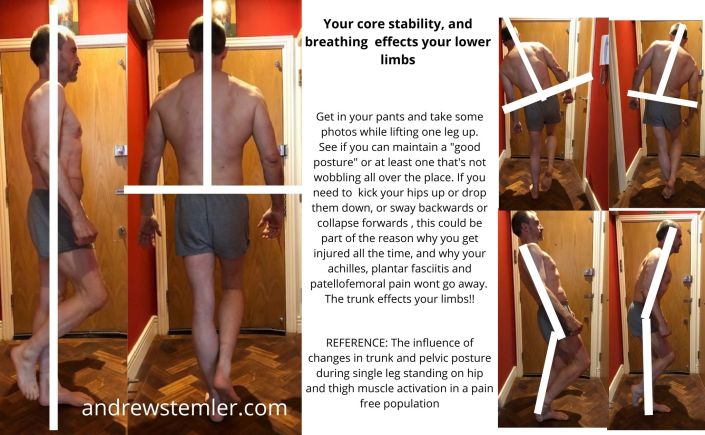
The reality is that your body is a global system and highly interrelated. Leg issues can be caused by core issues, how you chew your food can screw your knee!
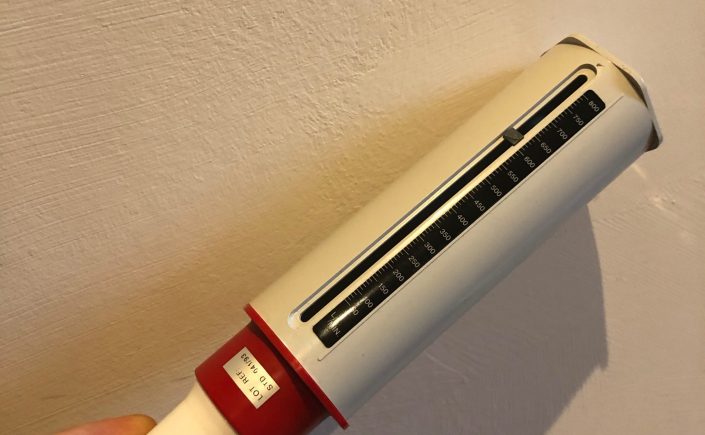
Before anyone starts criticising your breathing and setting you weird breathing exercises, make sure they have at the least taken a peak flow reading. This is where you puff down a tube and compare the reading with your height, so you can monitor your lung function. There are too many trainers hanging around who attended an online course and are now taping peoples mouths up while exercising with very little assessment of the science behind it.
Make sure they do some basic assessments first. The peak flow meter is one of those basic tests! You may need breathing drills.
We don’t assume that you have access to a pull up bar! But today we stayed in the flat because we have a pull up bar there (with rings on). We wanted to do a version of Cindy. The Crossfit workout of 5 pull ups, 10 push ups, 15 squats. AMRAP in 15 minutes (it should b 20 minutes, but Im 59, so I cut myself some slack now and then.)
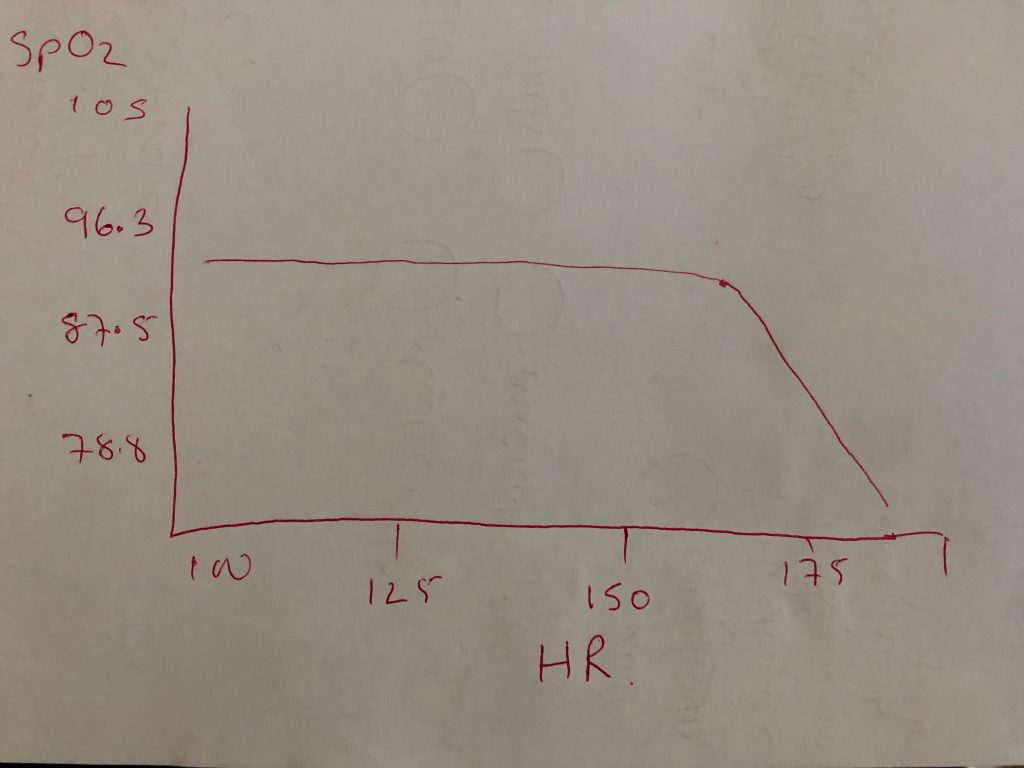
Lon Kilgore wrote in ‘The Paradox of the Aerobic Fitness Prescription” (Crossfit journal) that improvements in oxygen management could be driven by dropping Oxygen saturation during/after exercise. The logic of the General Adaption Syndrome (Seyle) requires an alarm phase to provoke adaptations.
“In the intermediate trainee and beyond, it is the depression of oxygen saturation as a result of interval training that forces the muscle to adapt to improve its ability to extract and consume oxygen to power exercise. Oxygen saturation is a marker of the specific driving force of VO2max gain*. If a beginner does long-slow-distance work and blood oxygen saturations drop 1% or less to 97%, this is enough to drive adaptation. But intermediate, advanced, and elite trainees need more. They need a drop in oxygen saturation to as low as 91%, maybe even lower for an elite athlete”
This observation was supported by David Lin et al who wrote “Oxygen saturations and heart rate during exercise performance” There is a fascinating write up here This basically showed that at a certain level of work, you can see a drop in O2 saturations
i
“SpO2% desaturations during maximal performance levels with power bursts into the clusters as revealed in this test could lead to measures of intense interval training providing an important augmentation to sports conditioning. “
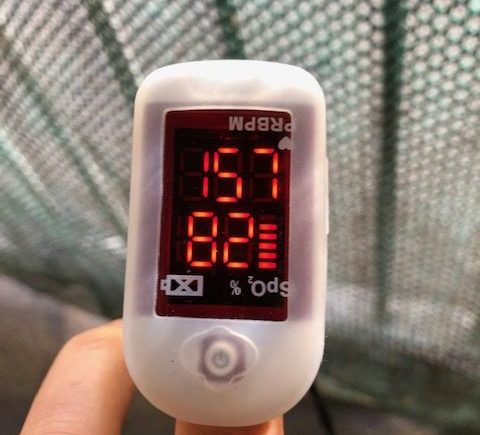
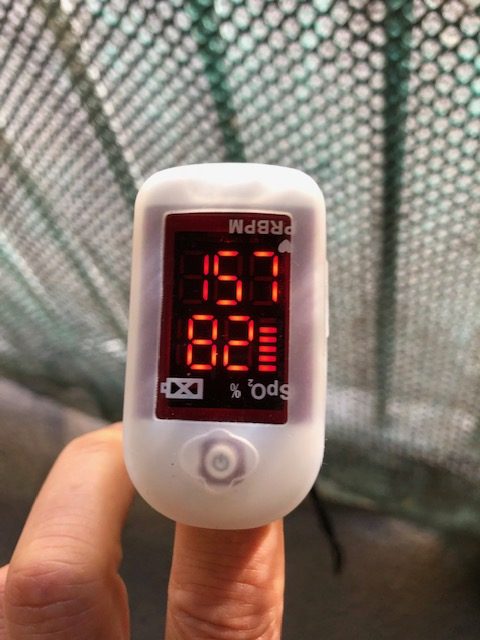
This mornings workout was a 15 minute AMRAP of 20 kettlebell swings, 15 double unders 150m sprint . I decided today, I’d take my pulse oximeter down. About half way through, straight after my double unders and during the run I managed to get my pulse ox on and this reading came up.
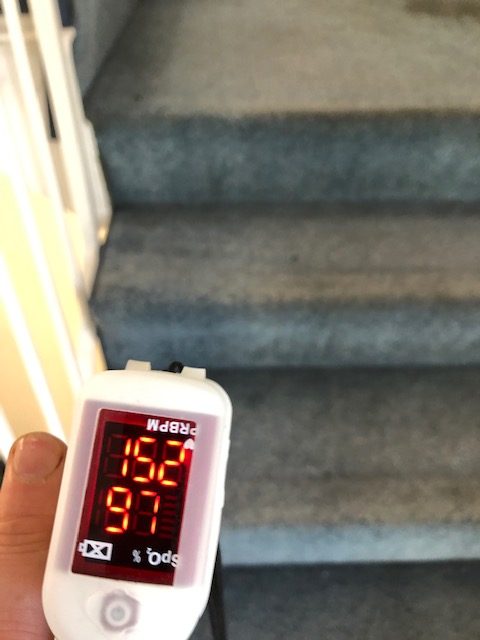
After a quick recovery our workouts always end with a disgusting stair climb to our flat ( to get home and haul the kettlebells back up) At the top it always feels as if you are going to die. As I reached the top I managed to get my pulse ox back on and whilst my heart rate was 160, my O2 saturations were 97. It took me a while to get my phone out so I only got a photo after my heart rate had dropped to 152
My take home conclusion is that the variation in a workout combined with power (in his case jumping in the double unders) really stresses the oxygen system. The requirement to rapidly change from one exercise to another takes the body by surprise and has it scrabbling around for oxygen like a pandemic government trying to buy PPE. BY comparison the rhythmic stair climb. which felt disgusting, and produced a highish heart rate, didn’t disturb my normal reading of 97%.
Obviously this is an old Pulse oxmimeter (new one here), this wasn’t a clinical environment ( no lab rats, no one had a clip board), but it was an in treating bit of citizen science!)
If you have never heard of it *According to wikipedia “Oxygen saturation is the fraction of oxygen-saturated hemoglobin relative to total hemoglobin (unsaturated + saturated) in the blood. The human body requires and regulates a very precise and specific balance of oxygen in the blood. Normal arterial blood oxygen saturation levels in humans are 95–100 percent”
For the normal person, you want to check that your O2 saturations are around 97 say, once every week or 2 weeks. When you get diagnosed with a breathing condition, your doctor will suggest to you that readings of 88-94 are acceptable. If you doctor has not told you, and you get O2 sats at rest of, say, below 90, its time to report that reading to your doctor and get them to run some more tests.
Amazon have a nice range of Pulse oximeters, and this one for £19.98 caught my eye ( as did Its qualification under the EU medical device scheme
To get more home monitoring and health ideas, do sign up for my newsletter!
Among a batch of reports studying the Crossfit method, you’ll find “physiological Predictors of Competition Performance athletes” by Martinez-Gomez et al worth a read ( or a quick skim).
In reality any attempt to predict an athletes performance in a specific wod is always a bit speculative as different wod’s can have massively different outputs and can focus on specific “modal domains”that can bring specialists to their knees. Wod’s can be as wide ranging as “run 5k” or “deadlift 1,1,1,1,1,1,1”.
Nevertheless this study took the 5 wods of the Crossfit Open in 2019 and evaluated the performance of 15 athletes who were also assessed against various laboratory tests: incremental load test for deep full squat and bench press; squat, countermovement and drop jump tests; and incremental running and Wingate tests. It would be a fairly safe bet to say that the athlete who scores high on all of these tests would also score highly in the Wod’s.
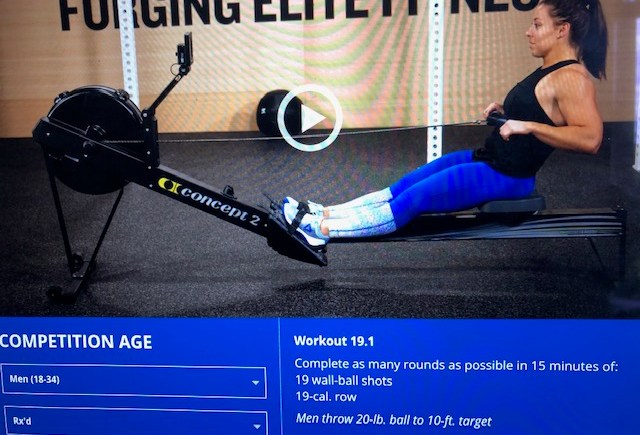
In 2019 the “open” wods were
19.1 Complete as many rounds as possible in 15 minutes of
19 wall-ball shots
19-cal. row
19.2 Beginning on an 8-minute clock, complete as many reps as possible of:
25 toes-to-bars
50 double-unders
15 squat cleans, 135 / 85 lb.
25 toes-to-bars
50 double-unders
13 squat cleans, 185 / 115 lb.
If completed before 8 minutes, add 4 minutes to the clock and proceed to:
25 toes-to-bars
50 double-unders
11 squat cleans, 225 / 145 lb.
If completed before 12 minutes, add 4 minutes to the clock and proceed to:
25 toes-to-bars
50 double-unders
9 squat cleans, 275 / 175 lb.
If completed before 16 minutes, add 4 minutes to the clock and proceed to:
25 toes-to-bars
50 double-unders
7 squat cleans, 315 / 205 lb.
19.3 For time:
200-ft. dumbbell overhead lunge
50 dumbbell box step-ups
50 strict handstand push-ups
200-ft. handstand walk
Men 50-lb. dumbbell / 24-in. box Women 35-lb. dumbbell / 20-in. box
19.4
For total time:
3 rounds of:
10 snatches
12 bar-facing burpees
Rest 3 minutes
Then, 3 rounds of:
10 bar muscle-ups
12 bar-facing burpees
Men 95 lb. Women 65 lb.
19.5
33-27-21-15-9 reps for time of:
Thrusters
Chest-to-bar pull-ups
Men 95 lb. Women 65 lb.
“CrossFit performance (i.e., final ranking considering the sum of all WODs, as assessed by number of repetitions, time spent in exercises or weight lifted) was significantly related to jump ability, mean and peak power output during the Wingate test, relative maximum strength for the deep full squat and the bench press, and maximum oxygen uptake (VO2max) and speed during the incremental test”. However the relationship varied depending on the wod analysed. No surprise there.
However, the authors by using “multiple linear regression analysis” suggest that the two crucial factors were lower body muscular power (especially jump ability) and VO2 max.
Maybe you like the idea of being a reality TV star, or you want to meet Ant Middleton, but lots of people want to get onto programmes like SAS: Who Dares Wins and Special forces Ultimate Hell Week. Some , even want to join the military!
Interest in military fitness regimes has also been stoked up by books such as “Can’t Hurt Me” by David Goggins and our relentless diet of war films.
Having been involved in the training of a few wannabe participants, chatted to a contestant who got a good way through the process, and having analysed the challenges, I thought it would be helpful to offer some general training and preparation advice.
I have a motto, stolen from an ancient greek warrior. In a crisis, you do not rise to the challenge, you sink to the level of your training. Success in these types of programs , and indeed success in applying for a position in the army, and their elite corps, requires you to be properly trained for the challenges you can anticipate.
Lower down in this article you find details of how military fitness testing goes, and the standards they expect. However, here is your take home message. To successfully survive one of these regimes, I say you need a good back ground in being “outdoors”. Do you love going for hikes in the rain and getting soaked. Do you know how to manage wet clothing. Are you ok with sleeping outside, and essentially are you ok with operating on limited sleep and getting up at 2, 3am and going for a run. Do you love camping. Would you turn down some super sex for a 10k run?
If your preparation only involves going to the gym, at sociable times, the chances are you’ll be screwed.
Let me rephrase this. You need to be able to put up with crap they don’t even have names for. Are you used to insect bites, going for a pooh in a bush, stinking and running in boots. Have you had blisters on your blisters, and can you work through the discomfort of a wet pant band working their way into your crotch.
Do you like the cold? Well you better like those morning cold showers and going out in all sorts of weather. On the plus side, getting used to the cold has benefits. A few years ago, “Thermal loading” was all the rage!
There is another type of training you should consider. It’s mindset. Doing a lot of mindset work would probably help; learning how to break big tasks into little task: it may be 4 am in the morning, you may have run 8 miles, you may be at the end of your tether but, maybe you can get to that tree thats 50m away. Ok, now let’s try that house 40m away. Not letting the enormity of the task overwhelm you is important.
This involves dealing with fear The science fiction fans amoung you will recall this monologue from Dune
“I must not fear. Fear is the mind-killer. Fear is the little-death that brings total obliteration. I will face my fear. I will permit it to pass over me and through me. And when it has gone past I will turn the inner eye to see its path. Where the fear has gone there will be nothing. Only I will remain.”
To be successful you probably need to distinguish the difference between fear and recognising danger. Fear is often described as False Evidence Appearing Real. Fear is an impractical emotion. Recognising danger and taking appropriate action is good. Being paralysed by fear isn’t.
Lord Moran, ( Winston Churchill’s physician, and a trench doctor in WW1) said “Courage is a moral quality; it is not a chance gift of nature like an aptitude for games. It is a cold choice between two alternatives, the fixed resolve not to quit; an act of renunciation which must be made not once but many times by the power of the will. Courage is willpower.” (The Anatomy of Courage).
This is part of working out how you think . Are you already looking for your excuse, or are you thinking, “I’m going to give this 100%”. Having a victim mentality can quickly bring your performance to an end. Combating a perfectionist mindset is also part of the magic. You’ll be slower and feel like you cannot succeed. Ignore that and just continue.
It’s worth remembering that 90% fail (the real) SAS selection, and most of these simply give up. The instructors rarely have to fail people.
The last thing you need to prepare for is lack of sleep. This is truly awful. Here are the consequences of not sleeping (Ref):
Humans can bear several days of continuous sleeplessness, but it screws everything. It may lead to deteriorated functioning, impaired perception, reducing concentration, vision disturbances, slower reactions, as well as lower capabilities and efficiency of task performance and to an increased number of errors.
It screws with your thinking which means wrong decisions, and emotional disturbances such as deteriorated interpersonal responses and increased aggressiveness.
Being woken up at 2 am to do a run or burpees is really, really awful. It is however a reality that soldiers at times need to operate in a sleep deprived state. There are some interesting tips and hints here but, it seems that you’ll need to set yourself some middle of the night exercise sessions. “Exposing soldiers to fatigue in a training environment teaches them how it affects them and their performance. Learning the consequences in a protected environment will help them identify the issues caused by sleep deprivation, so that they can know how deal with them before reaching combat. Likewise, understanding why you’re tired can help you power through the day”(National Sleep Foundation)
If you are from a farming background, you probably have some experience of sleep disturbing work like lambing, milking and chasing poachers. I knew a financial broker who got up to trade at 3am. I think after a few years he went a bit mad: but that could have been the drugs and the booze.
David Goggins, the navy seal, suggested an interesting task. It’s called a 4x4x48. In other words you go for a 4 mile run every 4 hours for 48 hours. That will give you a very good idea of what sleep deprivation feels like, although, I’d start at something like 2 x 4 x 12, and build up!
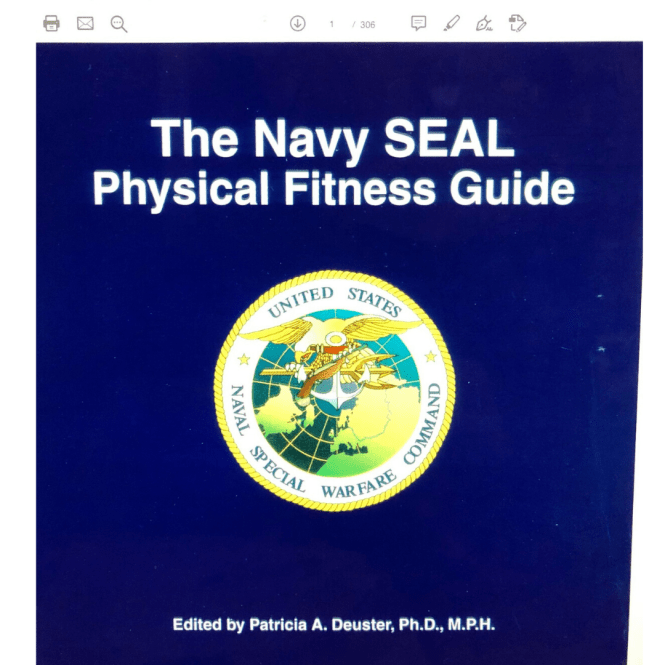
So, thats the background . What follows are the physical tests along with some official guidance from the military like this US Navy Seal training guide. Download and read it. Its free and useful
With these points in mind, you need to prepare for the actual standards. Either you have the knowledge to develop an effective training regime to master these, or you need a PT /or a coach
4km loaded march with 40kg within 50mins followed by 2km with 25kg in 15 mins (Infantry/RAC). The times allowed for 16 AAB/Paras are shortened to 35mins and 12.30mins respectively.
Fire and movement tactical bounds, followed by crawl and sprint ( 20 x 7.5 m bounds , or mini sprints. Then crawl 15m, sprint 15 m in 55 seconds
Casualty drag (110kg bag) dragged 20m in 55 seconds
Water can carry (simulates stretcher carry with 2 x 22kg cans) over 240 meters in 2 mins.
Vehicle casevac (70kg lift with 3-second hold)
Repeated lift & carry (20kg bags over distance) 20 x 30m in 14 minutes
I say you should not only be familiar with these challenges. You should do them, often, as part of your training. I think you should see these as the absolute minimum standards. Whilst I’m not sure, I’d prepare to do these tests with boots on.
The Royal Marines’ Pre-Joining Fitness Test allegedly involves completing two 2.4km runs on a treadmill that is set to a 2% incline. The first run must be completed in less than 12 minutes 30 seconds. You will then have a one-minute break before completing the second run in under 10 minutes and 30 seconds. This time is the absolute minimum requirement, and the expectation is that you will record the best time possible. You can use this chart to assess where you are
There are 4 body weight challenges. You should aim to ace them all. Why would you humiliate yourself on TV if you can only do 10 push ups if you know that 60 is the standard.
The VO2 Max bleep test (also known as the ‘bleep test’.) Minimum pass score is level 10.5. Shoot for the max!
Press ups are carried out immediately after the bleep test. A maximum score is achieved for 60 press-ups are conducted to an audible bleep (listen to the video below). Arms should be locked into side, shoulder width apart. The partner puts his fist on the floor facing away and counts one repetition for every time the chest touches his fist. If you put your knees onto the floor you will be told to stop.
Sit-ups come straight after the press-ups. 85 are needed for maximum points. Sit ups are conducted to an audible bleep. A partner holds the feet, elbows must touch top of knees and then the shoulders and elbows must touch the floor on the way down for a repetition to count. Knees must remain together or else reps will be deducted.
Pullups follow situps. A minimum of 3 are required to stay on the course but any less than 5 will be looked at critically and 16 will gain the maximum score. The over-grasp grip is used, the candidate is required to pull and hold the position until told to extend the arms; pull-ups are performed to the “bend” and “stretch” commands. The candidates chin must pass over the top of the bar to count and on the way down our body must be straight hanging down from the bar. Your legs must not cross. If the chin does not satisfactorily pass above the bar, or candidates cannot keep up with the commands, the candidate will be told to “drop off”.
The pool assessments include jumping off a high diving board (3m) in normal swimming kit and swimming a maximum of 4 lengths (approx 100m) of breast stroke followed by retrieving a brick from the bottom of the pool which is 3m deep. Train these skills. That brick retrival can be tricky. Learn to swim outdoors, in the cold, in clothes. For God sake have a life guard nearby. I think there are some outdoor swimming places like this one in the Royal docks in East London.
Other testing includes
The “Tarzan Assault Course” conducted up to 30 foot off the ground. Deal with your vertigo issues, or don’t apply!
The bottom field assault course which involves team games and other arduous physical activities.
An endurance course lasting 90 minutes and covering 2.5 miles undertaken on Woodbury Common
An over-night exercise which is intended to promote team building.
To train these, you’d better be a regular at your local Tough Mudder or Spartan Race. You need a t-shirt that says “I do love an obstacle race”. As I have said else where, if you don’t like getting wet, feeling cold, being woken up in the middle of the night, you really don’t want to apply for one of these programs, or the actual army for that matter. Familiarity with rope climbing and ab-sailing can probably be obtained at your local climbing centre. In the East End we have the Mile End Climbing wall
If you want to apply to be on SAS Who Dares Wins click here
If you are insane enough to want to do this, feel free to ask me for some in real life (if you are in the East End of London) or Online PT sessions.Click here





 Andrew Stemler