The romance of strength Training

Successful Strength training like marriage  is measured in years not  weeks or months

Pay attention to the basics . Lift often, lift heavy (5 plus, but vary from 5 to 1)  be happy with small increases. Every relationship or  “thing”  in your life requires consistency

Don’t panic if  you plateau.

In what other part of  (real) human existence  do we expect to have increases all the time . We can tamper with economics and pretend we have yearly growth:  some  NHS workers ( apparently ) get a  grade increase each year , but that always, always  unravels. “Maybe not today, maybe not tomorrow…….’

The hall marks of successful  strength training  (marriage) is patience and maturity: watch for the opportunity to improve but don’t obsess., be happy with consolidation,  treasure consistency and above all, be confident enough to rest and take it easy.

Eat well and sleep well

Bear in mind  that all advanced programming is dedicated to one phenomenon, failure.   Many marriages fail because one partner isn’t happy with the perfection they have, and instead   indulges in fantasy . Don’t let the strength porn of a few gifted ( psychotic) individuals deprave and corrupt your  normal image of how things are.

Failure is rushing at  fantasy  target too hard and fast.

Having preached consistency, it’s equally essential to mix it up and be creative. Add  and vary assistance exercises.

Variety has always been the spice of life   But variety is still just a spice. It makes the fundamentals seem a bit different that’s all. It still needs the fundamentals/

In short, don’t see strength as something geeky or the preserve of experts. See it as the perfect romance or marriage, demanding consistent loyalty commitment and work , along with romance and variation.

So to be successful, research how to be romantic and simply build it into your strength regime

The Stemler Bag

Self defence is a misunderstood subject.

 Self defence is a bundle of activities that you may on rare occasions be forced to use if you are unlawfully attacked or threatened . it’s not nice, it’s certainly not pretty

Self defence is not a sport, a martial art or a spiritual pursuit. It is not a pleasant restraint that you can use against an angry customer, a hysterical child or for that matter a slightly over amorous date.

It’s what you will do to someone who wants to rob,  beat,  rape and kill you.

Self defence begins with a thorough understanding of the law of self defence and a thorough appreciation of the human rights of others .

Self defence  also begins way before  any physical attack occurs. It relies on an effective scanning and awareness system. Most effective attacks take the victim by surprise. The attacker ” suddenly turned  nasty”  or “jumped out of no where”

There are a few courses that teach awareness : however, they lack the “Stemler bag” concept. It’s simply a sobering security visualisation.If you “Stemler Bag” properly, you will probably never have any type of physical confrontation

Imagine a see through bag stuffed full of cash. A lot of cash . Its yours. You can keep it, but you still have to do your normal week and carry it around with you, so its visible.

How would It change  your behaviour ? Would you take it to dark strange places where you are not familiar . Would you get drunk and take a snooze in a park. Would you willingly chat to strangers who wanted to ask where you alone? Did you have any martial arts experience ? Was the money bag a joke and where you being filmed.? Or, would you be a bit suspicious of absolute strangers approaching you and being weirdly friendly ? Would you listen out and notice if someone was following you  or would you listen to your i-pod instead? Would you  fumble for your keys while you put your bag down at your front door or would you have your keys ready to go. Maybe you would plan your journey, maybe you’d have a back up plan ?

I think it was James Coburn who said, ‘avoid arseholes and big egos, avoid places where arseholes and big egos hang out’. A good friend of mine, Geoff Thompson added ‘don’t be an arsehole and don’t have a big ego yourself’. It helps”

If you breach this Rule: you have screwed up: everything from here on is making the best out of the poor situation that you created!

If you are approached and a dialogue starts ( known as the interview), take up a small inconspicuous 45° stance place your lead hand in that all-important space between you and your antagonist to maintain a safe gap. This is called The fence. It gives you a degree of control without  alerting your  potential aggressor

Don’t let a potential attacker touch you at any time, The more weirdly friendly, the more deadly and dangerous

You will get scared. Its ok to be scared. The shaking leg, the swirling  tummy is your body gearing up for a fight. You may need that extra energy buzz

Try and talk your way out  If talking fails , it can you could try posturing.

Create a gap between you and your attacker by shoving the attacker hard on the chest. Once the gap has been secured “go crazy; shout, salivate, spread your arms, bulge your eyes and drop into single syllables” ( Geoff Thompson) This triggers the opponent’s flight response and often scares him into capitulation.

If that fails, one of 2 things happen: the language and the look of the attacker changes: their speech will become more and more limited, you’ll notice them scanning the area to see who could help you or be a witness , they will try and get super close the moment they close the gap, you are getting hit OR the attacker steams back in . Either way, after the shove, if they touch your fence for a second time, knock them out.

If that fails ( and you have really screwed up, we will teach  you an eye gouge, groin strike, so at least, on the way down, you do some damage).

Im always slipping the Bulgarian split squat in

Its impossible to run an effective programme without some consideration of  the work of  Mike Boyle and , for this article, the way he has popularised the Bulgarian Split (see here for his view point).

All it offers is better, stronger  bigger legs, but without back stress,  balance ,  hip flexibility, and a high level of safe training discomfort.

Marvellous

This will be making a regular , structured feature in most of my programmes Start practicing at home now  if you haven’t seen it before . It often features in our Metcon classes , but I know most of  our coaches sneak this into their training, so grab a PT session to get up to speed.

You’ll be grateful for  all that walking lunge practice you’ve had.  Pillow on the floor as a comfy knee target,   top of the rear foot on the sofa  and go!  Start off  with a lower rear surface if it helps, and “split”. If you need to revise for exams, while practicing, so be it. Do keep your torso upright if possible. Obviously an appropriate abdominal brace.

Get to 20 each side, 30 seconds rest between each leg, 2 minutes rest  then 2 more sets. Once you have  learned  this, we will be looking to load this .

The Bulgarian Lunge: apart from the fact that it isn’t a lunge and didn’t come from Bulgaria, its great.

Exercise-related transient abdominal pain” Opps, I’ve got a running stitch”

For those of you who enjoy a bit of science while suffering should read  MORTON, D. P., and R. CALLISTER. Characteristics and Etiology of exercise-related transient abdominal pain. Med. Sci. Sports Exerc., Vol. 32, No. 2, pp. 432-438. Is as good a place as any to begin to get up to date with what causes the stitch. Obviously you need to clarify what you are talking about . Its that sharp abdominal pain that some people get while being active. Not an aspect of needle work. (BTW ETP=  exercise-related transient abdominal pain)

This study issued a questionnaire to different types of sports people and asked them about the stitch ETAP appears to be most prevalent in activities that involve repetitive torso movement, whether ” vertical translation or longitudinal rotation”. Its normally  a local pain  mostly experienced in lumbar regions of the abdomen. Some  unlikely people also also experience “shoulder tip pain” (STP) too, famously known as the  diaphragmatic-referral  site, suggesting a miffed diaphragm

Note. No one has actually done anything in this report. They havent got runers, held them down and cut them open, or ultra sounded them, or poked them with sharp sticks. All they did was to ask some people if they have had it.  Thats not being a scientist, that being a pollster and a gossip

Conclusions:   This gives “perspective” to suggested etiologies of ETAP, which include diaphragmatic ischemia and stress on the visceral ligaments, and suggest we should be looking at other causes  such as cramp of the “musculature and irritation of the parietal peritoneum” ( who knew)

Interesting to note that the condition that is mostly associated with runners, is suffered through all sports. Its merely that runners whine more.

And the cure, after all this science?…. “factors that provoke and techniques that relieve ETAP, are not well understood” ( All that money, all those surveys, for this. Fu@%ers)

Several causes “theories”  make the rounds in gyms ;ischemia of the diaphragm and   stress on the visceral ligaments  have gained the most credibility. Im surprised my theory about irritated pixies hasn’t got more coverage. “Further examination of the characteristics of ETAP and the stimuli that provoke it may be beneficial for evaluating the integrity of these and other theories”. Oh, and guess what, more studies, funded by the tax payer is some secret roundabout sort of way, is needed. Oh yeh!

With my Therapist and Crossfit hat on, it was interesting to note that rotational movement through the torso played a part.  A lot of what we try and achieve  at Crossfit is to maintain a solid “core” which acts as an anchor for the limb to swirl about. We train you to use your legs to Deadlift, while keeping your  torso “locked down” Clinically we have noticed a tendency among aerobic athletes, when they come to us, to be unable to initiate a leg movement without a body movement. ( If they swing a leg it begins from the lower back, not the hip. load is lifted from the back, not the hip) in short, if every time you move you have to wiggle your core.

Thats a lot of additional movement for a biological box with lots of other stuff to do

Breath holding C02 and stuff

The problem , or joy, of fitness is that it often can, or should, take you back to those basic physics, chemistry and biology lessons you had at school.

When discussing aerobic and anaerobic fitness, these days, you’ll quickly come across the bohr effect, whether or not  you actually remember it. And you should.

The Bohr effect, according to wikipedia

increases the efficiency of oxygen transportation through the blood. After hemoglobin binds to oxygen in the lungs due to the high oxygen concentrations, the Bohr effect facilitates its release in the tissues, particularly those tissues in most need of oxygen. When a tissue’s metabolic rate increases, so does its carbon dioxide waste production. When released into the bloodstream, carbon dioxide forms bicarbonate and protons through the following reaction:

{\displaystyle {\ce {CO2 + H2O <=> H2CO3 <=> H+ + HCO3^-}}}{\displaystyle {\ce {CO2 + H2O <=> H2CO3 <=> H+ + HCO3^-}}}

Although this reaction usually proceeds very slowly, the enzyme carbonic anhydrase (which is present in red blood cells) drastically speeds up the conversion to bicarbonate and protons.[2] This causes the pH of the blood to decrease, which promotes the dissociation of oxygen from haemoglobin, and allows the surrounding tissues to obtain enough oxygen to meet their demands. In areas where oxygen concentration is high, such as the lungs, binding of oxygen causes haemoglobin to release protons, which recombine with bicarbonate to eliminate carbon dioxide during exhalation. These opposing protonation and deprotonation reactions occur at an equal rate, resulting in little overall change in blood pH.

The Bohr effect enables the body to adapt to changing conditions and makes it possible to supply extra oxygen to tissues that need it the most. For example, when muscles are undergoing strenuous activity, they require large amounts of oxygen to conduct cellular respiration, which generates CO2 (and therefore HCO3 and H+) as byproducts. These waste products lower the pH of the blood, which increases oxygen delivery to the active muscles. Carbon dioxide is not the only molecule that can trigger the Bohr effect. If muscle cells aren’t receiving enough oxygen for cellular respiration, they resort to lactic acid fermentation, which releases lactic acid as a byproduct. This increases the acidity of the blood far more than CO2 alone, which reflects the cells’ even greater need for oxygen. In fact, under anaerobic conditions, muscles generate lactic acid so quickly that pH of the blood passing through the muscles will drop to around 7.2, which causes haemoglobin to begin releasing roughly 10% more oxygen.[2]

The net result of this is an increasing interest in the management and training of Co2 tolerance.  as according to Conscious breathing.com CO2  has many important functions

  • AntibacterialA study at the Karolinska Institute in Sweden showed that the growth of staphylococci was 1,000 times higher when the bacteria were exposed to normal air for 24 hours, compared with exposure to air saturated with 100 percent CO2.
  • Increased oxygenation. Carbon dioxide forces the oxygen to leave the blood so it can enter into our muscles and organs and be of use. This is called the Bohr effect, ( you see, it was worth reading that paragraph)
  • Widens smooth muscles. CO2 has a widening and relaxing effect on our smooth muscles. These muscles are found in our blood vessels, stomach, intestines, bladder, and womb can’t be controlled by our will.

Naturally the alternative health market claims loads of extra things: increased CO2 tolerance cleans the skin, cures cancer, boosts digestion, cures/prevents dementia, builds your bones, blah, blah, so  this  accounts for the focus on breathing in witchcraft , various religions and yoga,

However, wild claims aside, Who knew. the hippies were right.

So to start you off, here is an interesting totally safe way to start, its called  4 count breathing. Simply inhale to a count of four, hold for a count of four, exhale for a count of four, and hold with empty lungs for a count of four. and build up the time you do this. Free diving had introduced many more periodisation types of  breathing exercises but you need to be cautious when doing them especially if you are competitive and inclined to try and hold you breath for 3 minutes out of the blue,  ” cause i heard that was a good figure”

Obviously, I’ll guide you through  effective  breathing and  help you build up your C02 tolerance


contact Andrew@crossfitlondonuk.com

Small cafes should publish calorie content of their food

According to todays telly, there are moves a foot to make small cafes and  food bars publish  (or display) the  calorie value of the food they serve.

To my surprise , the story wasn’t “about time” it was”poor small traders who will go bankrupt because they  have to workout the calorie value of the food they serve”

The poor dears.

I’d suggest that if you have a decent menu range , think old fashioned greasy spoon cafe, it could take,  maybe 2 hours to knock up this info. The reality is, if you don’t know the calorie value of the food you serve, maybe, you shouldn’t be dishing it up.

There are hundreds of easy to use calorie calculating resources.

We know we have an obesity crisis. We need to start dealing with it.


Milk: all trainers should have a position!

It seems that for some, milk is the spunk of the devil.

For me, as an old trainer ( 58) milk is what Margaret Thatcher took away from us primary children ( and with it, my early role as class milk monitor)

But, all my life I’ve been told that milk is good for you.  Its a core component of nutrition. But it’s so often attacked, I thought I’d do this research.

I looked up

Milk and dairy products: good or bad for human health? An assessment of the totality of scientific evidence.

See abstract here

It basically concluded that “The totality of available scientific evidence supports that intake of milk and dairy products contribute to meet nutrient recommendations and may protect against the most prevalent chronic diseases, whereas very few adverse effects have been reported”

Obviously, if you are allergic to milk, or don’t like it,  don’t have it. But don’t bitch about it, or make shit up about it. Sure some cows are pumped full of hormones.

but, according to nutrition advice.com

  • “A food safety review demonstrated that recombinant bovine growth hormone (rbGH) is not biologically active in humans. Furthermore, the concentration of the hormone insulin-like growth factor (IGF-1) found in hormone-treated cow’s milk is no more than that of breast milk (10).
  • Levels of IGF-1 in the human digestive tract are many hundreds of times larger than the concentrations found in hormone-treated milk. Additionally, oral consumption of IGF-1 appears to have no biological activity (11).

In other words, even if people do get traces of hormones through consuming milk, it will likely have no effect.”

However, the protein is complete, its full of vitamins and minerals has fat and carb, so an all-round great snack.

So, it’s still a free society. If you don’t like it, go and drink something else.


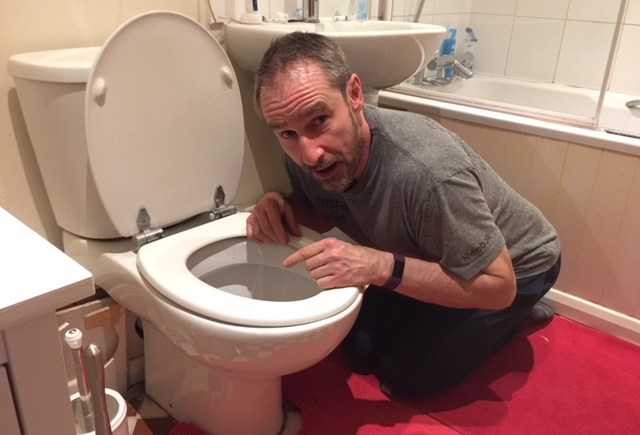
Whats in the loo: The Bristol Stool chart

Effective training means you’ll grab hold of as many indicators as you can. Actual work performed, weights lifted, distances run at what time, heart rates, blood pressure, HRV, and food eaten. But why not review what comes out of the  other end?

Today its time to self-assess your poo. I say self-assess as I’m not going to do it for you.

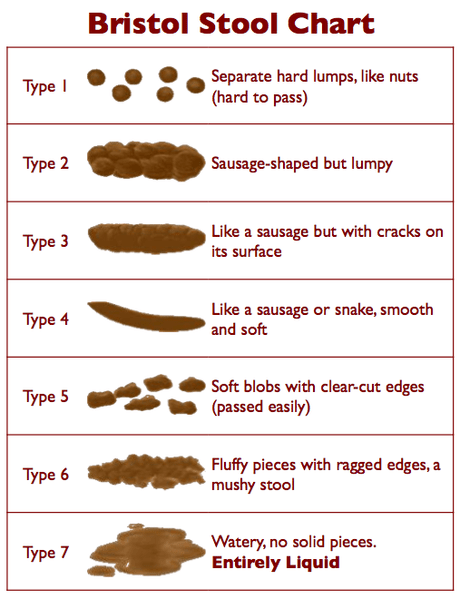
You poo, you look, you judge. The Bristol Stool chart, believe it or not, sorts poo into 7 types.

460px-Bristol_Stool_Chart.png

Thanks to Wikipedia for the picture

So, what does this mean?

Gut sense suggests this

“types 1, 2 and 3 = hard or impacted stools. Type 4 and 5 = normal or optimal. Type 6 = loose stool, subnormal, or suboptimal, and type 7 = diarrhea.”

The Express suggests these  possible causes

Type 1: Separate hard lumps like nuts which are hard to pass. Experts said this type of pool could be an indicator of constipation. It might mean a patient is not eating enough fibre, such as fruit, vegetables and cereals.

Type 2: Sausage-shaped but lumpy. This is also an indicator a person could be slightly constipated.

Type 3: Like a sausage but with cracks on its surface. This is considered to be a healthy stool.

Type 4: Like a sausage or snake and smooth and soft.  This is also considered to be a healthy stool by medical professionals.

Type 5: Soft blobs with clear cut edges  and usually passed easily. This could also be an indicator people are lacking fibre in their diet.

Type 6: Fluffy pieces with ragged edges, mushy stool. This category on the Bristol Stool Chart could indicate inflammation of the bowel.

Type 7: Water, no solid pieces and entirely liquid. This is also a sign a person is unwell, which could be caused by a virus, bacteria or a parasite.


thanks to Wikipedia

Programming

I’ve decided to share as much of my programming as possible, where possible. as I write for clients, I’ll post outlines here. Obviously, this won’t be the total programme as that will include warm-up ideas, mobility,  cardio, mental work, but, I thought, its good to share, even if it’s just a bit. Many of my City of London clients will go on to a 20-minute boxing session, for cardio, stress relief,  but also mental training under pressure.

This programme is basically a good spread of functional, compound movements for the legs, with upper back work for posture, and arm stuff, well, for Saturday night!

I’ll cycle between 5, 10, 15 reps, but be open to the mood and workload of my clients

Day 1

A) lunge plus Bulgarian split squat

B) Pull up 5 sets: some of these are wide grip for back development

Day 2
A) Deadlift:
B)  upper body is bench, bar/dumbbell
C) floor flaps for upper back
D) Dragon flag
 Day 3
A) Squat;
B) upper body building moves ( bicep/tri/shoulders)
C) upper back D/B rows
D) Burpees : ideally, build up to  4 minutes of burpees
So start every minute on the minute, start at say 3-5 a minute for 4 minutes. build week by week

How to break your concept 2 rower

As part of the management team of a CrossFit facility in the UK, I always struggled to understand how anyone could break the front stand of a concept 2.

However, I have now discovered a very clever way of incurring hundreds of extra pounds worth of repair bills and putting your concept 2 rowers out of service for days, sometimes weeks on end.

Here is how

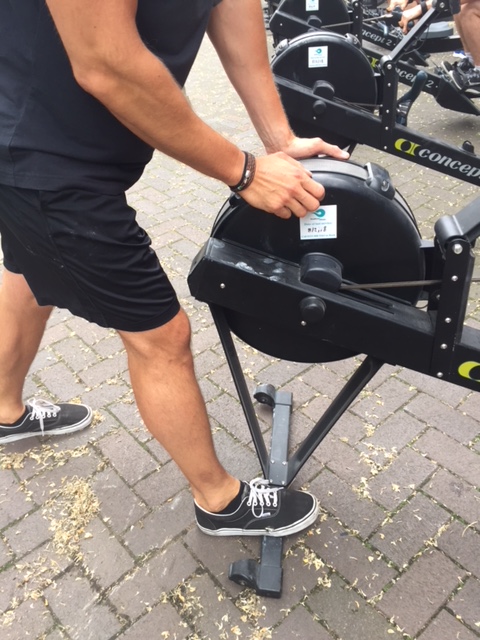
IMG_6127.JPG

To break* your concept 2 ,  put your foot on the front foot and hold it down. If you are fussy about where you put your foot, try heavy sandbags, or maybe even weights.

This will really screw it up.

I sent the above picture to  Concept 2 to be sure.

Here is their response

“Hello, in short the legs are meant to be moved freely, by putting bags on, standing on etc… you’re putting excess pressure on bolts/joints, allowing the machine to move slightly is okay.  If the machine is moving a lot it is likely technique that needs improving.  Rolling them around constantly or storing on end can also do a lot of wear and tear.”

Consider yourself told.

*This was not my 1st choice of words

My name is Andrew Stemler and I’m probably the East London personal trainer you have been looking for. Email me Andrew@crossfitlondon uk.com