The paper by Hanne B. Albert et al “Antibiotic treatment in patients with chronic low back pain and vertebral bone edema (Modic type 1 changes): a double-blind randomized clinical controlled trial of efficacy“ throws up a fascinating possibility. That some back pain and sciatica is caused by a pathogen and as such, can be treated by antibiotics .
The pathogen that could be causing this is Propionibacterium acnes.
If you think you recognise the “acne” bit. You’d be correct. The stuff that ruins your teenage years and gives you acne!
As Dr long in his article “The Murky world of Mordic Changes” . says “there will always be a proportion of our patients who simply don’t respond to our care…….Could there be something far more ‘pathological’ that might perpetuate lower back pain”
To understand this issue you need to vaguely understand “mordic changes”. These are changes in the bones marrow of the vertebral body either side of a damaged disc. In stage 1 changes these areas have increased levels of pro inflammatory cytokines and increased levels of innervation
“Propionibacterium acnes bacteria secrete propionic acid, which has the capacity to dissolve fatty bone marrow and bone. We hypothesize that diffusion of propionic acid from the disc into the vertebrae causes the Modic changes. Similarly, as increased TNF-alpha and the growth of PGP-5 unmyelinated nerve fibres have been reported in Type 1 Modic changes, with the inherent slowness of these pathological processes perhaps explaining the delayed onset of improvement observed in this study”.(Albert et al)
Needless to say, shooting up clients with lots of antibiotics has drawbacks!
“High-dose long-term antibiotics should not be prescribed without due consideration. Clearly in a condition as chronic lower back pain there is a potential community as well as individual hazard if used indiscriminately. However, as many patients, as in this trial, are on sick leave, at risk of losing their jobs and have a high analgesic intake, we suggest that antibiotics, when applied along the lines of this MAST protocol may be appropriate in this subgroup, i.e. chronic lower back pain with Modic Type 1 changes. We do not support the proposition that all patients with lumbar pain should have a trial course of antibiotics. The criteria in this study were very clear: chronic lower back for more than 6 months, Modic Type 1 changes in the adjacent vertebrae following a previous disc herniation. As we do with other drugs, we rely on our fellow colleagues to use clear evidence-based criteria and to avoid excessive antibiotic use.”
However antibiotic issues to one side, this treatment is mired in controversy . Lars Bråten authored a report totally failing to find any beneficial effect.
“Efficacy of antibiotic treatment in patients with chronic low back pain and Modic changes (the AIM study): double blind, randomised, placebo controlled, multicentre trial” (click here for report ) tested patients with chronic low back pain and Modic changes at the level of a previous disc herniation. For three months they were treated with amoxicillin. It did not provide a clinically important benefit. These results do not support the use of antibiotic treatment for chronic low back pain and Modic changes
I note though that that Albert experiment (Pro) used amoxicillin–clavulanate and the Braten report (Anti) used Amoxicillin. Im not clever enough to state whether this would have made any difference.
So, keep an eye on that research!
If you want to keep up to date this back pain and back pain issues join our mailing list
[mc4wp_form id=”345″]
The big warning. Some back pain is really serious: check your RED FLAGS by clicking here
Maybe this isn’t the headline , or discovery, of the century , but smart phones could lead to poor forward head posture, poor rounded shoulders and poor breathing.
Now its not as if the phone jumps out of the package and puts you in a combined head lock and choke hold, but it might as well: check out this new report “The effect of smartphone usage time on posture and respiratory function” by Jung et al smart phones and breathing.
The big take home is this “The result of this study showed that prolonged use of smartphones could negatively affect both, posture and respiratory function”. Wow. Modern day scientists are amazing!
The truth is this. Using your mobile phone now and then, wont hurt you (unless you walk into a lamp post). You can also sort of ignore those hippy therapists as poor posture, as such, wont hurt you. We all know people with disgusting posture who have never had a day of postural pain in their lives.
However, “postural stress” as used in advanced torture regimes simply takes a bad posture and makes you hold it for hours. The Scavengers Daughter was device that held you in a stooped posture for hours and was very effective as a torture.
As always, it’s how much “bad” you take before you start hurting.
Strangely the Backaholic Back Pain management course has a specific lesson on self torture techniques. Its sort of bazaar!
If you want more back pain tips on information on when the Backaholic course will be released, do join our mailing list.
[mc4wp_form id=”345″]
The big warning. Some back pain is really serious: check your RED FLAGS by clicking here
Underpinning every psychological approach to back pain is education.
It’s seen as crucial that you understand the mechanisms of pain within your body. So here is a super simple introduction to the basics of pain. I started teaching in our kitchen:
We have that basic banana approach. We can now build up to a bit more of a technical overview. You’ll see, I got kicked out of the kitchen, into the bathroom!
now, its up into the brain! We were relocated to the bedroom
Its back to the bathroom to remind ourselves about what switches nociceptive neurons on and off
back into the bedroom to look at “inhibitory interneurons” and “enkephalins”
Helping you understand how pain works is certainly the approach used by Dr Sarno in his TMS (Tension Myositis Syndrome)programme and Dr Schubiner in his MBS ( Mind Body Syndrome) programme. I just think our educational process is a bit funnier!
The Backaholic course should be ready in late August/early September, so if you want to fix your back pain, do sign up for our newsletter so you know when its available! Obviously we will send out lots of handy hints and tips between then and now.
[mc4wp_form id=”345″]
The big warning. Some back pain is really serious: check your RED FLAGS by clicking here
Many have a bout of back pain, then think no more of it. Often you get a second bout! In some cases it turns into chronic long lasting pain that has you demanding pointless MRI’s and screaming for painkillers like an addict.
This could be your opportunity to live the rest of your life back pain free. Whilst the isometric flexion tests is only one of many tests, it’s a very useful one. Hook your feet under an object ( or get someone to hold them down) and sit up to 45 degrees with your arms crossed across your chest. Ideally your back is held in a “neutral spinal position”.
Time how long you can hold this position?
The standards are these: men need to be able to hold this position for 136 seconds, women 134 seconds. Less is a substantial risk factor for future back pain.
If you thought your core was great because you can do lots of “functional fitness” sit ups and weird crunches, but you fail this test, you need to add soem very specific training to your regime asap.
Incase its news to you, your core needs to be able to isometrically contract all day long to support your spine! This test is a very good indicator if you are preparing for that Functional task.
Join the mailing list so I can help you stay pain free!
[mc4wp_form id=”345″]
The big warning. Some back pain is really serious: check your RED FLAGS by clicking here
Among a batch of reports studying the Crossfit method, you’ll find “physiological Predictors of Competition Performance athletes” by Martinez-Gomez et al worth a read ( or a quick skim).
In reality any attempt to predict an athletes performance in a specific wod is always a bit speculative as different wod’s can have massively different outputs and can focus on specific “modal domains”that can bring specialists to their knees. Wod’s can be as wide ranging as “run 5k” or “deadlift 1,1,1,1,1,1,1”.
Nevertheless this study took the 5 wods of the Crossfit Open in 2019 and evaluated the performance of 15 athletes who were also assessed against various laboratory tests: incremental load test for deep full squat and bench press; squat, countermovement and drop jump tests; and incremental running and Wingate tests. It would be a fairly safe bet to say that the athlete who scores high on all of these tests would also score highly in the Wod’s.
In 2019 the “open” wods were
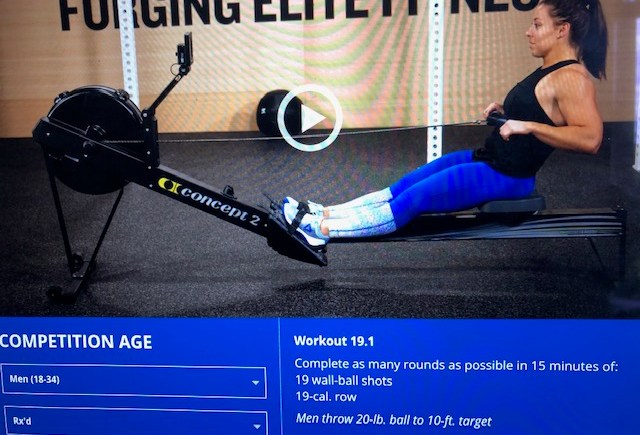
19.1 Complete as many rounds as possible in 15 minutes of
19 wall-ball shots
19-cal. row
19.2 Beginning on an 8-minute clock, complete as many reps as possible of:
25 toes-to-bars
50 double-unders
15 squat cleans, 135 / 85 lb.
25 toes-to-bars
50 double-unders
13 squat cleans, 185 / 115 lb.
If completed before 8 minutes, add 4 minutes to the clock and proceed to:
25 toes-to-bars
50 double-unders
11 squat cleans, 225 / 145 lb.
If completed before 12 minutes, add 4 minutes to the clock and proceed to:
25 toes-to-bars
50 double-unders
9 squat cleans, 275 / 175 lb.
If completed before 16 minutes, add 4 minutes to the clock and proceed to:
25 toes-to-bars
50 double-unders
7 squat cleans, 315 / 205 lb.
19.3 For time:
200-ft. dumbbell overhead lunge
50 dumbbell box step-ups
50 strict handstand push-ups
200-ft. handstand walk
Men 50-lb. dumbbell / 24-in. box Women 35-lb. dumbbell / 20-in. box
19.4
For total time:
3 rounds of:
10 snatches
12 bar-facing burpees
Rest 3 minutes
Then, 3 rounds of:
10 bar muscle-ups
12 bar-facing burpees
Men 95 lb. Women 65 lb.
19.5
33-27-21-15-9 reps for time of:
Thrusters
Chest-to-bar pull-ups
Men 95 lb. Women 65 lb.
“CrossFit performance (i.e., final ranking considering the sum of all WODs, as assessed by number of repetitions, time spent in exercises or weight lifted) was significantly related to jump ability, mean and peak power output during the Wingate test, relative maximum strength for the deep full squat and the bench press, and maximum oxygen uptake (VO2max) and speed during the incremental test”. However the relationship varied depending on the wod analysed. No surprise there.
However, the authors by using “multiple linear regression analysis” suggest that the two crucial factors were lower body muscular power (especially jump ability) and VO2 max.
Once you have tweaked your back a few times, you stand a good chance of dragging yourself down into a pain cycle. Here are the 5 things people who suffer from pain do.
THEY STOP PHYSICAL ACTIVITY
If you become sedentary it will start a cascade of bad stuff: your sleep will suffer, you’ll weaken your muscles meaning you’ll slide towards a boring disabled lifestyle, with a loss of control over your daily life. The more you sit and do nothing, the more you focus on your pain. The worse it becomes
THEY FALL INTO THE OVER ACTIVITY TRAP
taking advantage of any easing of pain to work yourself to exhaustion, or into pain. This means you need to collapse until you recover. When you have recovered a bit, you slog through loads of work until you are exhausted or in pain. This leads to worse pain and declining physical fitness
ABANDONING WORK AND FUN FOR BOREDOM
once you have taken time off work, and given up your hobbies, you get bored. Your pain will expand to fill the day
STRESS
Stress. is the ultimate multi-tasking sensation: it can make you avoid activity, avoid friends , edge out loved ones: it can make you feel helpless and hopeless. It can lay the foundations for arguments and anger, and given time will deliver you mental health issue such as anxiety and depression
WAITING FOR A CURE, or HOPING THAT THE PAIN WILL GO AWAY
Rather than simply doing the basic combination of stretches, smashes, movement education and strengthening that I can show you, You start obsessing about a “cure”. You chase your doctor for a magical MRI or a spinal fusion , even if you know that only 1 out of 250 MRI’s show anything remotely useful, and normally leads to a recommendation to stretch and build your core.
To be kept up to date with back pain fixes do join the Backaholic.com mailing list
The big warning. Some back pain is really serious: check your RED FLAGS by clicking here
This article is republished under a Creative Commons license. Read the original article here. It was written by Gustavo Machado, Christine Lin and Ian Harris.
From time to time, we hear or read about medical procedures that can be ineffective and needlessly drive up the nation’s health-care costs. This occasional series explores such needless treatments or procedures individually and explains why they could cause more harm than good in particular circumstances.
Back pain affects one in four Australians. It’s so common, nearly all of us (about 85%) will have at least one episode at some stage of our lives. It’s one of the most common reasons to visit a GP and the main health condition forcing older Australians to retire prematurely from the workforce.
Treatment costs for back pain in Australia total almost A$5 billion every year. A great proportion of this is spent on spinal surgical procedures. Recently, Choosing Wisely, the campaign to educate medical professionals and the public about tests, treatments and procedures that have little benefit, or lead to harm, added spinal fusion for lower back pain to its list.
This is because, despite rates of the procedure being on the rise, current evidence doesn’t support spinal fusion for back pain. Randomised trials (regarded as studies providing the highest-quality evidence) suggest spinal fusion has little advantage over a well-structured rehabilitation program, or psychological interventions, for back pain.
What is spinal fusion?
Spinal surgery is most commonly performed to remove pressure on nerves that causes pain and other nerve symptoms in the legs. This surgery is called decompression. The next most common procedure is spinal fusion, where two or more vertebrae are joined together (using such methods as transplanted bone from the patient, a donor or artificial bone substitutes) to stop them moving on each other and make one solid bone.
Spinal fusion may be performed for fractures, dislocations and tumours, and is commonly performed in conjunction with decompression. For back pain, it’s performed when the origin of the pain is thought to be related to abnormal or painful movement between the vertebrae (from degenerative joints and discs, for example).
Rates of spinal fusions have been rising and continue to increase, outstripping other surgical procedures for back pain. In the United States, rates of spinal fusion more than doubled from 2000 to 2009. In Australia, rates increased by 167% in the private sector between 1997 and 2006, despite almost no increase in the public sector.
Spinal fusion rates differ significantly between regions of Australia, with the highest being in Tasmania and the lowest in South Australia: a seven-fold variation. Significant variations are also seen between countries. For instance, spinal fusion rates in the United States are eight times those in the United Kingdom.
The greatest increase in the use of spinal fusion has been in older Australians, often in conjunction with decompression surgery for spinal stenosis – a condition that causes narrowing of the spinal canal (the cavity that runs through the spinal cord).
Differences in clinical training, professional opinion, and local practices are likely to play a role in such variations.
Evidence for spinal surgery
There is little high-quality evidence to support the use of spinal fusion for most back-related conditions, including spinal stenosis. And there is disagreement between surgeons on when spinal fusion surgery should be performed, not only for back pain but also for more acute conditions such as tumours and spine fractures.
There have also been no studies comparing spinal fusion to a placebo procedure. Most research to date compares one fusion technique to another technique or to a form of non-surgical treatment, so we still don’t know whether spine fusion is effective against placebo.
We also know that spine fusion surgery is expensive and associated with more complications than decompression surgery. And the surgery often fails. Around one in five patients who undergo spine fusion will have revision surgery within ten years.
Research also shows most patients having spine fusion surgery under workers’ compensation won’t return to the usual job, will still be having physiotherapy and be on opioid medication two years after surgery.
So why are rates going up?
There are several factors, including an ageing population, that may contribute to the rapid increase in spinal fusion despite the lack of evidence supporting its use. Financial incentives might also explain the differences in rates between private and public sectors in Australia and between the United Kingdom and the United States.
We don’t have high-quality evidence on the benefits and harms of spinal fusion. This means there is uncertainty, which allows practitioners to continue doing the procedures they were trained to do unchallenged. This then leads to overtreatment, particularly where reimbursement rates are high, such as in the workers’ compensation setting.
Uncertainty about the appropriateness of spine fusion results in practice variation, wastes scarce health care resources and leads to worse patient outcomes.
We need better research in this area. This means research efforts should shift from studies looking at different ways of performing the surgery and focus on investigating whether or not it works better than non-operative treatments or a placebo, and, if so, whether the benefits outweigh the harms.
In the absence of such evidence, patients can consider other evidence-based and less costly treatments, such as exercise, cognitive behavioural therapy and physiotherapy.
The big warning. Some back pain is really serious: check your RED FLAGS by clicking here
Maybe you like the idea of being a reality TV star, or you want to meet Ant Middleton, but lots of people want to get onto programmes like SAS: Who Dares Wins and Special forces Ultimate Hell Week. Some , even want to join the military!
Interest in military fitness regimes has also been stoked up by books such as “Can’t Hurt Me” by David Goggins and our relentless diet of war films.
Having been involved in the training of a few wannabe participants, chatted to a contestant who got a good way through the process, and having analysed the challenges, I thought it would be helpful to offer some general training and preparation advice.
I have a motto, stolen from an ancient greek warrior. In a crisis, you do not rise to the challenge, you sink to the level of your training. Success in these types of programs , and indeed success in applying for a position in the army, and their elite corps, requires you to be properly trained for the challenges you can anticipate.
Lower down in this article you find details of how military fitness testing goes, and the standards they expect. However, here is your take home message. To successfully survive one of these regimes, I say you need a good back ground in being “outdoors”. Do you love going for hikes in the rain and getting soaked. Do you know how to manage wet clothing. Are you ok with sleeping outside, and essentially are you ok with operating on limited sleep and getting up at 2, 3am and going for a run. Do you love camping. Would you turn down some super sex for a 10k run?
If your preparation only involves going to the gym, at sociable times, the chances are you’ll be screwed.
Let me rephrase this. You need to be able to put up with crap they don’t even have names for. Are you used to insect bites, going for a pooh in a bush, stinking and running in boots. Have you had blisters on your blisters, and can you work through the discomfort of a wet pant band working their way into your crotch.
Do you like the cold? Well you better like those morning cold showers and going out in all sorts of weather. On the plus side, getting used to the cold has benefits. A few years ago, “Thermal loading” was all the rage!
There is another type of training you should consider. It’s mindset. Doing a lot of mindset work would probably help; learning how to break big tasks into little task: it may be 4 am in the morning, you may have run 8 miles, you may be at the end of your tether but, maybe you can get to that tree thats 50m away. Ok, now let’s try that house 40m away. Not letting the enormity of the task overwhelm you is important.
This involves dealing with fear The science fiction fans amoung you will recall this monologue from Dune
“I must not fear. Fear is the mind-killer. Fear is the little-death that brings total obliteration. I will face my fear. I will permit it to pass over me and through me. And when it has gone past I will turn the inner eye to see its path. Where the fear has gone there will be nothing. Only I will remain.”
To be successful you probably need to distinguish the difference between fear and recognising danger. Fear is often described as False Evidence Appearing Real. Fear is an impractical emotion. Recognising danger and taking appropriate action is good. Being paralysed by fear isn’t.
Lord Moran, ( Winston Churchill’s physician, and a trench doctor in WW1) said “Courage is a moral quality; it is not a chance gift of nature like an aptitude for games. It is a cold choice between two alternatives, the fixed resolve not to quit; an act of renunciation which must be made not once but many times by the power of the will. Courage is willpower.” (The Anatomy of Courage).
This is part of working out how you think . Are you already looking for your excuse, or are you thinking, “I’m going to give this 100%”. Having a victim mentality can quickly bring your performance to an end. Combating a perfectionist mindset is also part of the magic. You’ll be slower and feel like you cannot succeed. Ignore that and just continue.
It’s worth remembering that 90% fail (the real) SAS selection, and most of these simply give up. The instructors rarely have to fail people.
The last thing you need to prepare for is lack of sleep. This is truly awful. Here are the consequences of not sleeping (Ref):
Humans can bear several days of continuous sleeplessness, but it screws everything. It may lead to deteriorated functioning, impaired perception, reducing concentration, vision disturbances, slower reactions, as well as lower capabilities and efficiency of task performance and to an increased number of errors.
It screws with your thinking which means wrong decisions, and emotional disturbances such as deteriorated interpersonal responses and increased aggressiveness.
Being woken up at 2 am to do a run or burpees is really, really awful. It is however a reality that soldiers at times need to operate in a sleep deprived state. There are some interesting tips and hints here but, it seems that you’ll need to set yourself some middle of the night exercise sessions. “Exposing soldiers to fatigue in a training environment teaches them how it affects them and their performance. Learning the consequences in a protected environment will help them identify the issues caused by sleep deprivation, so that they can know how deal with them before reaching combat. Likewise, understanding why you’re tired can help you power through the day”(National Sleep Foundation)
If you are from a farming background, you probably have some experience of sleep disturbing work like lambing, milking and chasing poachers. I knew a financial broker who got up to trade at 3am. I think after a few years he went a bit mad: but that could have been the drugs and the booze.
David Goggins, the navy seal, suggested an interesting task. It’s called a 4x4x48. In other words you go for a 4 mile run every 4 hours for 48 hours. That will give you a very good idea of what sleep deprivation feels like, although, I’d start at something like 2 x 4 x 12, and build up!
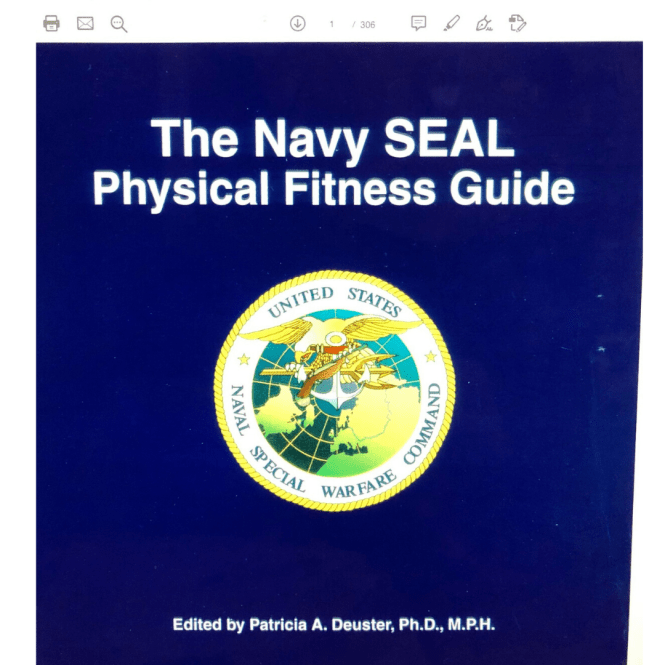
So, thats the background . What follows are the physical tests along with some official guidance from the military like this US Navy Seal training guide. Download and read it. Its free and useful
With these points in mind, you need to prepare for the actual standards. Either you have the knowledge to develop an effective training regime to master these, or you need a PT /or a coach
4km loaded march with 40kg within 50mins followed by 2km with 25kg in 15 mins (Infantry/RAC). The times allowed for 16 AAB/Paras are shortened to 35mins and 12.30mins respectively.
Fire and movement tactical bounds, followed by crawl and sprint ( 20 x 7.5 m bounds , or mini sprints. Then crawl 15m, sprint 15 m in 55 seconds
Casualty drag (110kg bag) dragged 20m in 55 seconds
Water can carry (simulates stretcher carry with 2 x 22kg cans) over 240 meters in 2 mins.
Vehicle casevac (70kg lift with 3-second hold)
Repeated lift & carry (20kg bags over distance) 20 x 30m in 14 minutes
I say you should not only be familiar with these challenges. You should do them, often, as part of your training. I think you should see these as the absolute minimum standards. Whilst I’m not sure, I’d prepare to do these tests with boots on.
The Royal Marines’ Pre-Joining Fitness Test allegedly involves completing two 2.4km runs on a treadmill that is set to a 2% incline. The first run must be completed in less than 12 minutes 30 seconds. You will then have a one-minute break before completing the second run in under 10 minutes and 30 seconds. This time is the absolute minimum requirement, and the expectation is that you will record the best time possible. You can use this chart to assess where you are
There are 4 body weight challenges. You should aim to ace them all. Why would you humiliate yourself on TV if you can only do 10 push ups if you know that 60 is the standard.
The VO2 Max bleep test (also known as the ‘bleep test’.) Minimum pass score is level 10.5. Shoot for the max!
Press ups are carried out immediately after the bleep test. A maximum score is achieved for 60 press-ups are conducted to an audible bleep (listen to the video below). Arms should be locked into side, shoulder width apart. The partner puts his fist on the floor facing away and counts one repetition for every time the chest touches his fist. If you put your knees onto the floor you will be told to stop.
Sit-ups come straight after the press-ups. 85 are needed for maximum points. Sit ups are conducted to an audible bleep. A partner holds the feet, elbows must touch top of knees and then the shoulders and elbows must touch the floor on the way down for a repetition to count. Knees must remain together or else reps will be deducted.
Pullups follow situps. A minimum of 3 are required to stay on the course but any less than 5 will be looked at critically and 16 will gain the maximum score. The over-grasp grip is used, the candidate is required to pull and hold the position until told to extend the arms; pull-ups are performed to the “bend” and “stretch” commands. The candidates chin must pass over the top of the bar to count and on the way down our body must be straight hanging down from the bar. Your legs must not cross. If the chin does not satisfactorily pass above the bar, or candidates cannot keep up with the commands, the candidate will be told to “drop off”.
The pool assessments include jumping off a high diving board (3m) in normal swimming kit and swimming a maximum of 4 lengths (approx 100m) of breast stroke followed by retrieving a brick from the bottom of the pool which is 3m deep. Train these skills. That brick retrival can be tricky. Learn to swim outdoors, in the cold, in clothes. For God sake have a life guard nearby. I think there are some outdoor swimming places like this one in the Royal docks in East London.
Other testing includes
The “Tarzan Assault Course” conducted up to 30 foot off the ground. Deal with your vertigo issues, or don’t apply!
The bottom field assault course which involves team games and other arduous physical activities.
An endurance course lasting 90 minutes and covering 2.5 miles undertaken on Woodbury Common
An over-night exercise which is intended to promote team building.
To train these, you’d better be a regular at your local Tough Mudder or Spartan Race. You need a t-shirt that says “I do love an obstacle race”. As I have said else where, if you don’t like getting wet, feeling cold, being woken up in the middle of the night, you really don’t want to apply for one of these programs, or the actual army for that matter. Familiarity with rope climbing and ab-sailing can probably be obtained at your local climbing centre. In the East End we have the Mile End Climbing wall
If you want to apply to be on SAS Who Dares Wins click here
If you are insane enough to want to do this, feel free to ask me for some in real life (if you are in the East End of London) or Online PT sessions.Click here
There is a lot to be learned about how you, and the people around you breath. As a trainer and 1st aider, I try and observe carefully how people breath.
A normal breathing pattern consists of between 12-16 (some argue 12-20) breaths a minute aka your respiratory rate. From a first aid and general fitness perspective breathing patterns out of this range should be investigated.
Respiratory rate has been described as the neglected vital sign, for instance a respiratory rate higher than 27 breaths/minute is one of the most important predictors of cardiac arrest in hospital wards
Changes in respiratory rate seem to be much greater than changes in heart rate or systolic blood pressure meaning that respiratory rate is likely to be a better means of discriminating between stable patients and patients at risk.
21% of ward patients with a respiratory rate of 25–29 breaths/minute assessed by a critical care outreach service, died in hospital. However, its not just the rate of breathing that indicates your current state. How you breath can be critical.
So, can you describe how you are breathing?
Here are some useful descriptive words that will help you categorise and explain to others what you see.
breathless: breathing very fast and hard, for example after exercising
winded unable to breathe because you have been running or have been hit in the stomach.
Obviously you need to put these observations in context. If someone has just sprinted 400m, they will be breathing heavily and be out of breath. But you can see why. If someone has been sitting down for the last hour and they have a breathing rate of 27, you really ought to be getting some help. Apart from breath counting, it’ as well to notice how people are holding themselves, or their posture.
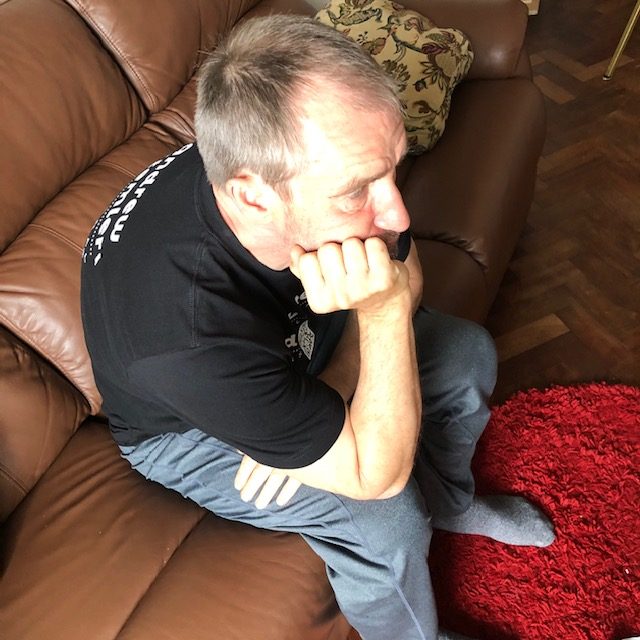
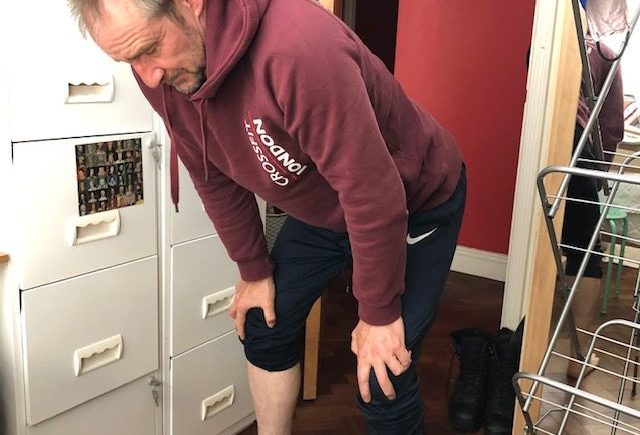
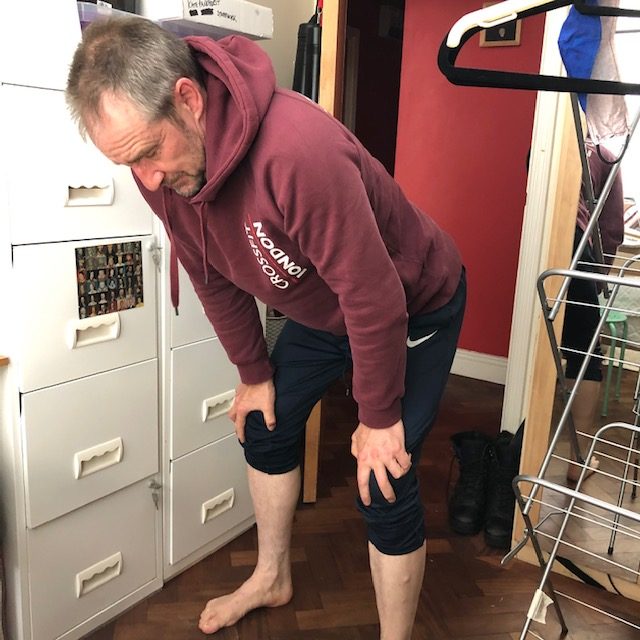
People with breathing issues often adopt a tripod position which is a “Physical stance often assumed by people experiencing respiratory distress or who are simply out of breath. In this position, a person sits or stands leaning forward and supports the upper body with hands on knees or other surface”(source)



 Andrew Stemler