who are the perpetrators?

to be effective at self-defence, you need to know who is most likely to attack you: once again and extract  from March 2016, the Crime Survey for England and Wales

Perpetrators were most likely to be male, being reported to be the perpetrator in three-quarters of violent incidents (76%). Perpetrators were also most likely to be aged between 25 and 39, with the perpetrator believed to belong to this age group in 42% of violent incidents.

In 74% of violent incidents, a sole perpetrator was reported to have been responsible. For incidents with more than one perpetrator, victims most commonly reported that 4 or more perpetrators (11% of incidents) or 2 perpetrators (10% of incidents) were involved.

The number of perpetrators involved varied by the relationship between the victim and the perpetrator. Only 1% of domestic violence incidents involved more than one perpetrator, compared with 24% of incidents of acquaintance violence and 43% of incidents of stranger violence. Incidents involving 4 or more perpetrators accounted for 14% of acquaintance violence and 15% of stranger violence, but no incidents of domestic violence.

Victims believed the perpetrator(s) to be under the influence of alcohol in 40% (491,000) of violent incidents1. In 19% (237,000) of violent incidents, the victim believed the perpetrator(s) to be under the influence of drugs

Victims aged 10 to 15 were able to say something about the perpetrator in 94% of violent incidents in the year ending March 2016 Crime Survey for England and Wales (CSEW). Incidents of violence against children were most likely to be committed by someone known well to the victim (52% of incidents), with a small proportion of incidents being committed by strangers (12%). The perpetrator was a pupil at the victim’s school in 68% of violent incidents, and was a friend (including boyfriend or girlfriend) in 11% of incidents. The perpetrator was most likely to be male (81% of incidents) and aged between 10 and 15 (78%)
Are you a victim?

Sure statistics often lie, but I thought this was an  interesting reflection for those thinking about self-defence assessments

The main characteristics of a victim were:

  • Men were more likely to be a victim of violent crime measured by the face-to-face Crime Survey for England and Wales (CSEW) interview than women (2.2% of males compared with 1.4% of females1 with stranger violence showing the largest difference in victimisation between men and women (1.2% compared with 0.4%).
  • Adults aged 16 to 24 were more likely to be a victim of violent crime (3.7%), particularly acquaintance or stranger violence (1.8%) than any other age group
  • Those who were widowed (0.5%) or were married or civil partnered (1.1%) were less likely to be a victim of violent crime than adults with any other marital status.
  • Adults living in the 20% most deprived output areas were more likely to be a victim of violent crime (2.5%) than those living in other output areas (1.7%) – particularly those living in the 20% least deprived output areas (1.2%).
  • Renters (2.8% social and 2.4% private) were more likely to be a victim of violent crime than home owners (1.3%)
  • Source: March 2016 Crime Survey for England and Wales

preparing to develop your self defence skills?

Well, that’s great, but who do you think is going to attack you, because it does, sort of, affect the defensive strategies you use

Have a read of this

“in the year ending March 2016 Crime Survey for England and Wales (CSEW), 43% (544,000 offences) of violent offences were perpetrated by an acquaintance1, 37% (467,000 offences) by a stranger2, and the remaining 20% (254,000 offences) were categorised as domestic violence perpetrated by a partner or ex-partner, or a family member (Figure 1.4). These figures have fluctuated over recent years, with acquaintance violence accounting for the largest proportion of offences in some years and stranger violence accounting for the largest proportion of offences in others ”

(Crime Survey for England and Wales).


I don’t like getting kicked in the bollocks, but there are worse things

Some of you know I teach self-defence: A very violent, nasty,  aggressive, swear word laced, punch fucking hard, self-defence. Preceded of course by not being, or acting like a victim,  with loads of awareness training chucked in.

I’m often told that a kick or knee in the balls is all you need to stop a fight. I need to feedback that in my sparring, door work and bodyguard assignments, I’ve been kicked in the groin several times.

This move didn’t put me down or stop me.

Equally, I’ve never stopped anyone with a kick in the balls. Tactically, I think some people expect it.

I have successfully knocked people out by whacking them on the jaw. It’s like a “night, nighty go to sleep button”.

My conclusion is that I’m not a great fan of ball kicking as a self-defence strategy.

Milk: all trainers should have a position!

It seems that for some, milk is the spunk of the devil.

For me, as an old trainer ( 58) milk is what Margaret Thatcher took away from us primary children ( and with it, my early role as class milk monitor)

But, all my life I’ve been told that milk is good for you.  Its a core component of nutrition. But it’s so often attacked, I thought I’d do this research.

I looked up

Milk and dairy products: good or bad for human health? An assessment of the totality of scientific evidence.

See abstract here

It basically concluded that “The totality of available scientific evidence supports that intake of milk and dairy products contribute to meet nutrient recommendations and may protect against the most prevalent chronic diseases, whereas very few adverse effects have been reported”

Obviously, if you are allergic to milk, or don’t like it,  don’t have it. But don’t bitch about it, or make shit up about it. Sure some cows are pumped full of hormones.

but, according to nutrition advice.com

  • “A food safety review demonstrated that recombinant bovine growth hormone (rbGH) is not biologically active in humans. Furthermore, the concentration of the hormone insulin-like growth factor (IGF-1) found in hormone-treated cow’s milk is no more than that of breast milk (10).
  • Levels of IGF-1 in the human digestive tract are many hundreds of times larger than the concentrations found in hormone-treated milk. Additionally, oral consumption of IGF-1 appears to have no biological activity (11).

In other words, even if people do get traces of hormones through consuming milk, it will likely have no effect.”

However, the protein is complete, its full of vitamins and minerals has fat and carb, so an all-round great snack.

So, it’s still a free society. If you don’t like it, go and drink something else.


Whats in the loo: The Bristol Stool chart

Effective training means you’ll grab hold of as many indicators as you can. Actual work performed, weights lifted, distances run at what time, heart rates, blood pressure, HRV, and food eaten. But why not review what comes out of the  other end?

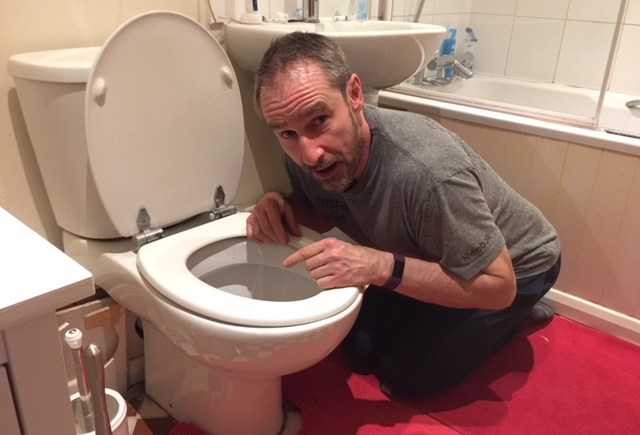
Today its time to self-assess your poo. I say self-assess as I’m not going to do it for you.

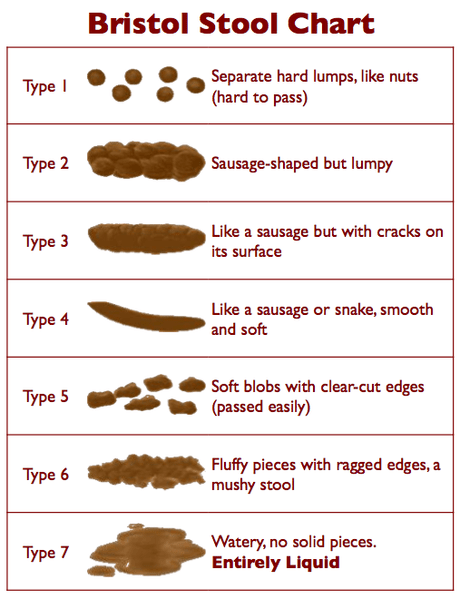
You poo, you look, you judge. The Bristol Stool chart, believe it or not, sorts poo into 7 types.

460px-Bristol_Stool_Chart.png

Thanks to Wikipedia for the picture

So, what does this mean?

Gut sense suggests this

“types 1, 2 and 3 = hard or impacted stools. Type 4 and 5 = normal or optimal. Type 6 = loose stool, subnormal, or suboptimal, and type 7 = diarrhea.”

The Express suggests these  possible causes

Type 1: Separate hard lumps like nuts which are hard to pass. Experts said this type of pool could be an indicator of constipation. It might mean a patient is not eating enough fibre, such as fruit, vegetables and cereals.

Type 2: Sausage-shaped but lumpy. This is also an indicator a person could be slightly constipated.

Type 3: Like a sausage but with cracks on its surface. This is considered to be a healthy stool.

Type 4: Like a sausage or snake and smooth and soft.  This is also considered to be a healthy stool by medical professionals.

Type 5: Soft blobs with clear cut edges  and usually passed easily. This could also be an indicator people are lacking fibre in their diet.

Type 6: Fluffy pieces with ragged edges, mushy stool. This category on the Bristol Stool Chart could indicate inflammation of the bowel.

Type 7: Water, no solid pieces and entirely liquid. This is also a sign a person is unwell, which could be caused by a virus, bacteria or a parasite.


thanks to Wikipedia

pain and dysfunction

I see a lot of people in muscular pain. I treat and help lots of people with muscular pain .

The reality is that there are lots of things you can do to ease pain and promote recovery or at the least , stop it getting worse .

What I have noticed is that people who take an active role in their recovery , get better soon .

Here are some questions for you

1) Have you gently moved the painful part . Years ago painful wrists and ankles were plastered up . Today, you need to get it moving . So , get it moving . Wiggle that toe. cautiously circle your wrist .

2) Have you rubbed it ? Rubbing , massaging kneading sore muscles helps . Try it

3) Have you gently stretched it . It helps . A lot ,

4) Heat and ice . Painful parts respond very well to ice ( in a plastic bag or a kool pack ) and heat ( normally by a wheat sack ) .

5) BLG: or basic lifestyle guidelines ! Are you eating well , do you get some sleep , are you avoiding alcohol are you moderating stress ? It all helps

6) Positive attitude . Recovery very much depends on your positive attitude . Get a positive attitude !

Exercise and Asthma (PAAP)

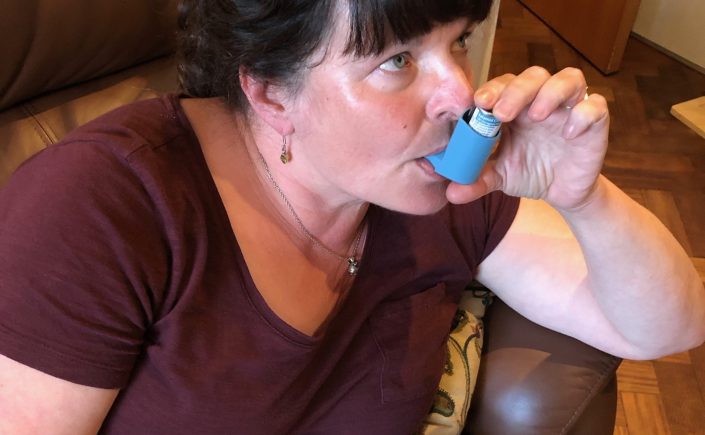
Whilst a written asthma plan,  hasn’t had the life-changing results it was hoped for, spending some time reflecting on your asthma, or in my case, the asthma of my clients’, seems sort of sensible.

A key aim of asthma care is to empower each person to take control of his or her own condition. A personalised asthma action plan (PAAP), also known as a written action plan, an individualised action plan, or a self‐management action plan, contributes to this endeavour. A PAAP includes individualised self‐management instructions devised collaboratively with the patient to help maintain asthma control and regain control in the event of an exacerbation. A PAAP includes baseline characteristics (such as lung function), maintenance medication and instructions on how to respond to increasing symptoms and when to seek medical help”.

Here is a link to help you create your own Asthma plan

Programming

I’ve decided to share as much of my programming as possible, where possible. as I write for clients, I’ll post outlines here. Obviously, this won’t be the total programme as that will include warm-up ideas, mobility,  cardio, mental work, but, I thought, its good to share, even if it’s just a bit. Many of my City of London clients will go on to a 20-minute boxing session, for cardio, stress relief,  but also mental training under pressure.

This programme is basically a good spread of functional, compound movements for the legs, with upper back work for posture, and arm stuff, well, for Saturday night!

I’ll cycle between 5, 10, 15 reps, but be open to the mood and workload of my clients

Day 1

A) lunge plus Bulgarian split squat

B) Pull up 5 sets: some of these are wide grip for back development

Day 2
A) Deadlift:
B)  upper body is bench, bar/dumbbell
C) floor flaps for upper back
D) Dragon flag
 Day 3
A) Squat;
B) upper body building moves ( bicep/tri/shoulders)
C) upper back D/B rows
D) Burpees : ideally, build up to  4 minutes of burpees
So start every minute on the minute, start at say 3-5 a minute for 4 minutes. build week by week

Run 400m, then rest, then go again!

This doesn’t seem that difficult a task.

400m, is, after all, 400m, but there are several interesting questions: what race are you actually training for, and what energy system do you want to train.

Let’s talk about energy systems

Whoever invented the human body was a bit of a ‘worry puss’– they felt that one energy system just wasn’t safe enough. Rather like the householder who has a real fire place, electric storage heaters and gas central heating. Some would call that greedy, but a cautious person would call it prudent..

The human body has three energy systems.

One for fast reactive movement (diving under a car to save your three-year-old toddler),

A slower, more extended, but still, a pretty snappy system (for running 350 metres, then diving under a car to save your three-year-old toddler).

Finally, there is the long-term ‘trickle’ energy system (the one you use while shoe shopping, running 5k, miles away from any toddlers)

For people who have little experience of toddlers, these ‘metabolic engines’ are known as the:


Phosphagen pathway,

Glycolytic pathway,

Oxidative pathway.

■ The first, the phosphagen, dominates the highest-powered activities (100-metre sprint), those that last less than about ten seconds.
■ The second pathway, the glycolytic, dominates moderate-powered activities, those that last up to several minutes (400-800 metre run).
■ The third pathway, the oxidative, dominates low-powered activities, those that last in excess of several minutes (5k run, walking, shopping).

They all use slightly different energy producing mechanisms, which isn’t the subject of this article.  The subject is, how long do you need to leave it between goes?

Think of 100m, you can run that “balls to the wall” or you could jog it.

Fine.


Here is the question. How soon could you do it again at the same pace?

So let’s say you run 100m (flat out, the fastest you’ve ever done) in 20 seconds* and collapse in a hysterical sobbing heap as you hyperventilate, and drool. If I make you go straight back, you’ll possibly stagger back in 30/40 seconds, while whining annoyingly!


So if you used the phosphagen pathway, I suspect you’ll need  11 times your time to recover. If you run 100m in 20 seconds, you probably need 220 seconds to recover to attempt the same pace again.

A simple principle is this, the slower you go, the less recovery you need, so, if you were to run 400m in 2 minutes, you probably want a 1-2-1 work rest period, so run 400m in 2 mins, rest 2 mins.

This helps you monitor consistency, otherwise, so some argue, you are not training or developing pace and capacity.  If you run 400m in 1.40, mini/erratic rest 1.50, mini/erratic rest,  2.00 mini/erratic rest 2.10 the argument is that you are simply surviving, not training.

So 2 take-home points

  1. Training needs non-emotional work and consistency to be successful
  2. It’s always the distance, plus the time it took you, plus the effective rest periods

.

( *for the sports pedants among you, if you run 100m in 20 seconds it’s not really phosphagen is probably a mix of what some call Anaerobic Alactic Endurance/ capacity, but the principle will hold for now)