back pain
The top 5 things that keep you in pain
Once you have tweaked your back a few times, you stand a good chance of dragging yourself down into a pain cycle. Here are the 5 things people who suffer from pain do.
THEY STOP PHYSICAL ACTIVITY
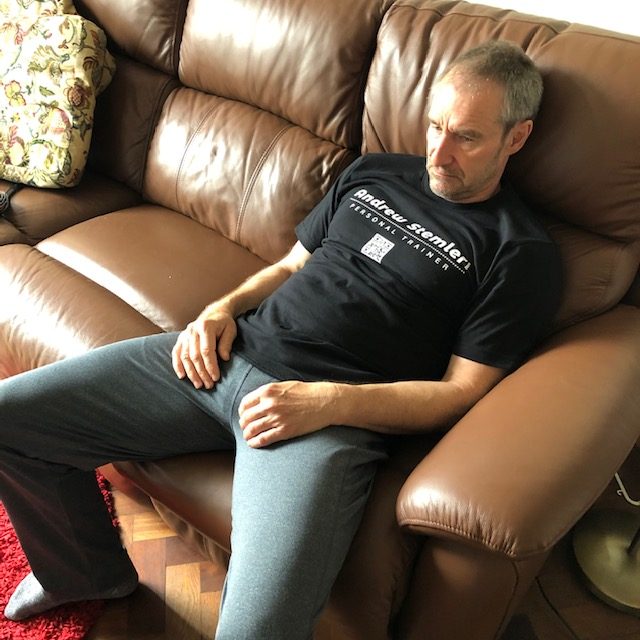
If you become sedentary it will start a cascade of bad stuff: your sleep will suffer, you’ll weaken your muscles meaning you’ll slide towards a boring disabled lifestyle, with a loss of control over your daily life. The more you sit and do nothing, the more you focus on your pain. The worse it becomes
THEY FALL INTO THE OVER ACTIVITY TRAP
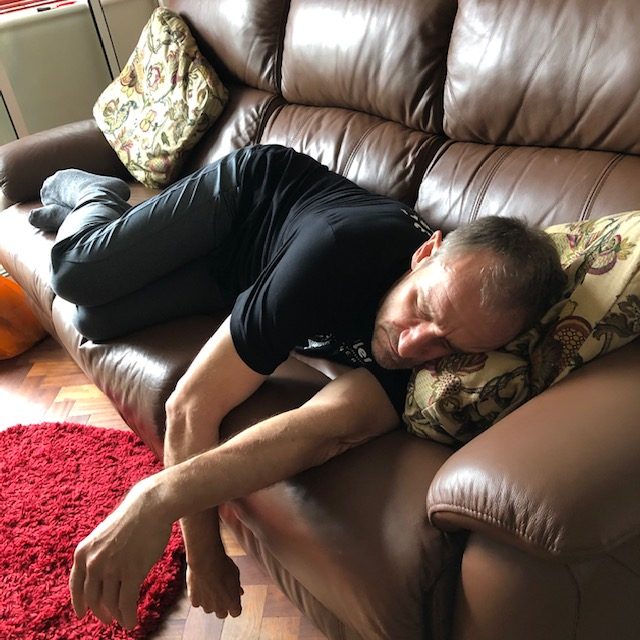
taking advantage of any easing of pain to work yourself to exhaustion, or into pain. This means you need to collapse until you recover. When you have recovered a bit, you slog through loads of work until you are exhausted or in pain. This leads to worse pain and declining physical fitness
ABANDONING WORK AND FUN FOR BOREDOM
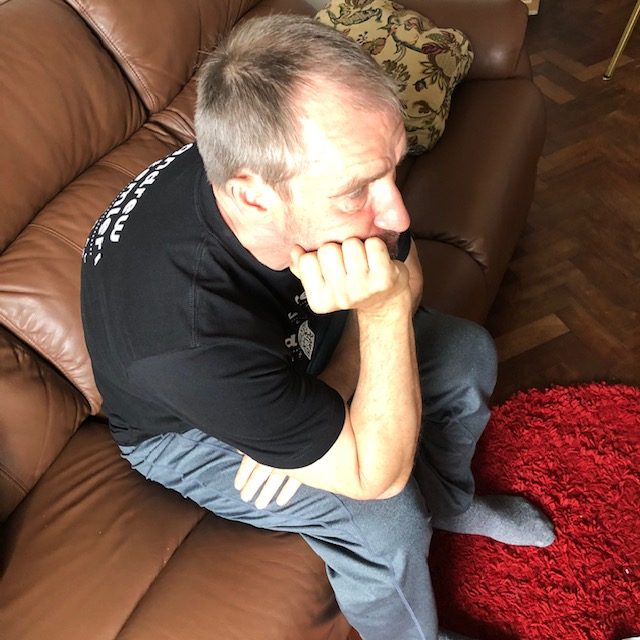
once you have taken time off work, and given up your hobbies, you get bored. Your pain will expand to fill the day
STRESS
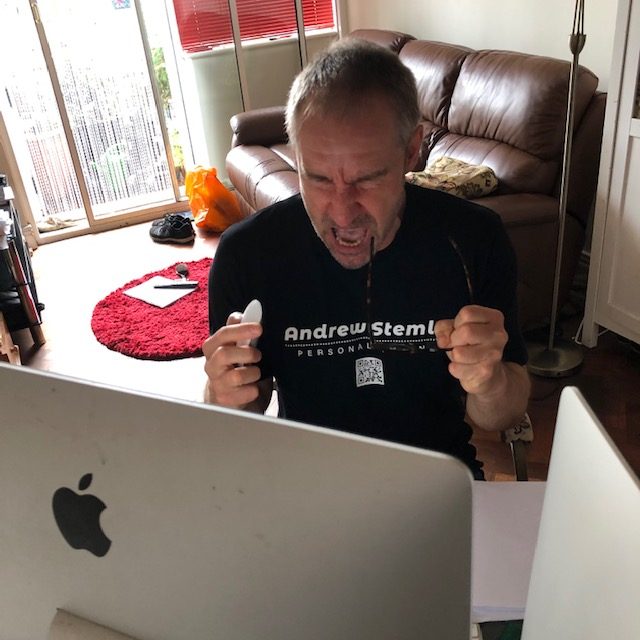
Stress. is the ultimate multi-tasking sensation: it can make you avoid activity, avoid friends , edge out loved ones: it can make you feel helpless and hopeless. It can lay the foundations for arguments and anger, and given time will deliver you mental health issue such as anxiety and depression
WAITING FOR A CURE, or HOPING THAT THE PAIN WILL GO AWAY

Rather than simply doing the basic combination of stretches, smashes, movement education and strengthening that I can show you, You start obsessing about a “cure”. You chase your doctor for a magical MRI or a spinal fusion , even if you know that only 1 out of 250 MRI’s show anything remotely useful, and normally leads to a recommendation to stretch and build your core.
To be kept up to date with back pain fixes do join the Backaholic.com mailing list
The big warning.
Some back pain is really serious: check your RED FLAGS by clicking here
Needless treatments: spinal fusion surgery for lower back pain is costly and there’s little evidence it’ll work
This article is republished under a Creative Commons license. Read the original article here. It was written by Gustavo Machado, Christine Lin and Ian Harris.
From time to time, we hear or read about medical procedures that can be ineffective and needlessly drive up the nation’s health-care costs. This occasional series explores such needless treatments or procedures individually and explains why they could cause more harm than good in particular circumstances.
Back pain affects one in four Australians. It’s so common, nearly all of us (about 85%) will have at least one episode at some stage of our lives. It’s one of the most common reasons to visit a GP and the main health condition forcing older Australians to retire prematurely from the workforce.
Treatment costs for back pain in Australia total almost A$5 billion every year. A great proportion of this is spent on spinal surgical procedures. Recently, Choosing Wisely, the campaign to educate medical professionals and the public about tests, treatments and procedures that have little benefit, or lead to harm, added spinal fusion for lower back pain to its list.
This is because, despite rates of the procedure being on the rise, current evidence doesn’t support spinal fusion for back pain. Randomised trials (regarded as studies providing the highest-quality evidence) suggest spinal fusion has little advantage over a well-structured rehabilitation program, or psychological interventions, for back pain.
What is spinal fusion?
Spinal surgery is most commonly performed to remove pressure on nerves that causes pain and other nerve symptoms in the legs. This surgery is called decompression. The next most common procedure is spinal fusion, where two or more vertebrae are joined together (using such methods as transplanted bone from the patient, a donor or artificial bone substitutes) to stop them moving on each other and make one solid bone.
Spinal fusion may be performed for fractures, dislocations and tumours, and is commonly performed in conjunction with decompression. For back pain, it’s performed when the origin of the pain is thought to be related to abnormal or painful movement between the vertebrae (from degenerative joints and discs, for example).
Rates of spinal fusions have been rising and continue to increase, outstripping other surgical procedures for back pain. In the United States, rates of spinal fusion more than doubled from 2000 to 2009. In Australia, rates increased by 167% in the private sector between 1997 and 2006, despite almost no increase in the public sector.
Spinal fusion rates differ significantly between regions of Australia, with the highest being in Tasmania and the lowest in South Australia: a seven-fold variation. Significant variations are also seen between countries. For instance, spinal fusion rates in the United States are eight times those in the United Kingdom.
The greatest increase in the use of spinal fusion has been in older Australians, often in conjunction with decompression surgery for spinal stenosis – a condition that causes narrowing of the spinal canal (the cavity that runs through the spinal cord).
Differences in clinical training, professional opinion, and local practices are likely to play a role in such variations.
Evidence for spinal surgery
There is little high-quality evidence to support the use of spinal fusion for most back-related conditions, including spinal stenosis. And there is disagreement between surgeons on when spinal fusion surgery should be performed, not only for back pain but also for more acute conditions such as tumours and spine fractures.
There have also been no studies comparing spinal fusion to a placebo procedure. Most research to date compares one fusion technique to another technique or to a form of non-surgical treatment, so we still don’t know whether spine fusion is effective against placebo.
We also know that spine fusion surgery is expensive and associated with more complications than decompression surgery. And the surgery often fails. Around one in five patients who undergo spine fusion will have revision surgery within ten years.
Research also shows most patients having spine fusion surgery under workers’ compensation won’t return to the usual job, will still be having physiotherapy and be on opioid medication two years after surgery.
So why are rates going up?
There are several factors, including an ageing population, that may contribute to the rapid increase in spinal fusion despite the lack of evidence supporting its use. Financial incentives might also explain the differences in rates between private and public sectors in Australia and between the United Kingdom and the United States.
We don’t have high-quality evidence on the benefits and harms of spinal fusion. This means there is uncertainty, which allows practitioners to continue doing the procedures they were trained to do unchallenged. This then leads to overtreatment, particularly where reimbursement rates are high, such as in the workers’ compensation setting.
Uncertainty about the appropriateness of spine fusion results in practice variation, wastes scarce health care resources and leads to worse patient outcomes.
We need better research in this area. This means research efforts should shift from studies looking at different ways of performing the surgery and focus on investigating whether or not it works better than non-operative treatments or a placebo, and, if so, whether the benefits outweigh the harms.
In the absence of such evidence, patients can consider other evidence-based and less costly treatments, such as exercise, cognitive behavioural therapy and physiotherapy.
The big warning.
Some back pain is really serious: check your RED FLAGS by clicking here
Shoulder mobility

It’s pretty crucial that everybody has an easy to do shoulder mobilising routine.
This is the shoulder regime I use extensively with my clients. Sort of easy, just needs a light band. Equally if you forget your band, use an imaginary one.
More Placebo, less con
In the old days, drug companies used to test their new fanged expensive products against a PLACEBO.
According to wikipedia A placebo “is a simulated or otherwise medically ineffectual treatment for a disease or other medical condition intended to deceive the recipient. Sometimes patients given a placebo treatment will have a perceived or actual improvement in a medical condition, a phenomenon commonly called the placebo effect or placebo response. The placebo effect consists of several different effects woven together, and the methods of placebo administration may be as important as the administration itself”.
These days its often not. I think the drug companies got miffed that their new fangled ( very expensive drug) only got 1 or 2 % better results than a sugar pill.
Very annoying if your corporate mission is to screw cash out of our NHS.
The reality is that getting our body to believe it can be cured has remarkable effects. Let’s face it, often the body cures itself, with no outside help from the drug companies what so ever.
Often “cures” like Reiki, magnets, supplements are raved about on social media.
Clearly, these things have no physical effect (as yet, discoverable). Adding less than .001% extra glucosamine to the bodies natural store of glucosamine really wont cure your shoulder issues. A deluded fanatic holding their hands 2 inches from your shoulder thinking happy thoughts wont apply any physical effect to fix your shoulder
But clearly, things like this actually work. Amulets don’t stop bullets, but give one to a boy soldier (add a few tokes of a good spliff and a motivational speech:obviously) and they will charge people firing machine guns at them.
People believe the weirdest things.
That placeboes work is beyond doubt. They often work well as pain relief, because often , after 2 or 3 weeks, pain is no longer an indication of the state of the tissue. Its simply an alarm bell that continues to ring because we don’t know how to switch it off. Ever heard of the guy whose amputated leg still hurts????
People in pain, often feel no pain after placebo “treatment”
Anything that rallies your subconscious into believing that a wrist band, or blue socks, or vitamin C, or an evangelical prayer will cure cancer, or improve performance ,is probably worth trying out as long as its only £10 (ish) or less.
I guarantee you that somewhere, someone, has been cured by a wrist band, or blue socks, or vitamin C, or an evangelical prayer. Ive cured people like this myself !
I have one plea.
If you respond to placeboes, try and find a cheap one to respond to.
Believe that drinking a glass of tap water cures pain, or that touching trees gives you healing powers. Believe that by simply adding your ailment to the comments below, our online community will send out universal love and fix it .
Try not to believe that a racoon paw improves virility , or that a Panda’s big toe cures aids. The animals concerned are rather fond of the bit remaining on their body just as it is. Thank you
That said, sometimes the most effective placebo is you spending lots of money and getting lots of attention!
Ce la vie
Ofcourse this is nothing but a shoddy advertorial for me as a personal trainer …………..but dont you feel better already
Do Physical Activities Trigger Flare-ups During an Acute Low Back Pain Episode?
“Do Physical Activities Trigger Flare-ups During an Acute Low Back Pain Episode?: A Longitudinal Case-Crossover Feasibility Study”. Is a useful report as we continue to make the connection between, excessive sitting and back pain.
The big question was this: whether physical activities trigger flare-ups of pain during the course of acute low back pain (LBP).
The conclusion:
Among participants with acute LBP, prolonged sitting (>6 hours) and stress or depression triggered LBP flare-ups. PT was a deterrent of flare-ups.
Join the Backaholic Mailing list
The big warning.
Some back pain is really serious: check your RED FLAGS by clicking here
the 48 injuries I got not doing crossfit
Misrepresenting Crossfit injuries is simple click theft!
Obese reporters, lazy bloggers out to “steal clicks”, and those seeking to curry favour with critics throw their hands up in horror at the thought that any sporting activity could result in any type of injury.
“Surely”, they ooze, “If we could rid ourselves of rugby, MMA, boxing, indeed all martial arts (except that nice Tai Chi, that’s ok) and Crossfit, no one would be injured again.”
I reflected on this and thought about my Crossfit injuries, then I thought about my pre-Crossfit injuries as a “fit” person, then I thought about my injuries as a normal member of the public.
I’m proving nothing, other than saying injury, biffs, cuts and stuff are probably part of life unless you are very unfit and sedentary. In which case, it’s just the bed sores.
An overview of my injuries
As a sedentary 100 day a smoker who avoided physical activity till I was 37.
- I got run over by a car.
- I fell of a ladder while painting,
- I burnt my chest in a garden fire.
- I had back pain from slouching.
- I had back pain from moving stuff badly.
- I had numerous hangovers from drinking too much.
- A disastrous smokers’ cough with the associated high blood pressure.
- I skipped down a low corridor and bounced so high that I smashed my head on the ceiling and landed on my elbow.
- I stood up too fast while filing and smashed my head against the bottom of a draw that was pulled out above me.
- I cut my lip by trying to lick the top of a soup tin, which I had opened with an opener .
- I nearly mandolin-ed the top of my finger off.
- I’ve caught my fingers in the car door,
- I’ve banged my fingers with hammers, sliced my skin open with knives so many times that I should have therapy for self harming.
- I’ve electrocuted my self, twice.
- I’ve burned myself on the iron, on the oven, and by seeing what would happen if I poked a straw into the 2 bar fire in the lounge.
- Cigarette burns galore.
- I’ve walked into too many doors.
- Tripped down stairs, and slipped on slippery things .
- I have left shoulder pain as I sleep on it… (for 54 years!!)
- I got several bouts of carpet burn knees after having sex on the floor
- I’ve caught my foreskin in my zip, unbelievably, 3 times.
- I fell off a wall while having a cigarette and dislocated my finger.
- Why do I continue to stub my toe?
As a child learning to ride my bike, I scraped both knees, badly, and my mum screwed up the bandage so the scab meshed into the material, so that had to be ripped off. I often slammed the breaks on and often went sailing over the handlebars.
Often.
From when I started to get fit at age 37
- I tumbled off the treadmill,
- Dropped a dumbbell on my foot,
- Caught my finger on the safety catch on the leg extension machine
- At martial arts, 5 years of black eyes, numerous with kicks to my poor testicles.
- Learning to swim at the age of 40 (God knows how much pool water I drank).
- While wrestling, I caught my big toe between two mats and twisted it.
- As a doorman and on security contracts, I got slashed with a bottle on my arm, then split a knuckle punching someone in the mouth. And I had someone try and scoop my eye out with their finger (I’m sure I got a knee in the groin too).
- From running I developed severe knee pain and shin splints, and Achillies tendonitis. I compounded my shoulder damage by dropping that bench press
- Since I started Crossfit:
- Callus tears
- 4 bouts of deadlift- induced bad back pain (1 during a wod, the other 3 during strength sessions)
- A nasty psoas injury, which I got demonstrating an unweighted split jerk.
- My Achilles and shoulder continue to bother me.
- I got a nasty dose of plantar fasciitis
- My wrists don’t like high rep bar push presses.
There are injuries in Crossfit, but bearing in mind it taught me sooo much, I think, on balance, for me, it was safer than normal living. Certainly I’ve not zipped up my foreskin since I became a bit more co-ordinated.
Get me to the safety of 30 power snatches for time.
But what if your back pain is extension based
Too many of us are obsessed with flexion driven back disorders. Which is fair because most cases of back pain are flexion based. However, not all of them are. Some are because you are over extended, and frankly, you need some careful flexion in your life, and back.
Until I produce a good guide, here are some useful thoughts from
https://tonygentilcore.com/2014/01/extension-based-back-pain-b/
why not join the backaholic mailing list
Back Pain: Cure your back with the Sorensen test
“The race has always been on to firstly predict, then inoculate against, back pain. A test known as the “Sorensen test” based on the work of Hansen in 1964, has been popular since 1984.
According to Demoulin et al 2006 ”The test consists in measuring the amount of time a person can hold the unsupported upper body in a horizontal prone position with the lower body fixed to the examining table”
The test is accepted in its discriminative validity, reproducibility, and safety. However debate continues to surround its ability to predict low back pain. No firm explanation, beyond “women rock” , has been offered as to why “chicks” can hold it longer than guys.
Naturally motivation and discomfort tolerance are confounding factors.
A interesting review is available in PDF form at Isometric back Extension tests: a Review of Literature Maureau et al Journal of Manipulative and Physiological Therapeutics Volume 24 • Number 2001, But in essence,this report says this….(yawn….)
“For men, the mean endurance time is 84 to 195 seconds; for women, it is 142 to 220.4 seconds. For subjects with LBP, the mean endurance time range is 39.55 to 54.5 seconds in mixed-sex groups 80 to 194 seconds for men, and 146 to 227 seconds for women” whether thats remotely useful lm not sure, but if you suffer or are prone to lower back pain, (you tend to know by your appalling posture), im going to suggest you move this figure up.
References
Demoulin C, Vanderthommen M, Duysens C, Crielaard JM. 2006. Spinal muscle evaluation using the Sorensen test: a critical appraisal of the literature. Joint Bone Spine. 2006 Jan;73(1):43-50.”
My name is Andrew Stemler. Im a london personal trainer working in Bethnal Green E2 and the City of London
Piriformis Syndrome
There is a sneaky little muscle in your bum that often makes your back , or legs hurt.
It’s sneaky as, whether or not you have a booty or a skinny ass, its a muscle that hides underneath the big ( or skinny?) obvious bits.
It creates a lot of mischief. So Voila, the piriformis is the muscle to blame. Its this muscle that I’ll often try and find and “trigger point” if I see you acting or moving in one of many ways. If you are going to have back pain, you might as well understand the anatomy
So this is where it lives.

When I’ve found it, here is where I’ll try and press

I’ll often press or rub each point with my thumb about 10 times. Often I’ll try and teach you how to find these points with a Lacross or massage ball.
Obviously, there are other muscles in this area that I’ll identify and treat, but this is often the cause of a lot of back pain
Well, thats why Ive probably shoved my thumb in your bum!
If you have back pain, do get in contact and I’ll see what I can do to help.
I do a lot of work with the Backaholic programme at Crossfit London in E2 , and I help people cure there back pain. Strangely Im just a massage therapist, but as I teach people to olympic lift, clamber over objects and do lots of cool gymnastic stuff, Ive been forced to deal with the bad backs my clients bring to their sessions
The big warning.
Some back pain is really serious: check your RED FLAGS by clicking here
 Andrew Stemler