Is stretching enough to fix pain?

Ever since I became a fitness instructor back in 1997, I was assured by every trainer and every therapist I met that pain can simply be stretched away.

In practice, results are far more mixed. Whether people are doing the wrong stretch, for the wrong time, or lying ,  if you are honest, stretching often isn’t a long term solution for pain.

I wrote about this in my “backaholic”  blog where I quoted some of the observations made by Stuart McGill And Boo Schexnayder

Soft tissue injuries result from excessive tension, so excessive tension in the rehabilitation situation is counterproductive…stretching of …chronically tight tissue is counterproductive. It may give an initial sensation of relief because the muscle spindles have been deadened, but this practice…weakens the tissue further because of the weakened proprioceptive response.” Boo Schexnayder

stop trying to Stretch and mobilise! Let tissues settle and regain their proprioceptive abilities so they tell the truth” Stuart McGill

Its important to recognise that stretching has an analgesic effect , but it seems to be attributed to switching receptors off in the muscle. ( I suppose its like I’ve cured your  headache by switching off the fire alarm, but I haven’ checked that there isn’t a fire!!).

Do bear in mind that pain has many causes. I have clients with bad backs, caused by rubbish abusive employers, I have clients who use their backs appallingly,  and are so tight their posture is disgusting, who have never had a minutes worth of pain.\

Nevertheless  stretching  has enough of an  albeit , muddled,  pedigree to justify its inclusion in pain treating especially if better protocols can be designed.

In the therapy world, the chances are we know everything, it’s probably a matter of nailing the sequencing to get optimal results.

We know for example not to train static stretching before sprint practice.  “in strict terms of performance, it seems harmful to include static stretching in the warm-up protocol of collegiate male sprinters in distances up to 100 m”. (ref)

So what do we have to do to make stretching work as a pain relieving protocol? Because just to say ” stretching is magic” doesnt cut it :

If you read “Effectiveness of calf muscle stretching for the short-term treatment of plantar heel pain: a randomised trial”. (Ref)  they found that “When used for the short-term treatment of plantar heel pain, a two-week stretching program provides no statistically significant benefit in ‘first-step’ pain, foot pain, foot function or general foot health compared to not stretching.”

Well check out Effectiveness of Myofascial Trigger Point Manual Therapy Combined With a Self-Stretching Protocol for the Management of Plantar Heel Pain”

This  2011 study combined trigger point therapy with stretching and concluded “that the addition of TrP manual therapies to a self-stretching protocol is superior to the sole application of self-stretching in the treatment of individuals with plantar heel pain at short term“. 

So its really worth thinking about combining trigger point therapy with stretching.

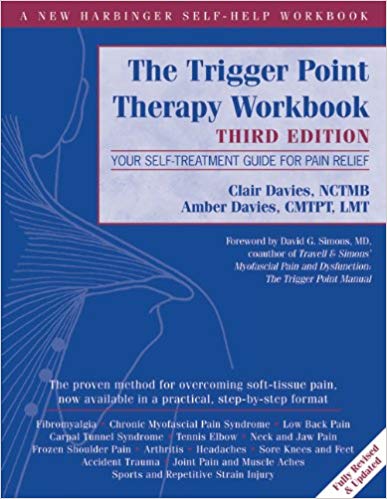
If you want to get an inexpensive handle on trigger points, buy this book

Trigger Point Therapy Workbook: Your Self-Treatment Guide for Pain Relief (A New Harbinger Self-Help Workbook)

51KqrB4Z9zL._SX385_BO1,204,203,200_.jpg


If you are near the east end of london, you can book a PT session with me and ill show you how (andrew@andrewstemler.com)


So, for now, my conclusion is that, when apply stretching for pain relief,  it’s sensible to consider combining Trigger points with stretching. I’ll talk about the re education of tissues, rest period, elsewhere.


It’s still important to  say that every year dancers, gymnasts athletes and physical enthusiasts get flexible by using a mix of the work of  Zaichik,  Kurz and others.  That you can improve your range of motion  isn’t really up for debate.
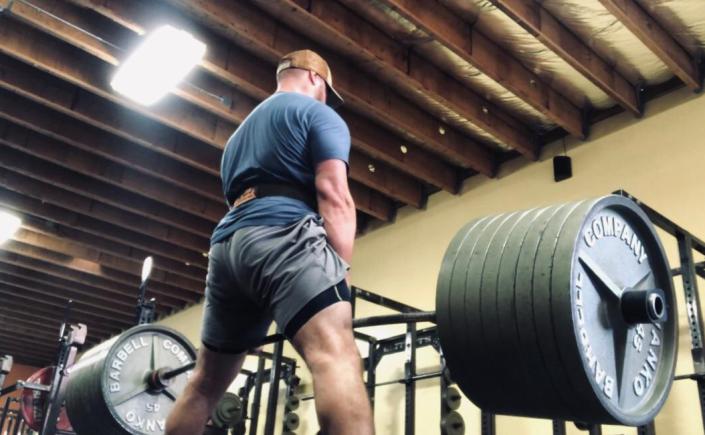
Deadlift homework: the Imaginary Bar drill

In the early stages many people struggle with the deadlift. This struggle is down to many factors: hamstring inflexibility, balance, proprioception (or lack of it) or simply, pure “what the hell is this”.

Mastering the move is made harder by the fact that many  people think they can only practice the move in the gym.  If you struggle, more practice is useful, hence the imaginary bar drill.

Focus on holding an imaginary bar, anywhere: at home, at work, in the pub.

Enjoy

If you need help drop me an email Andrew@andrewstemler.com

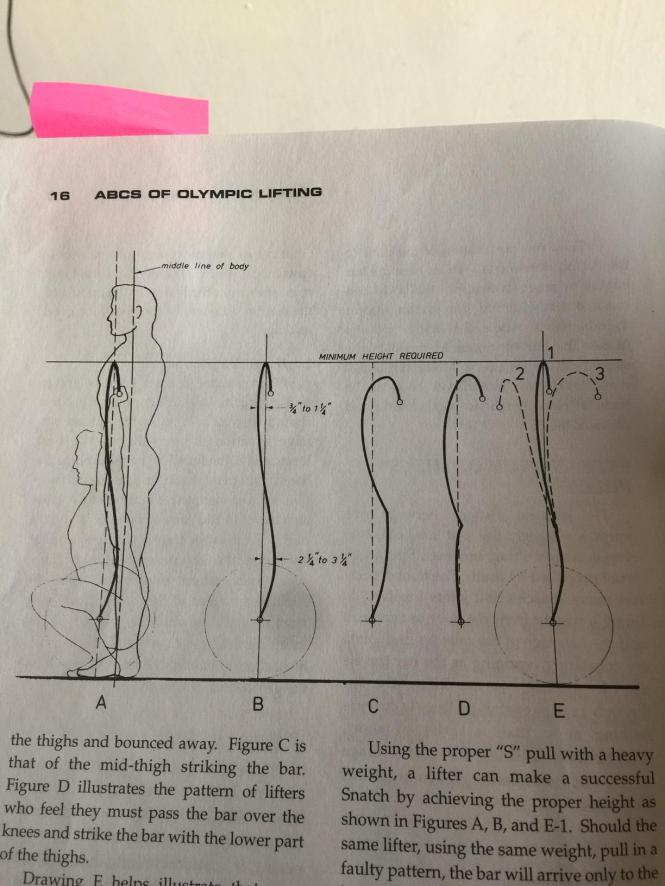
Its an S pull

s pull

Not that it really matters, but, the bar path in the olympic lifts isn’t straight up and down. There is a pleasing “S” curve to its path.

This is probably facilitated by a good “Lat Flare” as the bar passes the hips.

Thanks to Tommy Kono Weightlifting, Olympic Style”.

Thought I’d mention it.


Flexibility Standards

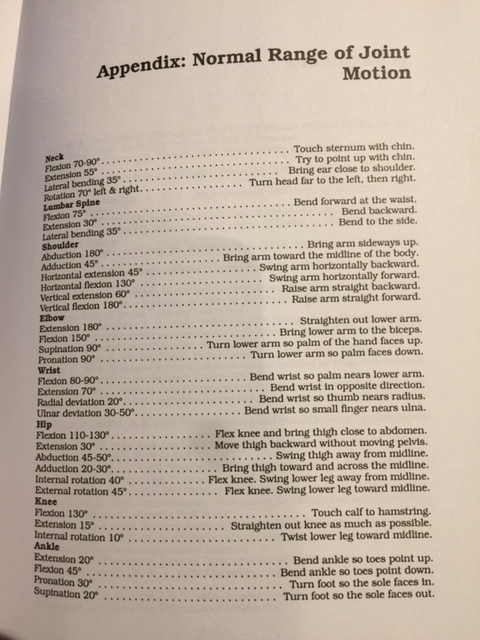
Do you need to be more flexible?  How flexible are you? What are your flexibility targets? It’s interesting ploughing through the flexibility literature looking for effective and reliable flexibility standards.

These  following two photos are from the  Men’s Gymnastics Coaching Manual and they give an “interesting” guide as to the possible  levels of flexibility that would be gymnasts may need. Im not sure to what extent it should guide normal people, but, it’s an interesting, if depressing, place to start answering the question of ” how flexible” do you need to be.

Tom Kurz suggests this reference chart in his famous book  Stretching Scientifically: A Guide to Flexibility Training

IMG_2607

Sign up to my mailing list

Coffee spikes your Cholesterol: the Cafestol and Kahweol effect

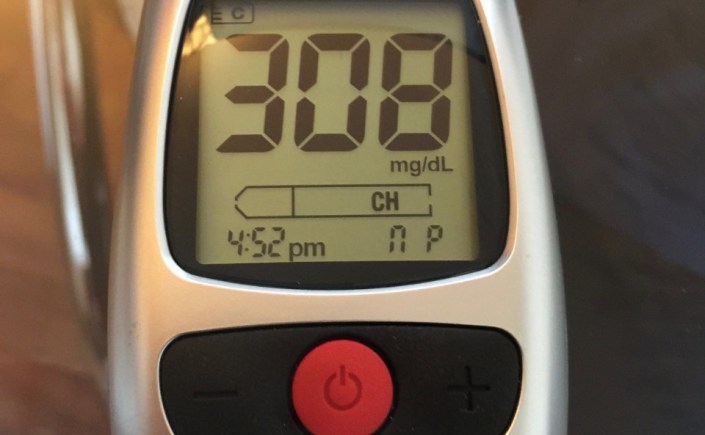
The bad news of a high cholesterol reading was a bit of a shock for me.

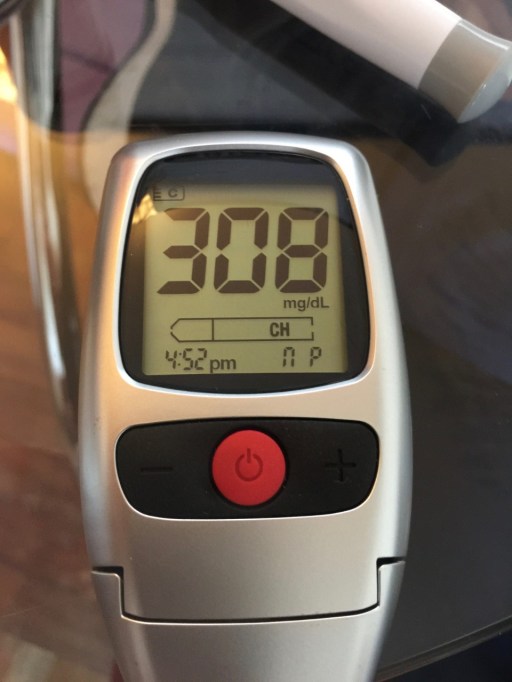
308 reading

I knew my diet had slipped (too much red meat, too much cheese: I love cheese). Equally,  I knew that to reduce  cholesterol  “all you had to do”  was cut down on red meat and saturated fat.

I’d been doing blood work for some of my clients and was able to  use my home blood test machine to check my level.

I was horrified.

3 weeks after a major diet shift my cholesterol remained  stupidly high. I looked over  the guidelines again, and  focused on the fibre content, so I bought fibre ( oat and wheat) and added that. Rather than my horror 311 readings I was getting 270’s 280’s.

Still,  80 points over my threshold.

I then started daily tests and compared the results with my food diary. I saw days where I had nothing but some fruit and a few cups of coffee with stupid cholesterol levels.

Equally, I noticed a no coffee day, producing a low reading.

I started researching coffee.  A lot.

What I rediscovered was this.

By the turn of the  20th century, medical, and food researchers knew one thing for sure.

Unfiltered coffee is a cholesterol bomb. There were so many studies all saying the same thing, and much of the research can be seen in this report

“Cafestol and Kahweol.  Review of Toxicological Literature 1999”.

Source here

Drink unfiltered coffee and it sends your Cholesterol rocketing due to two chemicals in coffee called Cafestol and Kahweol.

The numerous tests and reports quoted in the review of Toxicological Literature nailed this fact to the mast  (see appendix 1)

So why doesn’t every coffee shop in the UK have a massive warning plastered all over it? Everybody hears how bad red meat and saturated fat  is for cholesterol, so when you see your doctor after a high cholesterol test, why don’t they ask about your coffee consumption?

Well, everybody loves coffee. So there is an understandable bias in its favour.

Crucially in the 1990’s when this was discovered, most people drank filtered coffee “the cholesterol-raising effect seems to be limited to coffee that hasn’t been filtered, which includes Turkish coffee, coffee brewed in a French press, and the boiled coffee consumed in Scandinavia”   . (Harvard health in 2012 ) in fact “The cholesterol-raising ingredients in coffee are oily substances called diterpenes, and the two main types in coffee are cafestol (pronounced CAF-es-tol) and kahweol (pronounced KAH-we-awl).

But a paper filter traps most of the cafestol and kahweol, so coffee that’s been filtered probably has little, if any, effect on cholesterol levels.”

This was fine back in the last 20th century.  We mainly drank filtered coffee then .

I’m 58, I know.

But Guess what? Since the start of the 21st century unfiltered coffee consumption has rocketed. While some coffee shops have an unfiltered coffee option, most push and market unfiltered coffee

I don’t know how many coffee shops there were in 1999, but since 2008 the amount of coffee shops in the UK have grown from 10,000 to 25,000 in 2019. Most  coffee shops offer unfiltered coffee.

Thats a lot of cholesterol raising!

So, I should make it clear, I love coffee. The only effect  this  rediscovery has had  on me is to switch to filtered coffee. I’ve even cut filter paper into  small  circles to put into espresso machines. Some coffee shop don’t mind doing this.

The real horror is this.

If I had gone back to my doctor, they would have pushed me to go on statins. They would not have even mentioned coffee. Im guessing that anyone who has 2 cups of unfiltered coffee a day, and is on statins, should drink filtered coffee and get retested ( having chatted to their doctor first , ofcourse)

In balance I should say that coffee and caffeine have health effects. I think, almost all of which can be obtained through the filtered variety.


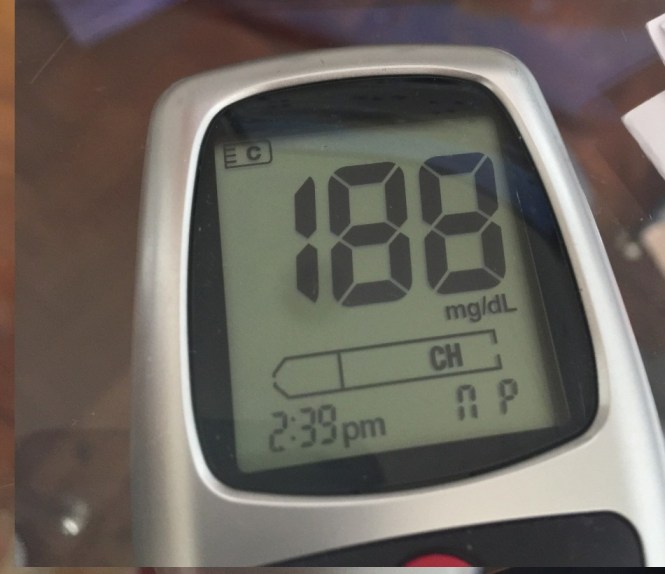
188 reading

with filtered coffee my readings returned to “normal”


Appendix 1

In an open randomized study, healthy male and female volunteers who drank coffee containing 148 mg cafestol and kahweol daily for 30 days exhibited a considerable rise in total cholesterol (average mean, 31.6%), low density lipoprotein (LDL) cholesterol (50.2%), and triglyceride concentrations (87%) versus the control group (Heckers et al., 1994).

In three volunteers, consumption of highly purified cafestol (73 mg/day; 0.23 mmol/day) and kahweol (58 mg/day; 0.19 mmol/day) as the corresponding mono- and dipalmitates for 6 weeks increased the serum levels of cholesterol by 66 mg/dL (1.7 mmol/L) and triglycerides by 162 mg/dL (1.83 mmol/L) (Weusten-Van der Wouw et al., 1994).

In a randomized, crossover trial using healthy, normolipemic volunteers, six subjects received 2 g Arabica oil containing 72 mg (0.23 mmol) cafestol per day and 53 mg (0.17 mmol) kahweol per day, and five subjects received 2 g Robusta oil providing 40 mg (0.13 mmol) cafestol per day and 2 mg (0.006 mmol) kahweol per day (Mensink et al., 1995). Compared to a control group given placebo oil, serum triglyceride levels increased 71% in the group receiving Arabica oil and 61% in the group given Robusta oil. Serum cholesterol concentrations were increased by 13% for both oils.

references

Cafestol and Kahweol.  Review of Toxicological Literature 1999  accessed online  (Sept/Oct 2019) https://ntp.niehs.nih.gov/ntp/htdocs/chem_background/exsumpdf/cafestol_508.pdf

Heckers, H., U. Göbel, and U. Kleppel. 1994. End of the coffee mystery: Diterpene alcohols raise serum low-density lipoprotein cholesterol and triglyceride levels. J. Intern. Med. 235(2):192-193.

Weusten-Van der Wouw, M.P.M.E., M.B. Katan, R. Viani, A.C. Huggett, R. Liardon, P.G. Lund-Larsen, D.S. Thelle, I. Ahola, A. Aro, S. Meyboom, and A.C. Beynen. 1994. Identity of the cholesterol-raising factor from boiled coffee and its effects on liver function enzymes. J. Lipid Res. 35:721-733.


Basic life support: First aid

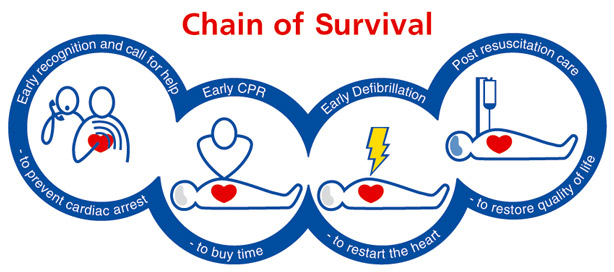
As its “restart a heart” week, I thought it would be good to put the official CPR  guidance on this site.  First aid protocols are set by reference to the standards of the resuscitation council and to the current edition of the first aid guides produced by The St John Ambulance and the Red Cross.

You can look up the  Resuscitation Council here

SEQUENCE Technical description
SAFETY Make sure you, the victim and any bystanders are safe


RESPONSE Check the victim for a response

  • Gently shake his shoulders and ask loudly: “Are you all right?”

If he responds leave him in the position in which you find him, provided there is no further danger; try to find out what is wrong with him and get help if needed; reassess him regularly

AIRWAY Open the airway

  • Turn the victim onto his back
  • Place your hand on his forehead and gently tilt his head back; with your fingertips under the point of the victim’s chin, lift the chin to open the airway
BREATHING Look, listen and feel for normal breathing for no more than 10 seconds
In the first few minutes after cardiac arrest, a victim may be barely breathing, or taking infrequent, slow and noisy gasps. Do not confuse this with normal breathing. If you have any doubt whether breathing is normal, act as if it is they are not breathing normally and prepare to start CPR
DIAL 999 Call an ambulance (999)

  • Ask a helper to call if possible otherwise call them yourself
  • Stay with the victim when making the call if possible
  • Activate the speaker function on the phone to aid communication with the ambulance service
SEND FOR AED Send someone to get an AED if available
If you are on your own, do not leave the victim, start CPR
CIRCULATION Start chest compressions

  • Kneel by the side of the victim
  • Place the heel of one hand in the centre of the victim’s chest; (which is the lower half of the victim’s breastbone (sternum))
  • Place the heel of your other hand on top of the first hand
  • Interlock the fingers of your hands and ensure that pressure is not applied over the victim’s ribs
  • Keep your arms straight
  • Do not apply any pressure over the upper abdomen or the bottom end of the bony sternum (breastbone)
  • Position your shoulders vertically above the victim’s chest and press down on the sternum to a depth of 5–6 cm
  • After each compression, release all the pressure on the chest without losing contact between your hands and the sternum;
  • Repeat at a rate of 100–120 min-1
GIVE RESCUE BREATHS After 30 compressions open the airway again using head tilt and chin lift and give 2 rescue breaths

  • Pinch the soft part of the nose closed, using the index finger and thumb of your hand on the forehead
  • Allow the mouth to open, but maintain chin lift
  • Take a normal breath and place your lips around his mouth, making sure that you have a good seal
  • Blow steadily into the mouth while watching for the chest to rise, taking about 1 second as in normal breathing; this is an effective rescue breath
  • Maintaining head tilt and chin lift, take your mouth away from the victim and watch for the chest to fall as air comes out
  • Take another normal breath and blow into the victim’s mouth once more to achieve a total of two effective rescue breaths. Do not interrupt compressions by more than 10 seconds to deliver two breaths. Then return your hands without delay to the correct position on the sternum and give a further 30 chest compressions

Continue with chest compressions and rescue breaths in a ratio of 30:2

If you are untrained or unable to do rescue breaths, give chest compression only CPR (i.e. continuous compressions at a rate of at least 100–120 min-1)

IF AN AED ARRIVES Switch on the AED

  • Attach the electrode pads on the victim’s bare chest
  • If more than one rescuer is present, CPR should be continued while electrode pads are being attached to the chest
  • Follow the spoken/visual directions
  • Ensure that nobody is touching the victim while the AED is analysing the rhythm

If a shock is indicated, deliver shock

  • Ensure that nobody is touching the victim
  • Push shock button as directed (fully automatic AEDs will deliver the shock automatically)
  • Immediately restart CPR at a ratio of 30:2
  • Continue as directed by the voice/visual prompts

If no shock is indicated, continue CPR

  • Immediately resume CPR
  • Continue as directed by the voice/visual prompts
CONTINUE CPR Do not interrupt resuscitation until:

  • A health professional tells you to stop
  • You become exhausted
  • The victim is definitely waking up, moving, opening eyes and breathing normally

It is rare for CPR alone to restart the heart. Unless you are certain the person has recovered continue CPR

RECOVERY POSITION If you are certain the victim is breathing normally but is still unresponsive, place in the recovery position

  • Remove the victim’s glasses, if worn
  • Kneel beside the victim and make sure that both his legs are straight
  • Place the arm nearest to you out at right angles to his body, elbow bent with the hand palm-up
  • Bring the far arm across the chest, and hold the back of the hand against the victim’s cheek nearest to you
  • With your other hand, grasp the far leg just above the knee and pull it up, keeping the foot on the ground
  • Keeping his hand pressed against his cheek, pull on the far leg to roll the victim towards you on to his side
  • Adjust the upper leg so that both the hip and knee are bent at right angles
  • Tilt the head back to make sure that the airway remains open
  • If necessary, adjust the hand under the cheek to keep the head tilted and facing downwards to allow liquid material to drain from the mouth
  • Check breathing regularly

Be prepared to restart CPR immediately if the victim deteriorates or stops breathing normally

Basic life support
ChainOfSurvival

Measuring cups

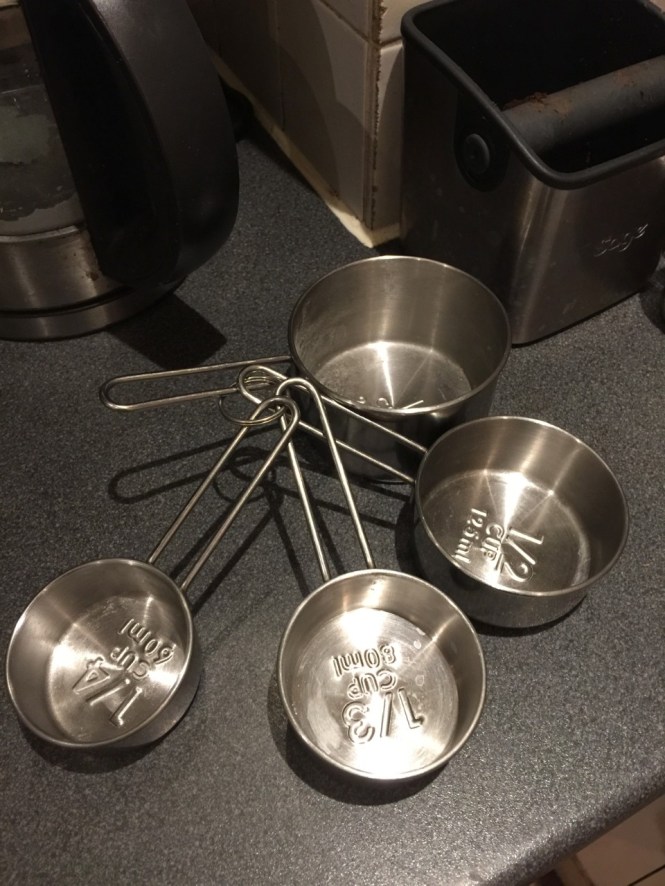
Over the years, Ive spoken to a lot of people about food and quantities of food. Whenever I’ve checked that the would be dieter has a set of cups, everyone , everyone goes “yes”.

Just to confirm, I say ” do you have a set of cups?” they say, “Yes”.

In 9/10 times these people are lying, or are very ignorant, or very stupid.

A set of cups is a specific way of measuring quantities.  Here is a pictureandrew stemler cups

You can buy them online. Here are some cheap plastic ones and here are some more expensive stainless steel ones.

As much as I hate the smart arse phrase ” if you’re not measuring you’re guessing“: in food, its spot on.

At costs ranging from £1.35 to £12 you really do need to get some way of measuring food!

Short term skipping of meals produces an immediate increase in cholesterol levels.

Just a personal reflection.

I was reviewing my food diary/cholesterol log. On those days when I had a tiny  breakfast, and  in effect, fasted throughout the day ( with some cups of tea and a bit of fruit), on those days, I noticed the cholesterol went back up!

superficially the report

Intermountain Medical Center. “Fasting reduces cholesterol levels in prediabetic people over extended period of time, new research finds.” ScienceDaily. ScienceDaily, 14 June 2014.

States that fasting reduces cholesterol over the longer term however  “During actual fasting days, cholesterol went up slightly in this study, as it did in our prior study of healthy people, but we did notice that over a six-week period cholesterol levels decreased by about 12 percent in addition to the weight loss,” said Dr. Horne

“Because we expect that the cholesterol was used for energy during the fasting episodes and likely came from fat cells, this leads us to believe fasting may be an effective diabetes intervention.”

The process of extracting LDL cholesterol from the fat cells for energy should help negate insulin resistance. In insulin resistance, the pancreas produces more and more insulin until it can no longer produce sufficient insulin for the body’s demands, then blood sugar rises.

“The fat cells themselves are a major contributor to insulin resistance, which can lead to diabetes,” he said. “Because fasting may help to eliminate and break down fat cells, insulin resistance may be frustrated by fasting.”

Dr. Horne says that more in-depth study is needed, but the findings lay the groundwork for that future study.

“Although fasting may protect against diabetes,” said Dr. Horne. “It’s important to keep in mind that these results were not instantaneous in the studies that we performed. It takes time. How long and how often people should fast for health benefits are additional questions we’re just beginning to examine.”

This clearly leads into a re-evaluation of intermittent fasting

The European Society of Endocrinology asked  “Could intermittent fasting diets increase diabetes risk? Fasting every other day to lose weight impairs the action of sugar-regulating hormone, insulin, which may increase diabetes risk.” ScienceDaily. 20 May 2018.

Their conclusion  was “Fasting every other day to lose weight impairs the action of sugar-regulating hormone, insulin, which may increase diabetes risk, according to data presented in Barcelona at the European Society of Endocrinology annual meeting, ECE 2018. These findings suggest that fasting-based diets may be associated with long-term health risks and careful consideration should be made before starting such weight loss programmes”

Anecdotally this makes me think about lots of thin/skinny people I know, who have poor health!